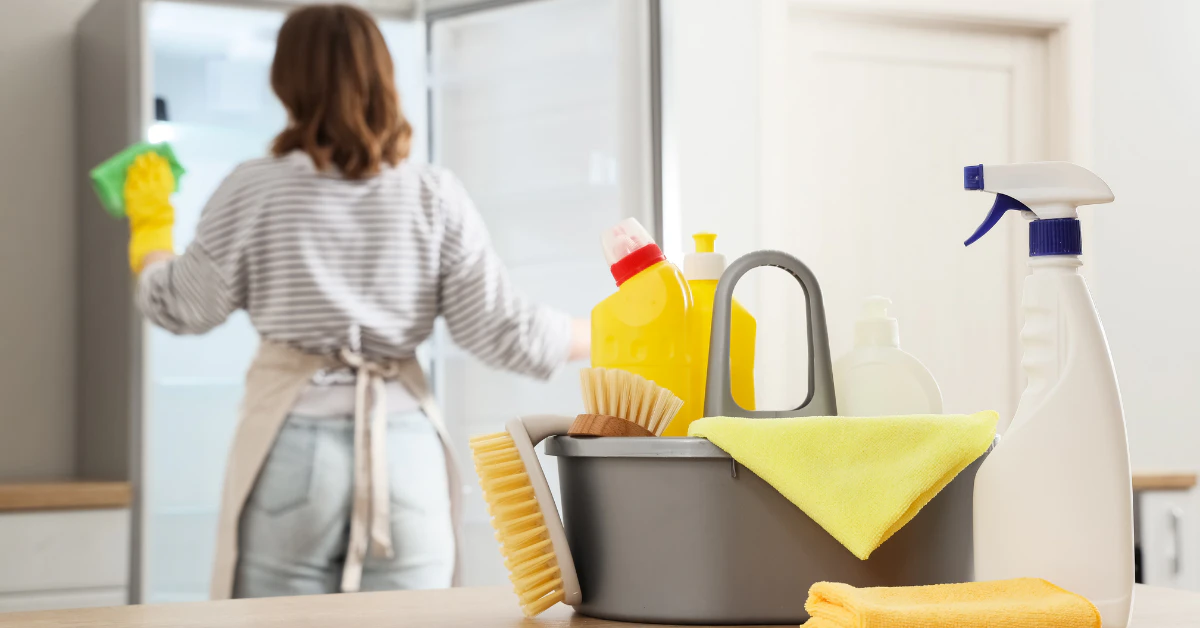
A smelly fridge means bacteria are already at work. Fix it fast with these steps.
- Pull everything out. Check every container. Toss anything spoiled, expired, or unrecognizable.
- Check the temperature. Your fridge should sit at or below 40°F. Between 40°F and 140°F, bacteria multiply fast and cause odor. This range is called the “danger zone,” according to the FDA.
- Wipe down the shelves and walls. Use hot water and dish soap first.
- Sanitize. Follow with a mild bleach solution to kill bacteria left behind, per USDA guidance.
- Air it out. Leave the door open for 15 minutes so fresh air can circulate.
These five steps handle most fridge odors in under an hour. If the smell lingers, the cause is likely hiding somewhere deeper, and the next sections cover exactly where to look.
The Deep Clean Protocol (And the Critical Safety Warning)
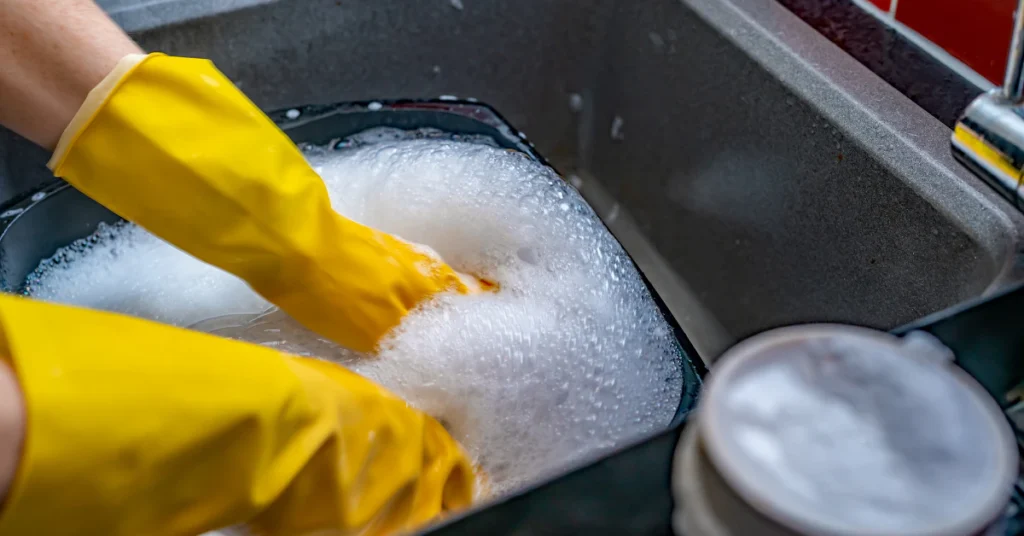
A real clean goes deeper than a quick wipe-down. This is how to remove smell from fridge and freezer surfaces the right way.
Empty everything out.
Take out every shelf, drawer, and bin. Set them aside for washing.
Wash with hot water and detergent.
Scrub the shelves, drawers, walls, and door with hot water and regular dish detergent. This clears away sticky spills and food residue before any smell can be neutralized.
Sanitize with a diluted bleach solution.
Mix 1 tablespoon of unscented liquid chlorine bleach per gallon of water, following USDA guidance. Wipe down the interior, including the door and the rubber gasket. This kills bacteria that plain soap and water leave behind.
Rinse with plain water.
Wipe every surface again with a clean, water-dampened cloth. Do not skip this step.
The Warning You Cannot Skip
Never mix bleach and vinegar, and never apply one right after the other without a full water rinse in between.
Bleach and vinegar react to form chlorine gas. This gas can cause serious lung damage if inhaled. The CDC has linked this exact mixture to thousands of poison-control calls. Symptoms include coughing, burning eyes, and trouble breathing. In enclosed spaces like a kitchen, the risk goes up.
Many guides suggest using vinegar as a follow-up step for how to remove smell from fridge after cleaning with bleach. That is fine, but only if you rinse the bleach residue away with plain water first. Skipping the rinse and going straight from bleach to vinegar is what creates the dangerous reaction.
If odor remains, try a vinegar wipe.
Once the bleach has been fully rinsed away, wipe the interior with a mix of equal parts vinegar and water. Vinegar’s acid helps break down mildew that plain soap can miss.
Air dry before restocking.
Leave the door open for 15 minutes so the fridge can air out completely. Make sure everything is dry before putting food back in.
This sequence, wash, sanitize, rinse, then vinegar if needed, covers the deep clean without any chemical risk. Keep bleach and vinegar in separate cleaning sessions, never combined in the same bucket or spray bottle. For more on chlorine gas exposure and symptoms, see the CDC’s guidance on hazardous chemical mixtures.
If your fridge still smells after this full protocol, the source is likely hiding somewhere the cloth never reached, and the next section shows exactly where to look.
Deodorants vs. Antiperspirants: Why Some Methods Mask While Others Trap Odors

Think about how you handle body odor. A deodorant covers a smell with a different scent. An antiperspirant stops the source. Kitchen odor fighters work the same way, and knowing the difference explains why so many home remedies for how to remove smell from fridge naturally only work for a day or two.
Masking agents act like deodorants.
Coffee grounds, white vinegar, and vanilla extract all fall into this group. They give off their own smell, and that new smell competes with the bad one. The problem is that these agents do not remove anything. They just add a second odor on top of the first.
There is also a hidden downside. These masking scents can transfer onto nearby food. A bowl of coffee grounds left too close to butter or milk can leave those foods tasting faintly like coffee. The same goes for vinegar and vanilla. If you do not mind a coffee-scented fridge, this method can work as a short-term patch. But it is not solving the actual problem.
Adsorbing agents act like antiperspirants.
Baking soda and activated charcoal work differently. Instead of adding a competing smell, they give odor molecules a surface to stick to. The bad smell gets physically trapped instead of covered up.
This distinction matters because it changes what result you should expect. A box of coffee grounds might make your fridge smell like a coffee shop for a few days, but the original odor is still there underneath. Baking soda and charcoal actually pull odor molecules out of circulation, which is why they tend to hold up better over time.
Neither method fixes a fridge with active spoiled food or mold in the gasket. Odor absorbers only work once the real source has been cleaned out. Think of them as maintenance, not a cure.
Once you understand this split, it becomes easier to pick the right tool. If you want something that actually reduces odor rather than just hiding it, reach for an adsorbing agent first. The next section breaks down exactly how to use baking soda and activated charcoal the right way, since even these can be used wrong.
The Baking Soda Debate: Does It Actually Work, or Is It a Fridge Myth?
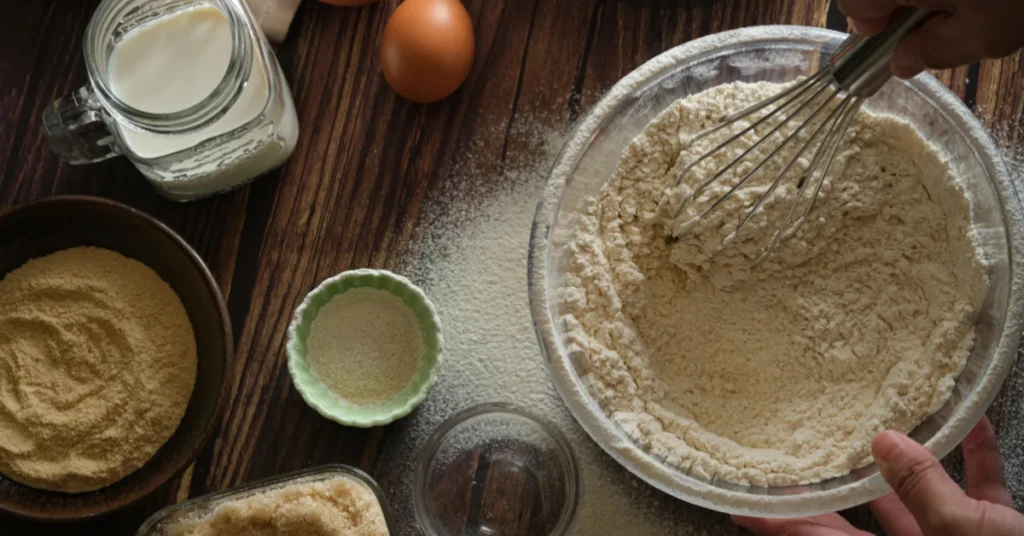
You put a box of baking soda in your fridge. A month later, the smell is still there. So does baking soda actually work, or has this been a myth the whole time?
The science is genuinely mixed.
Cook’s Illustrated ran a blind sniff test with sour milk, stinky cheese, and spoiled fish sealed in containers, some with baking soda added, some without. The results came back inconclusive. Some testers noticed a difference. Others could not tell the containers apart. Food writer Robert Wolke has argued that odor molecules rarely travel far enough inside a fridge to actually reach a box sitting on a shelf. If the smell and the baking soda are not close together, nothing gets neutralized.
On the other side, Arm & Hammer explains that baking soda is amphoteric, meaning it can react with both acidic and alkaline odor molecules and turn them into neutral, odorless compounds. In theory, this should work well against common fridge odors like sour milk or fish.
So which side is right? The honest answer is that both can be true at once. The chemistry behind baking soda is real, but most people are not using it in a way that lets that chemistry do its job. This is how to remove smell from fridge with baking soda the way it is actually meant to be used, not the way most people do it by default.
The fix is simple: stop using the sealed box.
- Open a fresh box of baking soda.
- Pour ⅛ to ¼ cup into a small, shallow bowl.
- Place the bowl close to the source of the odor, not just anywhere on a shelf.
- Replace it with fresh baking soda once a month.
A sealed box has almost no surface area exposed to the air. A shallow bowl multiplies that surface area and puts the baking soda in direct range of the smell. This single change is often the difference between baking soda that “doesn’t work” and baking soda that actually earns its reputation.
Baking soda is not a fix for spoiled food or a dirty drip pan. It only handles low-level, lingering odor once the real source is gone.
Natural Remedies Head-to-Head: Vinegar, Lemon, Coffee, and Charcoal Cost Breakdown
Not all natural fridge fixes work the same way or cost the same amount. Here is how the most common options compare, so you can pick the best refrigerator odor eliminator for your situation and your wallet.
Lemon works through citric acid, which is thought to neutralize amine compounds, the molecules responsible for fishy and sour smells. If you are searching for how to remove smell from fridge lemon style, place fresh lemon slices in a shallow bowl and swap them out every few days once they dry out. Lemon also leaves behind a citrus scent, so it functions partly as a masking agent too.
Vinegar breaks down mildew thanks to its acidity, which makes it useful for wiping surfaces where mold has taken hold. As a standalone odor fighter left sitting in a bowl, it works more like a mask than a true fix, since it brings its own strong smell into the mix.
Coffee grounds work the same way. They add a competing scent rather than trapping the original odor at the source.
Activated charcoal stands apart because of its surface area. It has far more surface area than baking soda, which means it can trap a larger volume of odor molecules in the same amount of space.
Here is where the real savings show up.
| Charcoal Type | Approx. Cost | Best For |
| Fridge-labeled charcoal sachets | About 81 cents per ounce | Convenience, ready to use |
| Aquarium or terrarium-grade charcoal | About 35 cents per ounce | Same material, DIY sachets |
Both types are the same activated charcoal. The fridge-branded version simply comes pre-packaged and priced for that market. Buying aquarium-grade charcoal from a pet supply store and filling your own small cloth pouch or sock gets you the same odor-trapping power for less than half the price.
Quick guide to choosing:
- Want a pleasant scent along with some odor control? Use lemon.
- Cleaning up mold or mildew? Use vinegar directly on the surface, not as a standing bowl.
- Want the strongest adsorption for the lowest cost? Buy aquarium-grade activated charcoal.
None of these remedies replace a proper deep clean. They work best as maintenance after the fridge is already clean and the real source of the odor is gone.
The “Still Smells” Decision Tree: Ranked Hidden Culprits Behind Persistent Odors
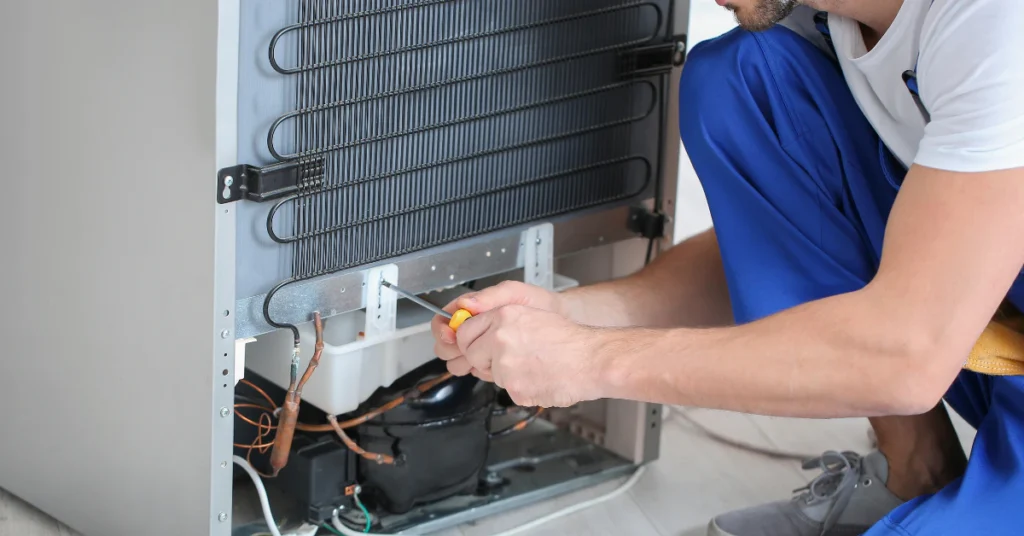
You cleaned every shelf, wiped every drawer, and the smell came right back. This means the source is not on the surface anymore. If you are dealing with fridge smells bad even after cleaning, work through this list in order. It is ranked from most likely to least likely.
The drip pan (most likely culprit).
Every fridge with an automatic defrost cycle has a drip pan somewhere near the bottom. It catches condensation from the defrost cycle, and that water can sit and turn foul over time. Because it is out of sight, most people never think to check it. Look at your owner’s manual to find the exact spot, since access varies by model.
Mold hidden in the door gasket folds.
The rubber seal around the door has folds that trap crumbs and moisture. Mold grows easily here, and a quick wipe of the flat surface often misses it. Pull the folds open and check inside them directly.
A clogged internal defrost drain hole.
This is different from the drip pan. It is a small drain opening, often at the back of the fridge interior, that channels melted frost down toward the drip pan. If it clogs with debris, water backs up and starts to smell. This is the source people are often searching for when they describe bad smell from fridge back sections.
Evaporator coil debris behind the freezer back panel.
If the smell has made it this far down the list, check behind the plastic panel at the back of the freezer. Dust, mold, or standing water can build up around the coil. This step is more involved and may be model-specific, so check your appliance’s manual before removing any panel.
Porous plastic shelves and liners.
Strong-smelling foods like onions, garlic, and fish can soak into plastic surfaces over time. Once the odor is absorbed into the plastic itself, no amount of surface cleaning will fully remove it. Replacement may be the only real fix at this stage.
Non-food mechanical or electrical issues.
Rarely, the smell is not food-related at all. A dead pest that got inside, a burning or chemical smell from an electrical fault, or spoilage from a past power outage can all cause lingering odor unrelated to anything currently on the shelves.
Work down this list one step at a time. Most persistent odors get solved by step one or two. If you reach step five or six, the smell has likely been building for a long time, and a repair technician may be worth calling for anything involving the coil or electrical components.
Frequently Answered Questions
What will absorb odors in a fridge?
Baking soda and activated charcoal are the two main odor absorbers. Both work through adsorption, meaning they give smelly gas molecules a surface to stick to instead of just covering up the smell. Activated charcoal has more surface area than baking soda, so it tends to trap more odor overall.
What can I put in my fridge to stop the smell?
An open box or shallow bowl of baking soda works well as a low-cost option. Activated charcoal sachets offer stronger results. Lemon slices, coffee grounds, or a small dish of vinegar can also help, though these tend to mask odor with their own scent rather than removing it completely.
Does baking soda really absorb odors in the refrigerator?
The science here is mixed. A blind sniff test by Cook’s Illustrated found the results inconclusive, and food writer Robert Wolke has argued that odor molecules rarely travel far enough to reach a sealed box. At the same time, Arm & Hammer points to baking soda’s amphoteric chemistry, which lets it react with both acidic and alkaline odors. In practice, baking soda works best when poured into an open, shallow bowl placed near the smell, not left sealed in its box.
Why does my fridge still smell even after I’ve cleaned it?
The source is likely hidden. Common culprits, in order of likelihood, include a dirty drip pan, mold in the door gasket folds, a clogged internal defrost drain, buildup on the evaporator coil, or odor that has soaked permanently into porous plastic shelving.
How do I get a stinky smell out of my fridge?
Start by removing all food and tossing anything spoiled. Wash the interior with hot water and detergent, sanitize with a diluted bleach solution, rinse fully with plain water, and air the fridge out. If the smell remains, check the hidden spots listed above before assuming the fridge itself is the problem.
Will a bad smell eventually go away?
Not on its own. The smell will keep coming back as long as its source, whether spoiled food, mold, or standing water in the drip pan, is still there. Once you find and remove the actual source, the odor should clear within a few days.
If a smell truly cannot be removed after trying every step above, USDA guidance says the appliance may need to be discarded. Before getting rid of an old refrigerator or freezer, always remove the door or disable the latch completely, since an unlocked door prevents a child from becoming trapped inside.