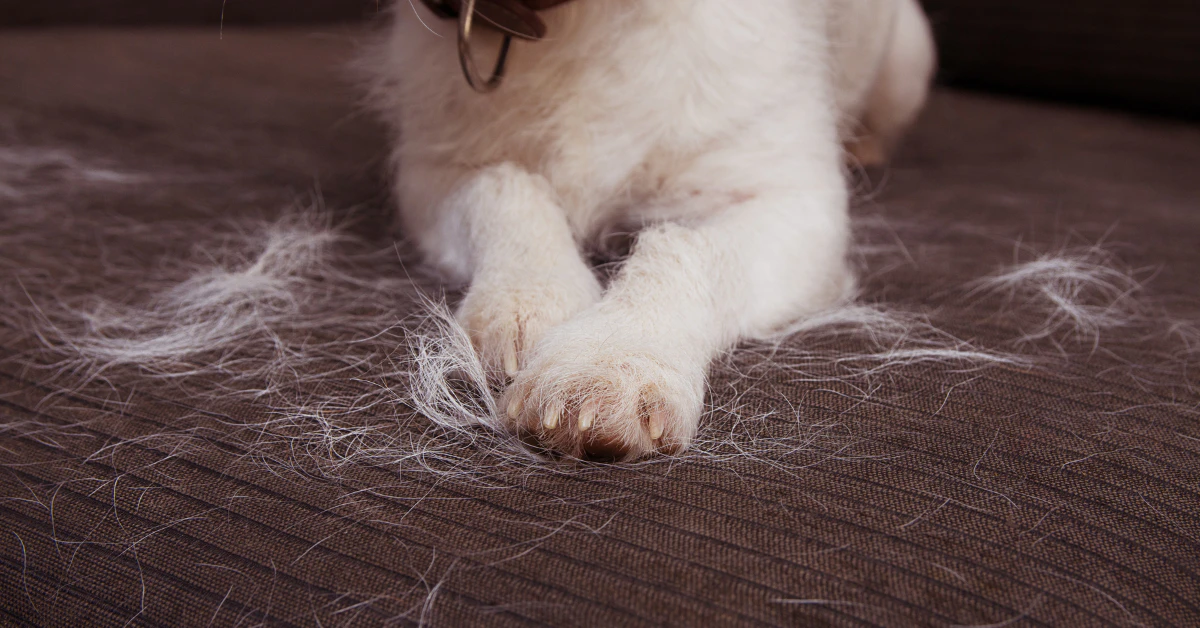
You cannot stop dog shedding completely. Shedding is a natural process, and it can only be managed, not ended. The good news is that the right habits can cut the mess down a lot. Expect less hair, not zero hair.
I get how tired you are. I have swept the same floor twice in one hour. I have worn black pants and left the house covered in fur. It feels like the hair wins every time.
Here is what helps me stay calm. Shedding is a sign the coat is working. Old hair falls out so new hair can grow. The Animal Humane Society agrees there is no way to stop it completely.
So I will not promise a hair-free home. I will show you real dog shedding solutions that cut the fur and keep your dog safe. Less hair is a win. That is a real one.
The Sneaky Reason Your Dog Sheds Year-Round
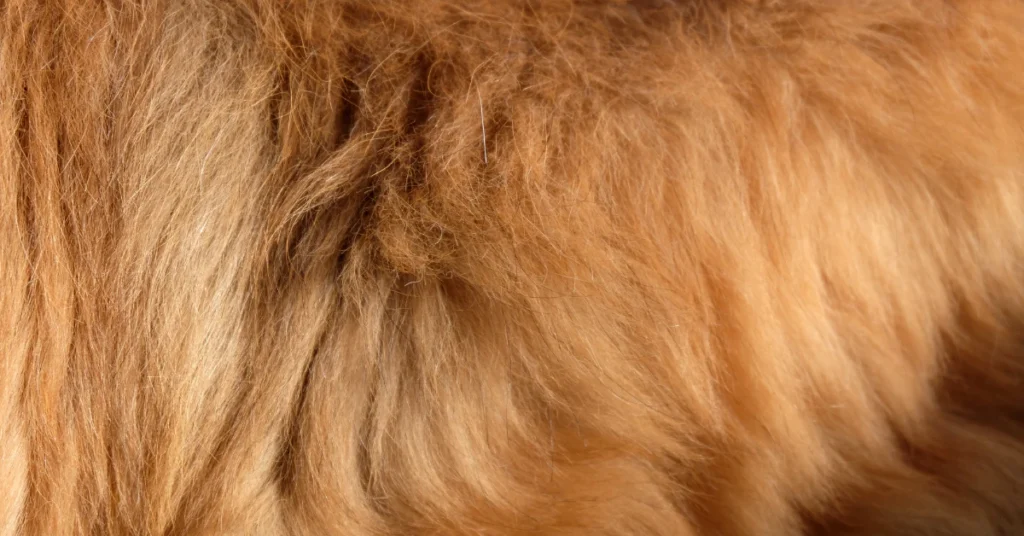
Dog hair grows in cycles. Each hair grows, rests, and then falls out so a new one can take its place. This is why shedding never fully stops.
Most dogs follow a seasonal pattern. Hair grows the most in summer. Shedding picks up in spring and fall. Dogs with double coats show this the most. The Animal Humane Society explains that their undercoat changes between seasons. Dogs with a single coat tend to shed about the same amount all year.
So why does your dog shed in January? Why does the hair keep coming?
Here is the sneaky part. Artificial light can confuse a dog’s coat. According to Embark Vet, consistent indoor light acts like daylight. That interrupts the natural daylight cycle an outdoor dog would follow. Dogs that live under lamps and ceiling lights may shed all year.
How common is it? In Embark’s health survey, almost 47% of owners said their dog sheds year-round. That is nearly half.
This changed how I think about my own dog’s hair. I used to wonder what I was doing wrong. Now I know that my living room lights may be part of it.
You cannot turn off every lamp. But knowing the cause means you can stop blaming yourself. It also means steady, daily habits will work better than waiting for “shedding season” to end.
Brushing and Deshedding Tools: More Isn’t Always Better
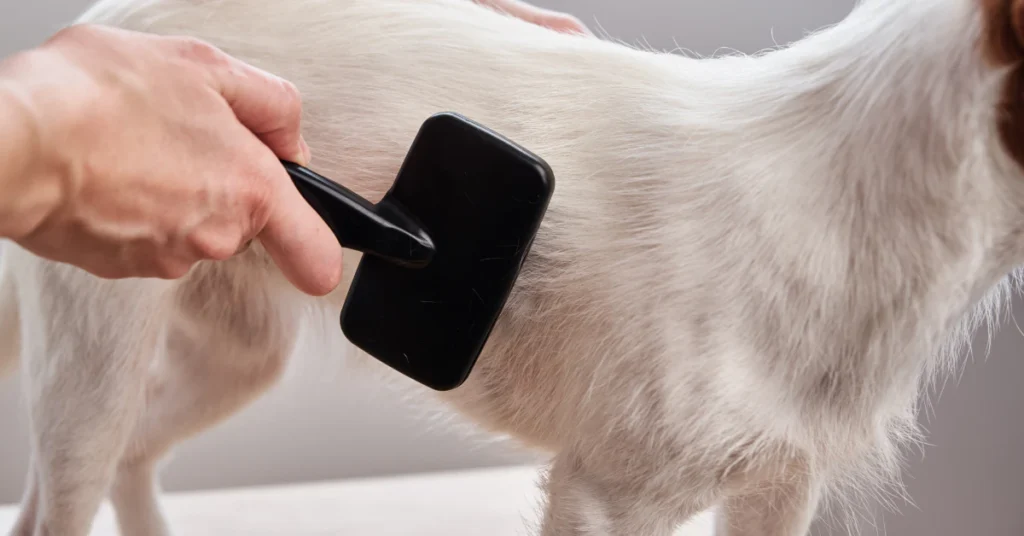
Brushing is the habit that helps me the most. It pulls loose hair out before it lands on my couch.
The Animal Humane Society says to brush your dog every couple of days, no matter how long the coat is. Short coat or long coat, the schedule stays the same.
Pick the Right Brush
The best brush depends on your dog’s coat. Here are two common options:
- Comb or pin-head brush: works well for general use.
- Slicker brush: works especially well for removing dead hair.
Not sure which one fits your dog? A vet or groomer can point you to the right tool.
Follow the Rules for Deshedding Tools
Deshedding tools like the Furminator can pull out a lot of loose undercoat. When I’m tired of the fur, I’m tempted to use one every day. That would be a mistake.
The manufacturer sets clear limits. These rules are brand-specific, so other tools may have different directions.
- Use it only 1 to 2 times a week.
- Keep each session to 10 to 20 minutes.
- Use it on a completely dry coat.
- Remove mats and tangles first. The manufacturer suggests its dematting tool, a grooming rake, or a slicker brush.
- Choose the right tool for your dog’s coat type and size.
Too much pressure or too much use can irritate your dog’s skin. Using the wrong tool on the wrong coat can also cause damage.
Safety warning: Deshedding tools have sharp blades. Store them out of reach of small children.
Why Harder Is Not Better
When the hair keeps coming, it feels logical to brush longer or press harder. It won’t fix the problem, and it might hurt your dog.
Remember the lights from the last section. If your dog sheds year-round, steady care works better than one big brushing session. A few calm minutes every couple of days beats a long, rough one.
If your dog pulls away or the skin looks red, stop. Skin that looks irritated is a reason to call your vet, not a reason to keep brushing.
Bathing Rules and the High-Velocity Dryer Secret
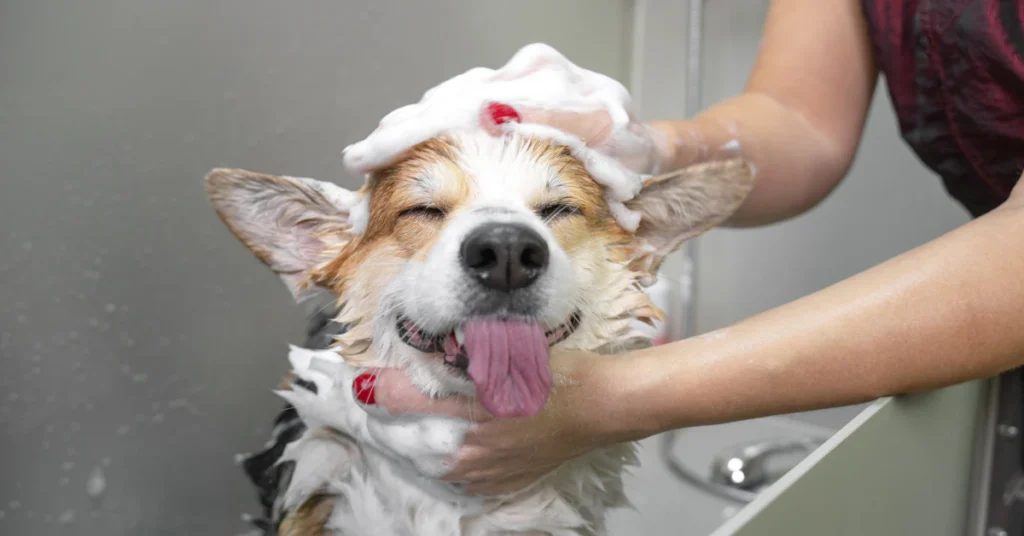
How often should you bathe a dog? The advice online clashes, and it confused me too.
The Animal Humane Society says every two to four months. The exception is a dog that gets dirty or smelly, or one with vet instructions. The AKC gives no fixed number. It says to bathe your dog when it is no longer “huggable.” One groomer in the AKC article says dogs with medium to large coats may need a bath anywhere from weekly to every four to six weeks, if the coat is well kept in between.
So who is right? All of them, for different dogs. Coat type, lifestyle, and skin health decide the schedule. If your vet gave you a plan, follow it. Always use dog shampoo. Brush first to remove loose hair and mats.
The Groomer Trick: The High-Velocity Dryer
Groomers use a high-velocity dryer. It blasts air to lift loose undercoat out of a wet coat. Groomers and many owners say it removes more hair than brushing alone. That comes from groomer experience, not a lab test.
It has no heating element, but the air can feel warm after running a while. Many people leave this step to a pro.
Safety warning:
- High-velocity dryers are loud. Wear hearing protection.
- Do not use them on young puppies, seniors, or dogs with stressful health conditions.
- Keep the air away from the face and ears. Groomers switch to a gentler dryer for the head.
- I also would skip it for a dog that panics at bath time. Stress is not worth it.
Diet, Oils, and Supplements: Separating Fact from Fiction
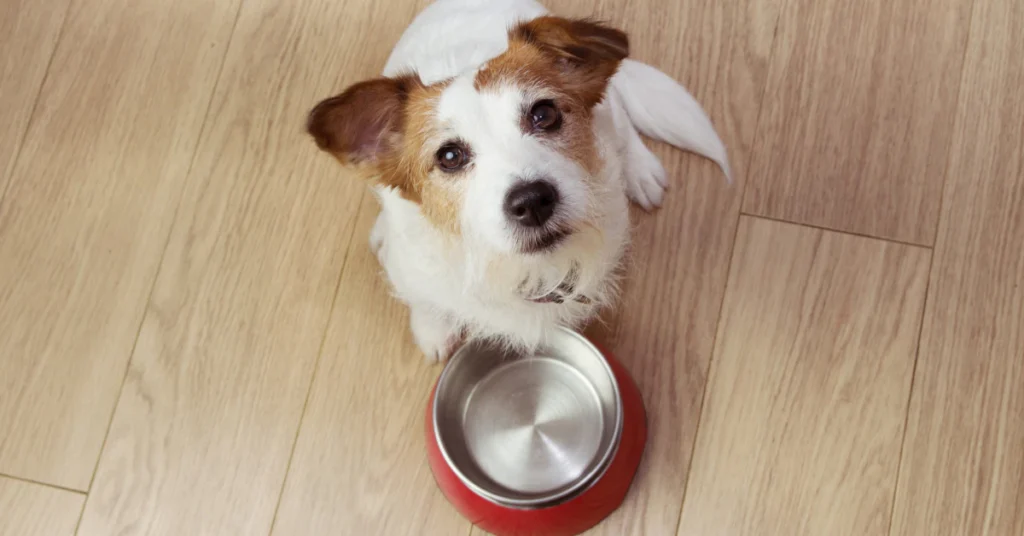
Food can help your dog’s coat. The Animal Humane Society says to look for dog food labeled “nutritionally complete.” A balanced diet supports strong hair. A kitchen “hack” does not replace one.
I have seen plenty of shedding tips online that sound easy. Some are risky. Let me sort them out.
The Molasses Myth
Some blogs say to add molasses to your dog’s food. I would skip it. Molasses is sugar. It is a risk for dogs with diabetes. Blackstrap molasses has the least sugar, but it is still sugar. I found no credible source showing that molasses reduces shedding.
Olive Oil and Coconut Oil
One tablespoon of olive oil has about 119 calories and 14 grams of fat. WebVet says there is no established dose for dogs. It also says there is no good proof it works as a coat treatment.
Safety warning: Olive oil and coconut oil are high in fat and calories. They carry a pancreatitis risk, and there is no established safe dose. Ask your vet first, especially if your dog is overweight or has had pancreatitis. If your vet approves olive oil, use plain oil only, never garlic or herb oils.
Coconut oil follows the same caution. A vet quoted by Healthy Paws pet insurance says dogs prone to pancreatitis should avoid it.
Fish Oil and Omega-3s
Vets often point to fish oil over olive oil. Hepper’s vet-reviewed guide says fish and krill oils are better choices.
Still, fish oil is not harmless. The AKC’s chief veterinarian, Dr. Jerry Klein, warns that it can upset the stomach. Long-term use with grain-based food may use up the dog’s vitamin E. Other possible problems include weight gain, pancreatitis, slow wound healing, and allergic reactions.
Safety warning: Talk to your vet before giving any fish oil or omega-3 supplement. Many dog foods already contain fish oil. Your vet can tell you if your dog needs more.
I am not giving an amount here. Only your vet can set one for your dog.
Safety warning: Keep all supplements and oils out of reach of children and pets.
Cleaning Up the Hair (And One Popular “Hack” to Avoid Completely)
Even with great grooming, some hair will land on your furniture. Here are simple ways to pick it up.
Safe Ways to Remove Dog Hair
- Lint roller: a vet quoted by PetMD likes 3M lint rollers for quick pickups on clothes and furniture.
- Lint brush: works well on couches and clothes.
- Masking tape: wrap a strip around your hand, sticky side out, and press it on the fabric.
- Rubber squeegee: drag it across upholstery to bunch hair into piles.
All four come from AKC’s list of safer options. Wash your dog’s bedding often, too. Forbes recommends beds with removable covers that are easy to clean.
The Hack I Want You to Skip
You may have read that you can wipe baseboards, furniture, or even your dog with a dryer sheet. Please don’t.
Safety warning: Dryer sheets contain cationic detergents. These are corrosive if swallowed and can burn the mouth, throat, and stomach. Dryer sheets also leave a residue on whatever they touch. Dogs lick their fur and the places where they rest. Used sheets can also cause a blockage. The AKC says the safest choice is not to use dryer sheets around pets at all.
If your dog may have licked or eaten one, call right away:
- Pet Poison Helpline: (855) 764-7661
- ASPCA Animal Poison Control: (888) 426-4435
Do not make your dog vomit unless a vet or poison line tells you to. Corrosive items can do as much harm coming up as going down.
A Note on Air Purifiers
Some owners add an air purifier for floating hair and dander. I’m not recommending a brand. If you buy one, choose an ozone-free unit. Look for a CARB certification, and check the California Air Resources Board’s list before you buy.
The Shaving Shortcut: Why You Shouldn’t Do It
I have stood there with a lint roller, wondering if shaving my dog would end this. If you’ve had that thought, you are not alone.
But shaving is not a fix. It does not stop shedding. For a double-coated dog, it can cause real harm.
Safety warning: A double coat has a soft inner layer that works as insulation. It helps keep a dog warm in cold weather and cool in hot weather. Shaving takes that layer away. The AKC’s chief veterinary officer says this makes a dog more likely to get heatstroke. It can also lead to improper hair growth and follicle damage.
Rover adds that heavy-coated dogs shaved close to the skin may develop post-grooming alopecia. The hair grows back unevenly, with bald patches or thin, wispy fur.
So when is shaving okay? The AKC names two reasons: surgery, or as a last resort when a coat is so matted you can’t brush it. Even then, a groomer or vet should guide you.
If you feel at your limit, do this instead:
- Brush every couple of days.
- Try a professional groomer visit, since groomers know safe ways to remove loose undercoat.
- Keep up the cleanup habits from the last section.
When Shedding is a Red Flag: Seeing the Vet
Heavy shedding is annoying, but it is often normal. Your dog’s usual amount is the best guide. Forbes quotes an animal nutritionist who says healthy dogs can shed a lot or very little. What matters is a change from your dog’s own pattern.
So how do you tell the difference? Watch for these red flags:
- Patchy or clumped hair loss: hair coming out in clumps or leaving bare areas.
- Redness or skin irritation: pink, sore, or scabby skin.
- Bald spots: areas with no hair at all.
- Lots of scratching or licking: your dog can’t leave a spot alone.
- A dull, dry coat: Embark says this can point to a nutrition problem.
- Hair loss with more drinking and peeing: Embark links this to hormone issues.
These signs can be linked to allergies, parasites like mites, ringworm, hormonal conditions, infections, or stress. Embark notes that mites often cause hair loss on the face and feet with itchy, red skin. Ringworm tends to cause patchy hair loss.
Safety warning: I’m not a vet, and this article does not give medical diagnoses. If you see any of these red flags, book a vet visit right away. Do not treat it at home.
Also, don’t start a new supplement or oil to “fix” it first. Let your vet find the cause.
If your dog has none of these signs, take heart. The hair is a mess, but it is normal. Keep brushing, keep cleaning, and keep your dog safe.
Conclusion
You won’t end dog shedding, and that’s okay. What you can do is cut the mess down and keep your dog safe while you do it.
Start with the basics: brush every couple of days, bathe by your dog’s needs, and clean up with a lint brush or squeegee. Skip the dryer sheets, the molasses, and the clippers. Check with your vet before adding any oil or supplement.
Some days there will still be hair on the couch. That is normal. A little less every week is real progress.
Frequently Asked Questions
Can you stop a dog from shedding completely?
No. Shedding is a natural process, and it can only be managed, not stopped. Regular brushing, a balanced diet, and steady cleanup can reduce how much hair ends up in your home.
Why does my indoor dog shed all year?
Artificial light may be the reason. Embark Vet explains that steady indoor light acts like daylight and disrupts the natural daylight cycle. In Embark’s survey, almost 47% of owners said their dog sheds year-round.
How often should I brush my dog to reduce shedding?
Brush every couple of days, no matter how long the coat is, according to the Animal Humane Society. If you use a deshedding tool like the Furminator, the manufacturer says to use it 1 to 2 times a week for 10 to 20 minutes, on a dry coat with mats removed first. These limits are brand-specific.
How often should I bathe my dog?
It depends on the dog. The Animal Humane Society says every two to four months, unless your dog is dirty or smelly or your vet gives other directions. The AKC says to bathe when your dog is no longer “huggable.” Use dog shampoo only, and brush first.
Should I shave my dog to stop shedding?
No, not a double-coated dog. Shaving does not stop shedding. It removes the dog’s natural insulation, raises the risk of heatstroke, and can cause uneven regrowth. The AKC says the only reasons to shave are surgery or a severely matted coat as a last resort.
When is dog shedding a sign of a health problem?
Watch for patchy or clumped hair loss, redness, bald spots, or a lot of scratching and licking. These can be linked to allergies, parasites, or hormonal conditions. This article does not give medical diagnoses. If you see these signs, book a vet visit right away.