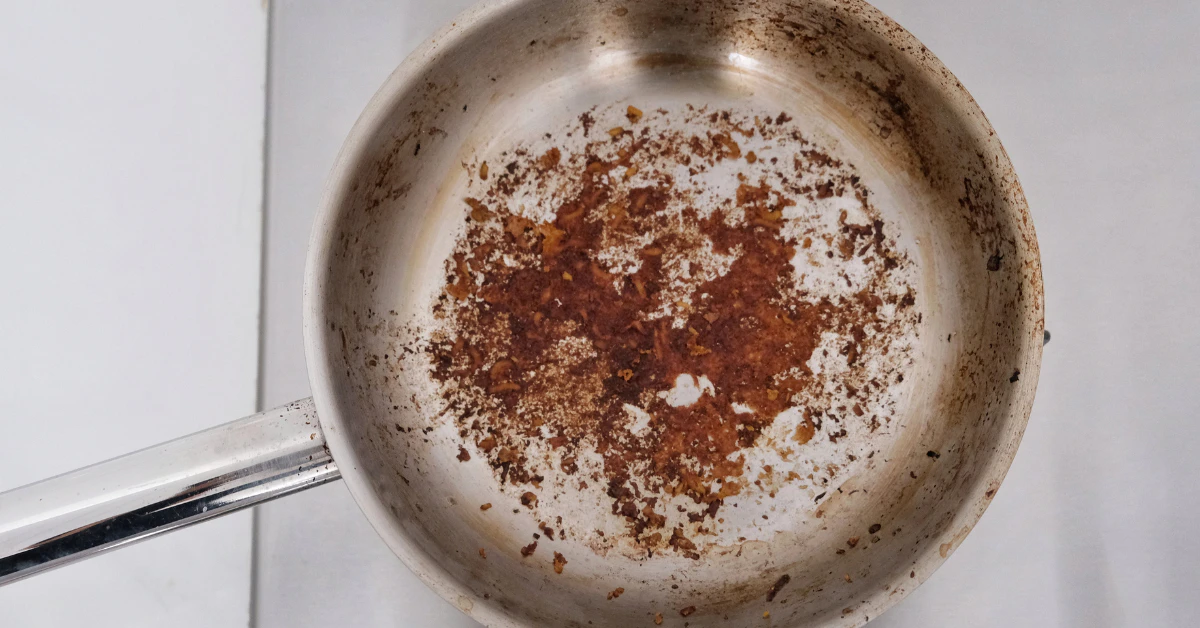
Got a burnt pan right now? Here’s the fastest fix. Never use aluminum foil, steel wool, or dry abrasive powders on non-stick pans. If your pan is stainless steel or enamel, make a paste of baking soda and a little water, then scrub with a crumpled ball of aluminum foil. In The Kitchn’s testing, this cleaned a burnt pan in about 3 minutes flat. If your pan is non-stick, skip the foil completely. Instead, add warm water and a drop of dish soap, let it simmer gently, then wipe with a soft sponge. One more thing: always let a hot pan cool before adding cold water. It can warp the metal.
Pan Material & Burn Location Decision Matrix
Not every burnt pan needs the same fix. Use this table to find your pan type fast.
| Pan Material | Burn Location | Best Method | What to Avoid |
| Stainless Steel | Inside bottom | Baking soda paste + foil scrub | Steel wool on polished finishes |
| Stainless Steel | Outside scorch ring | Baking soda paste, let it sit, then scrub | Submerging or boiling (won’t reach it) |
| Non-Stick (PTFE) | Inside bottom | Warm water + dish soap simmer, soft sponge | Foil, steel wool, dry baking soda scrubbing |
| Cast Iron | Inside bottom | Coarse kosher or sea salt scrub | Soaking overnight (causes rust) |
| Bare Aluminum | Inside bottom | Baking soda paste, rinsed off right away | Letting baking soda sit for long periods |
| Copper | Inside bottom | Same as stainless steel | Harsh acids left on too long |
A quick heads up on aluminum: baking soda can oxidize bare, uncoated aluminum and leave dark discoloration behind if it sits too long. Rinse it off as soon as you’re done scrubbing.
Here’s something many people get wrong. That bluish or rainbow-colored sheen on a stainless pan isn’t burnt food at all. It’s called heat tint, and it happens from high heat alone. No amount of scrubbing will remove it, but a quick wipe with vinegar usually clears it right up.
Worried that letting a pan sit overnight made things worse? For stainless or non-stick, don’t stress. The stain won’t bond permanently. Cast iron is the one exception. Never let it soak overnight, since standing water leads to rust.
The Fastest Inside Fixes for Stainless Steel & Enamel
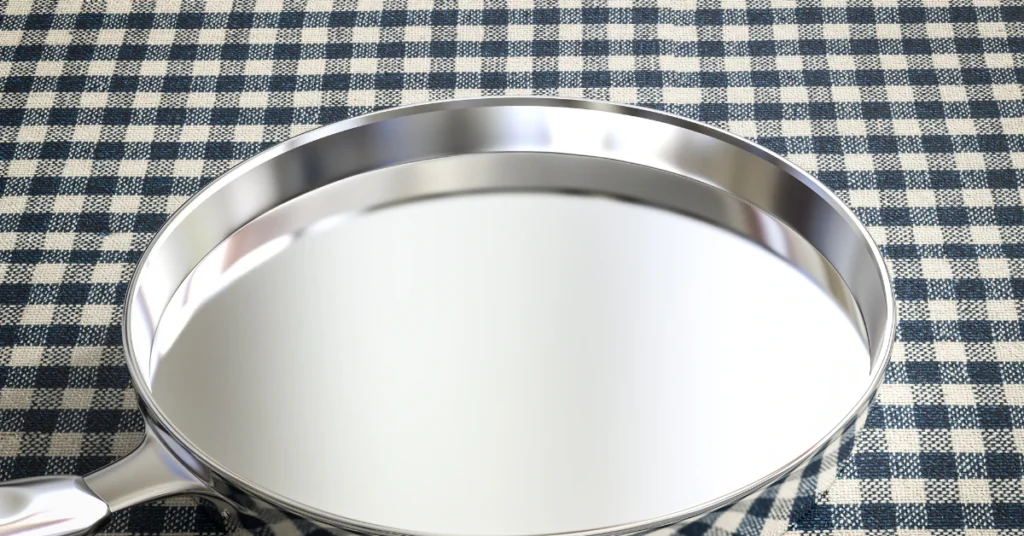
If your pan is stainless steel or enameled, these two methods will get it clean with the least effort. Both were timed in real testing, so you know what to expect.
Baking Soda Paste and Foil
- Let the pan cool completely before you start.
- Sprinkle 2 to 3 tablespoons of baking soda over the burnt area.
- Add a little warm water, just enough to turn the baking soda into a thick paste.
- Crumple a piece of heavy-duty aluminum foil into a ball about the size of a golf ball.
- Scrub the paste in small circles using the foil ball.
- Rinse and check your progress. Repeat if any spots are stubborn.
This is the method you want when you’re in a hurry. In The Kitchn’s controlled testing, it cleaned a badly burnt stainless steel pan in about 3 minutes and earned a perfect 5 out of 5 rating. The foil acts like gentle sandpaper. It’s rough enough to lift burnt food but won’t scratch stainless steel the way steel wool can.
Dishwasher Tablet Scrub
- Warm the pan slightly on low heat, just enough to loosen things up.
- Wet the burnt area lightly.
- Rub a standard dishwasher detergent tablet directly over the black crust, like you’re using an eraser.
- Rinse the pan thoroughly with warm, soapy water.
This runner-up method also worked fast in testing, cleaning a pan in 3 to 5 minutes. The tablet does double duty as both scrubber and detergent, so there’s less mess overall.
One quick note if you have a bare aluminum pan. Baking soda paste still works well on it, but don’t let it sit around after you’re done scrubbing. Rinse it off right away. Leaving baking soda on aluminum too long can cause the metal to oxidize and darken.
The Vinegar Method: Why the “Fizz Trick” Fails (And How to Do It Right)
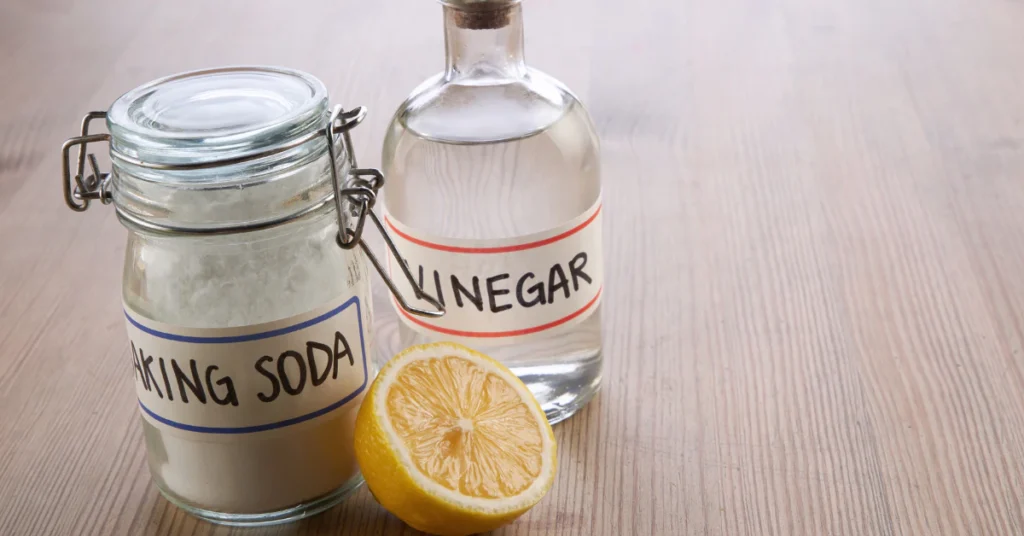
You’ve probably seen this trick online a hundred times. Cover the scorched food with water, add a cup of white vinegar, bring it to a boil, pull the pan off the heat, and dump in some baking soda. It fizzes up dramatically, so it feels like it’s working.
Here’s the problem. In The Kitchn’s controlled testing, this exact method took 25 minutes and the pan still wasn’t fully clean. Testers had to go back in for a second round of scrubbing. It scored just 1 out of 5.
So why does the trick that’s all over the internet actually underperform? The answer comes down to basic chemistry. Vinegar is an acid. Baking soda is a base. When you mix them together, they react and fizz up, releasing carbon dioxide gas. That fizzing feels powerful, but it mostly just cancels both ingredients out, turning them into salty water. You lose most of the cleaning strength from each one.
Quick safety note here: this reaction is completely harmless. Unlike bleach and ammonia, which should never be mixed, vinegar and baking soda create nothing more dangerous than fizzy gas. It’s just not very effective cleaning power.
The fix is simple. Use the two ingredients one at a time instead of together.
- Pour in water and 1 cup of white vinegar, with nothing else added yet.
- Simmer for 5 to 10 minutes. The acid alone needs this time to break down the stuck-on residue.
- Pour out the vinegar water and let the pan cool slightly.
- Make a wet baking soda paste and spread it over any dark spots still left.
- Scrub with a non-abrasive pad.
This way, the vinegar gets to do its full job first, and the baking soda gets to do its full job second. No fizzing, no wasted cleaning power.
How to Clean Burnt Pan Outside Bottoms (Scorch Rings)
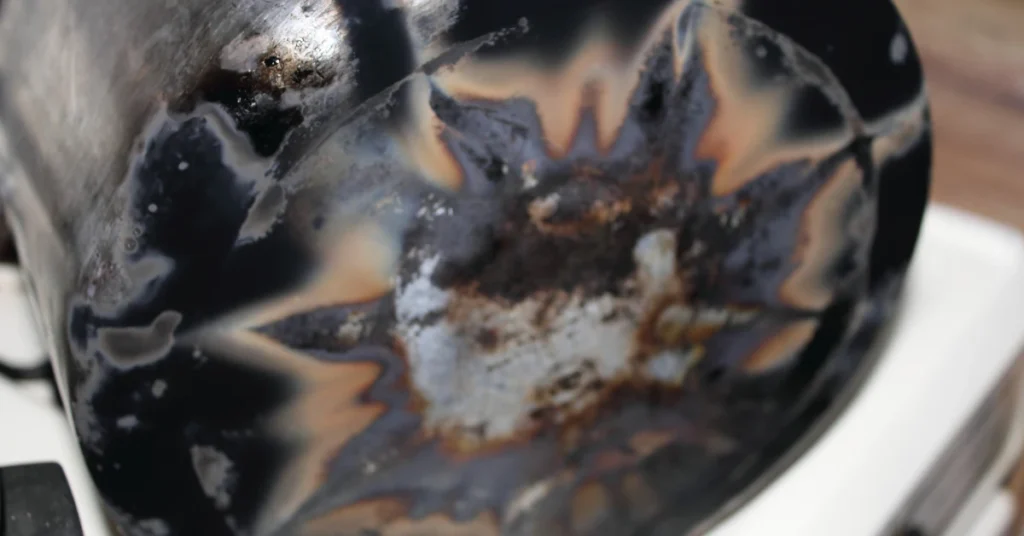
Here’s where most guides let you down. They tell you to boil water and vinegar inside the pan, but that does nothing if the mess is on the outside. Maybe a sauce boiled over the edge, or the bottom got scorched sitting over a flame. You can’t exactly simmer the outside of a pan on your stove.
For exterior burns, you need a different approach. It’s called paste-and-sit, and it’s simple.
- Make sure the pan is fully cooled.
- Flip it upside down in the sink, or set it on an old towel.
- Mix baking soda and water into a thick paste, using about 3 parts baking soda to 1 part water.
- Spread the paste generously over the burnt ring on the bottom.
- Let it sit undisturbed for 10 to 15 minutes. This gives the paste time to soften the baked-on grease.
- Scrub with a scouring pad or a crumpled ball of foil.
- Rinse well.
If any rainbow or blue discoloration remains after the burnt residue is gone, that’s heat tint, not a stain. Soak a paper towel in white vinegar and wipe the area. It should clear right up.
This method works especially well on stainless steel bottoms, where the baking soda has time to really break through the stuck-on grease instead of just sitting on the surface for a few seconds.
How to Clean a Burnt Non-Stick Pan (And When to Toss It)
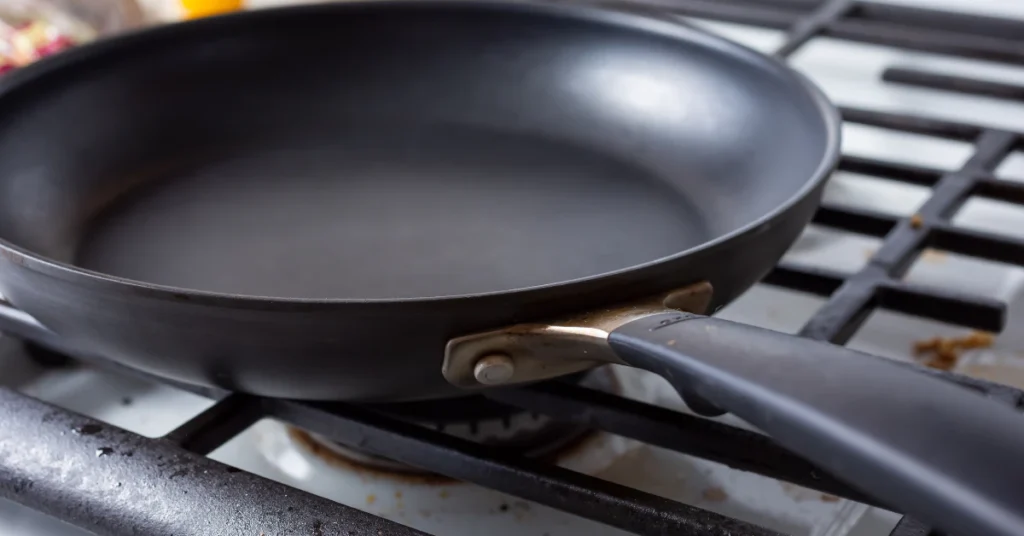
Non-stick pans need gentler treatment than stainless steel. Skip the foil and scouring pads here, and follow this instead.
- Let the pan cool completely.
- Add warm water and a few drops of dish soap.
- Simmer gently on low heat for 5 to 10 minutes. This loosens the burnt food without any scrubbing.
- Let it cool, then wipe with a soft sponge or a nylon scraper.
- If residue is still stuck, make a wet baking soda slurry and let it sit for 10 minutes before wiping it away gently.
Never use dry baking soda powder, foil, or any metal pad on a non-stick surface. It will strip the coating.
Use-It-or-Toss-It Check
Once the pan is clean, take a close look at the burnt spot. If it feels slightly raised and a little rough, that’s just leftover carbonized food, and your pan is fine. But if you see pitting, peeling, flaking, or bare metal showing through, the coating itself is damaged. At that point, it’s time to retire the pan.
Important Safety Warning: Non-Stick Overheating
If your non-stick pan was heated empty, or got hot enough to actually damage the coating (not just burn the food on it), there’s a real health risk worth knowing about. It’s called polymer fume fever, or “Teflon flu.” It happens when an overheated PTFE coating releases fumes, and it can cause flu-like symptoms such as chills, fever, and headache. According to America’s Poison Centers, there were 265 to 267 suspected cases reported in the US in 2023 alone, the highest number since 2000. Manufacturers advise never heating a non-stick pan above 500°F, and never leaving one empty on a hot burner.
This is different from simply eating burnt food. The FDA has studied acrylamide, a compound that forms in burnt starchy foods, and while it caused cancer in animal studies, a clear link to everyday human exposure hasn’t been established. As long as your pan’s coating is intact, scraping off burnt food and reusing the pan is completely safe.
Cast Iron & Copper: Cleaning Burnt Pans Without Baking Soda
Out of baking soda, or working with cookware that needs special care? These pantry-staple methods work just as well for cast iron, copper, and stainless steel.
Seasoned Cast Iron: Coarse Salt
Skip fine table salt here. It dissolves too quickly to work as an abrasive. Coarse kosher or sea salt holds its grit longer, which is exactly what you need.
- Warm the pan slightly.
- Sprinkle in 2 tablespoons of coarse salt.
- Add a splash of oil or warm water.
- Scrub with a stiff brush or crumpled foil.
- Wipe clean.
There’s an old myth that soap ruins cast iron seasoning. It doesn’t. A little mild dish soap is fine. What actually damages cast iron is water. Never soak it. Dry it right away on low stovetop heat, then rub on a thin layer of oil while it’s still warm.
If rust shows up along with the burn, a diluted vinegar soak can help. Mix vinegar and water 1:1, and limit the soak to 30 to 60 minutes. Full-strength vinegar, or soaking overnight, will strip the seasoning and can actually eat into the raw iron underneath. Stick to the diluted, time-limited version only.
Stainless Steel and Copper: The Coca-Cola Simmer
This one surprises people, but it works. Pour 1 to 2 cans of a dark soda, like Coca-Cola or Dr. Pepper, into the burnt pan. Simmer for 30 to 60 minutes. The carbonic acid in the soda helps break down stubborn scorched food. Once it cools, scrub as usual.
Keep this method away from non-stick pans. The soda can discolor or damage the coating.
Any Pan: Boiled Lemons
Quarter 2 to 3 lemons and boil them right in the pan with some water for 5 to 10 minutes. The burnt crust loosens on its own, and you can scrape it away with a wooden spoon. In testing, this method scored a solid 4 out of 5.
Category Safety Checklist: Cookware & Chemical Guardrails
Quick guardrails to keep your pans, and your kitchen, safe.
- No mixing danger here. Vinegar and baking soda are safe to combine. You’ll just get harmless carbon dioxide bubbles and salt water. This is nothing like bleach and vinegar or ammonia, which should never be mixed.
- No abrasives on non-stick. Steel wool, foil, metal spatulas, and dry baking soda powder will all damage PTFE coatings. Once a coating flakes or peels, stop scrubbing and replace the pan.
- Watch the 500°F limit. Never preheat a non-stick pan empty, and never let it exceed 500°F. If a dry pan starts smoking heavily, turn on your exhaust fan, open a window, and watch for flu-like symptoms, a sign of polymer fume fever.
- Limit cast iron’s acid exposure. Never soak cast iron in water. Never leave it in vinegar longer than 30 to 60 minutes, even diluted, or the acid will pit the bare iron underneath.
- Rinse aluminum right away. Baking soda left sitting on bare aluminum causes dark oxidation stains, so rinse it off as soon as you’re done scrubbing.
Frequently Asked Questions
How do you clean a badly burnt pan?
Match the method to your pan. For stainless steel, scrub a baking-soda paste with crumpled aluminum foil (just 3 minutes in Kitchn’s testing), or simmer vinegar first, rinse, then follow with a baking-soda slurry. Severe burns may need an overnight soak.
How do you get black stuff off the bottom of a pan?
For the inside bottom, scrub a wet baking-soda paste with crumpled foil, or simmer water and vinegar together. For the outside bottom, where sauce boiled over, spread a thick baking-soda paste and let it sit 10 to 15 minutes before scrubbing, since you can’t simmer the exterior.
What can I use to clean a burnt pan?
Baking soda, white vinegar, coarse kosher salt for cast iron, crumpled aluminum foil, quartered lemons, a hard dishwasher detergent tablet, or 1 to 2 cans of Coca-Cola simmered 30 to 60 minutes work well. The soda trick is for stainless steel and copper only.
Can a burnt pan be restored?
Almost always, yes. Burnt black crust is usually just carbonized food, not permanent damage to the metal. The one exception is a non-stick pan whose coating has started flaking, peeling, or showing bare metal underneath. That pan needs to be replaced.
Is it bad to use a burnt pan?
Stainless steel and cast iron pans are totally safe once cleaned. A non-stick pan overheated past 500°F is a different story. It can release fumes linked to “Teflon flu,” with over 265 poison control cases reported in 2023 alone. Retire any pan with flaking coating.
Will baking soda clean a burnt pan?
Yes. In testing, it’s the most reliable all-around cleaner, whether mixed into a paste or a slurry. Always use it wet, never as a dry powder, if your pan is non-stick.
What shouldn’t you clean with baking soda?
On cookware, don’t let it sit on bare, uncoated aluminum, since repeated contact causes oxidation and dark spots. Never scrub it dry onto non-stick coatings. Outside the kitchen, keep it off glass or ceramic cooktops and polished stone too.
How long to let baking soda and vinegar sit on a pan?
A baking-soda paste needs 5 to 15 minutes, or overnight for a bad burn. Don’t let a combined vinegar-and-baking-soda mixture sit together though. The fizz cancels out both ingredients. Simmer the vinegar first, rinse, then apply baking soda on its own.
Will Coke clean a burnt pan?
Yes, on stainless steel or copper. Pour in 1 to 2 cans, simmer 30 to 60 minutes so the carbonic acid gets to work, let it cool, then scrub. Skip this one entirely on non-stick pans, since soda can discolor or damage the coating.
When to Call It Quits
If you’re holding a stainless steel, cast iron, or enameled pan right now, don’t give up. Even the worst-looking black crust is almost always cosmetic. A second round with baking-soda paste, or an overnight soak, will usually finish the job.
There’s really only one time to stop scrubbing for good. If your pan is badly warped, or your non-stick skillet has peeling, blistered, or scratched-through coating, set it aside. Retiring that pan isn’t giving up. It’s the smart call for your kitchen.