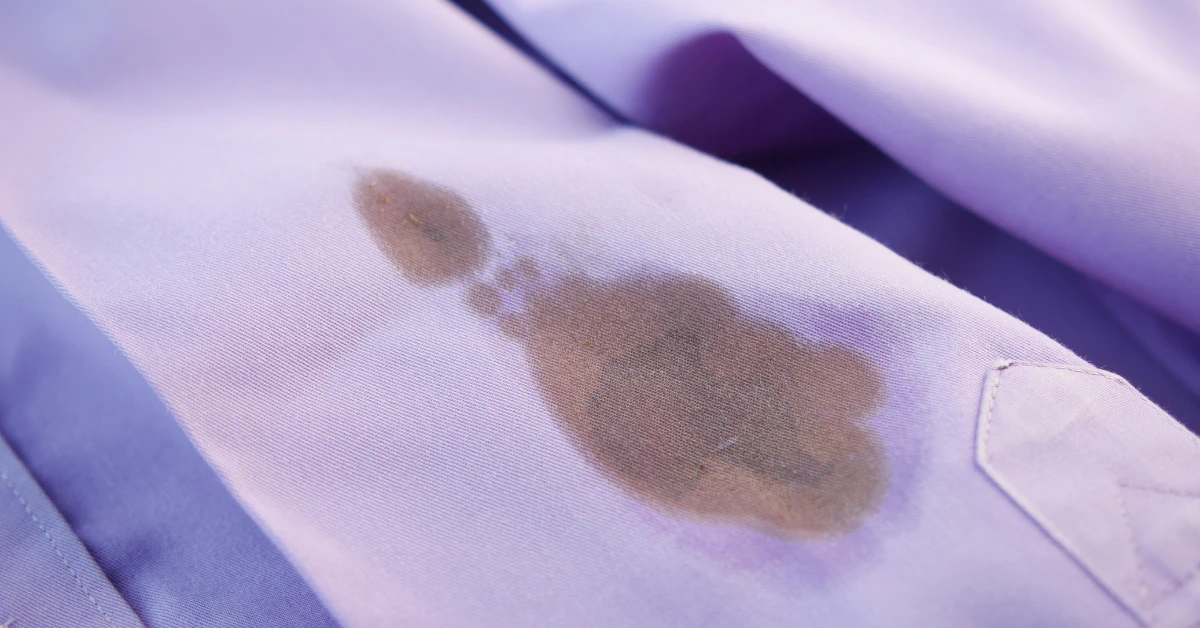
Blot the oil stain right away with a paper towel. Do not rub it. Add a few drops of dish soap straight onto the spot and rub it in gently. Sprinkle baking soda on top and let it sit for 15 to 30 minutes. Rinse with warm water, then wash as usual.
That’s the fast version. But oil stains don’t always show up at the best time. Maybe you just noticed one after the wash cycle. Maybe it’s already been through the dryer. Maybe you need the shirt clean in the next ten minutes and can’t run a full load.
This guide covers all of it. You’ll learn how to remove oil stains from clothes quickly, how to deal with stains that snuck past the washer, and how to try the baking soda and iron method when you can’t wash the item at all.
The Golden Rules of Grease Removal (Stop and Read First)
Before you touch that stain, follow these rules. Skipping them can turn a fixable spot into a permanent one.
Blot, never rub.
Press a paper towel or clean cloth onto the stain. Rubbing pushes the oil deeper into the fabric fibers and spreads it wider. Blotting lifts it up instead.
Keep the stain far away from the dryer.
This is the one rule you cannot break. Heat from a dryer bakes oil permanently into the fibers. Once that happens, the stain may never fully come out. Only put the item in the dryer after you’ve checked, in good light, that the stain is completely gone.
Never use bleach on a grease stain.
Bleach does not remove oil. It can actually set the grease further into the fabric, making the stain harder to treat.
Don’t toss a raw stain straight into a hot washing machine.
Running an untreated oil stain through a regular hot wash cycle in the washing machine often isn’t enough on its own. The oil needs to be broken down first with dish soap or baking soda before the wash cycle can finish the job.
The Standard Dish Soap & Baking Soda Routine
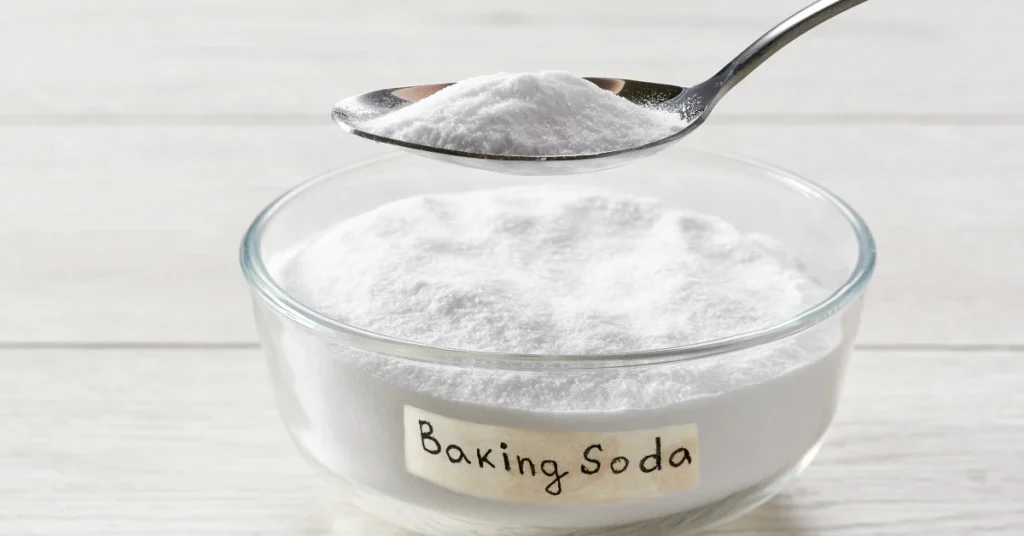
This is the go-to fix for most fresh oil stains. It combines two household items that work in different ways: one absorbs the oil, the other breaks it down.
Blot first.
Use a paper towel to blot up as much extra oil as you can before adding anything else.
Cover the stain with baking soda.
Sprinkle a generous layer of baking soda right over the stain. Baking soda works as a physical absorbent. It doesn’t dissolve the oil, it pulls it up and out of the fabric fibers. Let it sit for 15 to 30 minutes. If you don’t have baking soda on hand, cornstarch or talcum powder works the same way.
Brush off the powder.
Once the time is up, brush or shake off the baking soda. You should see it’s picked up some of the oil.
Apply dish soap directly to the stain.
Add a few drops of dish soap onto the spot and rub it in gently with your fingers. Dish soap is a surfactant, which means it’s built to cut through grease, the same way it cuts grease off a dinner plate.
Rinse and wash as usual.
Rinse the area with warm water, then wash the item in your regular laundry cycle.
One important note here. Dish soap brands like Dawn are meant for pretreating a stain, not for replacing your laundry detergent. Dawn’s own care guidance is clear that products like Dawn Platinum Powerwash should be used to pretreat stains or hand-wash a small load, not poured into the washing machine in place of detergent. Apply it to the stain by hand, then let your regular detergent handle the actual wash cycle.
How to Rescue “Already Washed” and Dried Stains
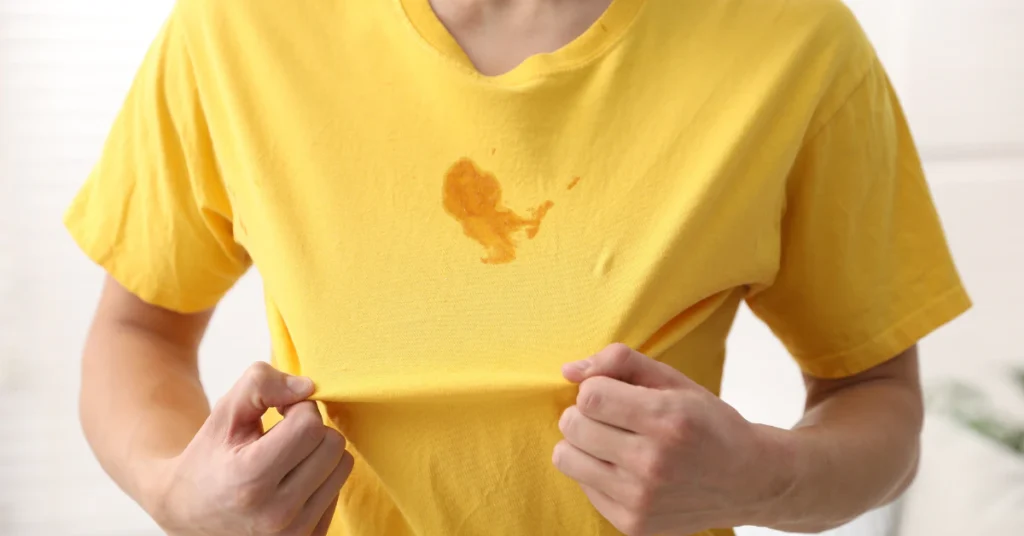
So you pulled the shirt out of the dryer and there it is, a spot that definitely wasn’t gone before. First, don’t panic. It’s harder to remove at this point, but it’s often still fixable.
How do you know if a stain is “set-in”?
There’s an easy test. A set-in stain is dry to the touch and looks darker than it did when it was fresh. If that describes what you’re looking at, treat it as set-in and skip straight to the stronger method below.
The rescue plan for set-in stains:
- Re-wet the stain. Dampen the area with a little warm water. This helps loosen the bond between the oil and the fabric.
- Make a paste. Mix baking soda with a small amount of dish soap until it forms a thick paste.
- Work it into the stain. Rub the paste gently into the fabric, covering the whole stained area.
- Let it sit overnight. For stains that have already been washed and dried, give the paste much longer to work, up to 24 hours. This extra time lets the baking soda pull out oil that’s already settled deep into the fibers.
- Brush off the dried paste.
- Wash in the warmest water your fabric allows. Check the garment’s care label first.
- Air dry and inspect. Once it’s dry, check the spot in good light before deciding what to do next.
If the stain is still there, don’t give up yet.
Set-in stains sometimes need two or three rounds of this process. Repeat the paste treatment and wash again. Just remember the golden rule from earlier: don’t put it in the dryer until the stain is completely gone, or you’ll undo your progress and bake it in for good.
It’s also worth knowing this is genuinely harder work than treating a fresh spill. The oil has had time, and heat, to settle in. But persistence with the same method, repeated a few times, is often what finally gets it out.
The “No-Wash” Iron Method for Same-Day Emergencies
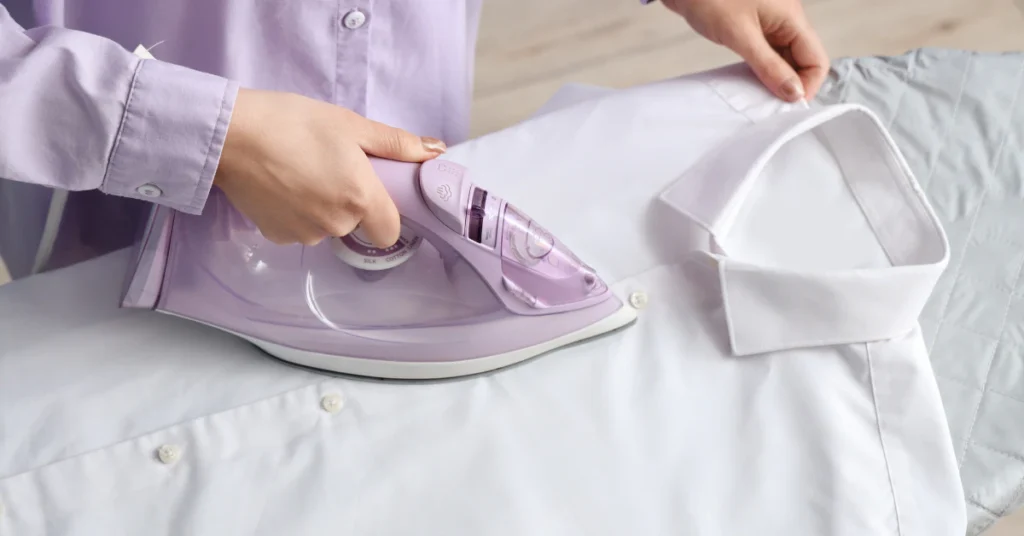
Sometimes you don’t have time for a wash cycle. You need the shirt in ten minutes, not after a spin and dry. For that, there’s a tested method that skips the washing machine entirely.
This method was put to the test by Tom’s Guide, and it works by pairing an absorbent powder with careful heat.
Rub baking soda into the stain.
Pour a small amount of baking soda onto the spot and work it in gently with your fingers.
Check your fabric’s care label.
This step matters more than it sounds like. Synthetic fabrics like polyester or acrylic can scorch or melt under an iron, even at settings that are totally safe for cotton. Check your garment’s care label and set your iron to a heat level it can actually handle.
Sandwich the stain with parchment paper.
Place a sheet of parchment paper over the stain, and another piece underneath it if you can.
Press with a warm iron.
Move the iron over the parchment paper. The heat helps draw the grease out of the fabric and into the paper, instead of the fabric itself.
Remove the paper and brush away the leftover baking soda.
Here’s the part you absolutely cannot skip. Never iron a stain that hasn’t been treated with baking soda first. Ironing raw, untreated oil does the opposite of what you want. The heat will permanently bond that oil to the fibers, turning a fixable stain into a lasting one. The baking soda has to do its absorbing work before any heat touches the fabric.
This method is a smart option if you’re in a jam and need to wear the item right away. You may still want to run it through a regular wash later, but unlike the baking soda and dish soap routine, you won’t be left with a damp patch to deal with first.
The Chemistry Check: Why You Shouldn’t Mix Vinegar and Baking Soda
You’ve probably seen this hack floating around: mix vinegar and baking soda into one paste and slather it on the stain. It sounds powerful. It isn’t.
Baking soda is a base. Vinegar is an acid. The moment they touch each other, they react and basically cancel each other out, leaving behind mostly water, carbon dioxide, and a substance called sodium acetate. That fizzing reaction you see isn’t cleaning power at work. It’s the two ingredients neutralizing each other before they ever get the chance to tackle the oil.
This isn’t a guess. A chemistry professor confirmed this directly, explaining that baking soda and vinegar basically cancel each other out when mixed together.
So does that mean skip vinegar entirely? No. It just means don’t combine them into one paste. If you want to use both, use them separately. Let the baking soda sit on the stain first to absorb the oil on its own. Then, after you’ve brushed off the baking soda, you can follow up with a separate vinegar and water rinse. Used one at a time, each ingredient actually gets to do its job.
Commercial Stain Removers: What the Pros Actually Use
If pantry ingredients aren’t cutting it, a dedicated stain remover might save the garment faster. Here’s how the most recommended products stack up, based on what cleaning pros and reviewers actually reach for.
| Product | Best For |
| Zout | An enzyme formula built specifically for grease and oil stains |
| OxiClean Max Force Spray | A color-safe, general favorite that works across most stain types |
| Shout Advanced | Handles both oil-based stains and protein stains like blood or sweat |
| Lestoil | A budget-friendly option that’s strong on grease, though it leaves a noticeable scent |
A few tips for using any of these:
- Spray or apply the product directly to the stain before washing, not after.
- Let it sit for the time listed on the label so it has a chance to break the oil down.
- Test it on a hidden spot first if you’re unsure how it’ll react with your fabric.
One warning worth repeating. Some forum threads suggest using garage solvents like brake cleaner or acetone on stubborn automotive grease stains. Don’t do this at home. These solvents are highly flammable and aren’t meant for use on clothing. If you’re dealing with a heavy motor oil or automotive grease stain that regular products can’t touch, that’s a job for a professional dry cleaner, not a DIY fix.
A Quick Guide to Fabric-Specific Care
Not every fabric handles stain removal the same way. Before you treat anything, test your chosen product on a hidden spot, like an inside seam, to make sure it doesn’t cause fading or damage.
Cotton and sturdy fabrics can usually handle the full range of methods in this guide, including higher iron heat and a firm scrub with dish soap.
Synthetics like polyester and acrylic need lower heat settings than cotton. Check the care label before ironing or using hot water, since these fabrics can scorch or melt more easily.
Delicates like silk, cashmere, and wool deserve a lighter touch. Stick to gentle blotting rather than scrubbing, and consider taking the item to a professional dry cleaner instead of pushing a DIY method that might stretch or damage the fibers.
Frequently Asked Questions
Will Dawn remove old oil stains?
It can help, especially when paired with a baking soda pretreatment first. But Dawn is meant to be used as a spot treatment, not a guaranteed cure for stains that are already deeply set. Older stains may need a few repeat rounds.
Does vinegar and baking soda remove oil stains?
Each one helps on its own, but mixing them together into one paste causes them to neutralize each other. Use baking soda to absorb the oil first, then follow up with a separate vinegar and water rinse.
Do oil stains eventually come out of clothes?
Often, yes, even after a trip through the wash and dryer. It just takes a more aggressive approach: absorb, degrease, wash, and repeat as needed.
How can I remove dried grease stains from clothes?
Re-wet the stain, apply a baking soda and dish soap paste, let it sit, then wash in the warmest water your fabric allows.
Can grease stains be removed after drying?
Yes, though it’s harder. Multiple rounds of treatment followed by air drying between checks give you the best shot.
What’s a hack for getting dried grease stains out of clothes?
The baking soda and iron method works well. Rub baking soda into the stain, sandwich it with parchment paper, and press with a warm iron suited to your fabric.
What is the best stain remover for oil and grease stains?
Zout and OxiClean Max Force Spray are two of the most recommended by cleaning pros, with Shout Advanced and Lestoil also popular picks.
How do you remove old hardened grease?
Repeat the absorb-and-degrease cycle a few times. For truly stubborn stains, a dedicated grease remover often works better than DIY pastes alone.
Can baking soda and iron be used to remove grease stains?
Yes. The baking soda absorbs the oil first, then the warm iron, used through parchment paper, helps lift it out. Never iron a stain before the baking soda has had time to work.
Conclusion
Oil stains feel like a disaster in the moment, but most of them aren’t permanent. Whether you catch it fresh, find it after the dryer, or need a same-day fix with just an iron, you now have a method that fits. Blot first, skip the bleach, keep heat away from untreated stains, and give it a second round if the first one doesn’t finish the job.