Gnats swarming your kitchen or houseplants? You need to know what kind you have before you can kill them fast.
If they’re near fruit or your sink, they’re likely fruit flies. Trap them with a bowl of apple cider vinegar and a few drops of dish soap. If they’re flying up out of your plant pots, they’re fungus gnats. Drench the soil with a 1:4 mix of 3% hydrogen peroxide and water to kill the larvae fast.
Those fixes work in hours, not days. But if you want gnats gone for good and not just today, you have to find and remove what’s feeding them. That’s the only way to get rid of gnats in the house quickly and keep them from coming back.
The #1 Reason Traps Fail: Misidentification
If your vinegar trap worked for a few days and then stopped, the trap isn’t broken. You’re probably fighting the wrong bug.
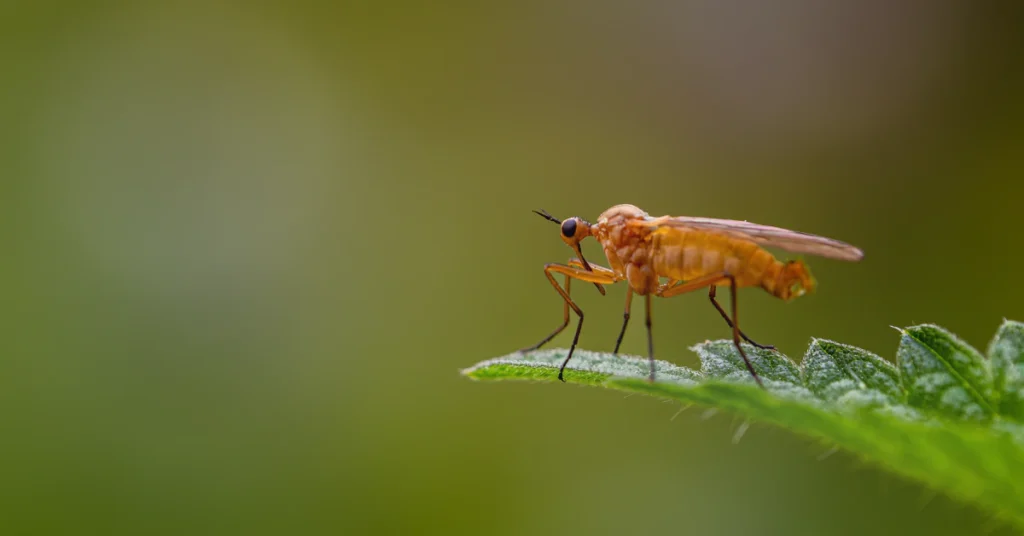
Fruit flies and fungus gnats get lumped together, but they’re not the same pest. They don’t breed in the same place, and they don’t respond to the same fixes. Using a fruit fly trap on a fungus gnat problem is like leaving cheese out to catch a mouse that only eats crumbs off the floor. Wrong bait, wrong target.
Here’s how to tell them apart:
Fruit flies
- Tan or brown body
- Red eyes (easy to spot)
- Hang around produce, sink drains, and trash
Fungus gnats
- Dark gray or black body
- Long, mosquito-like legs
- Hover near houseplants and moist soil, not food
Fruit flies breed in rotting produce and drain gunk. Fungus gnats breed in wet potting soil. That means a vinegar trap in your kitchen will do absolutely nothing if the real problem is an overwatered fern in your living room.
Before you try another fix, watch where the gnats actually gather. Are they circling your fruit bowl or your plant pots? That one detail tells you exactly which method below will actually work.
The “How Fast” Comparison Guide
Nothing kills gnats the second you spot them. But some fixes work a lot faster than others, so here’s what “overnight” actually looks like.
| Method | Targets | Time to Work | Best For |
| Hydrogen peroxide soil drench | Fungus gnat larvae | Seconds on contact | Killing what’s already living in the soil |
| Mosquito Bits (Bti) | Fungus gnat larvae | 24-48 hours to kill larvae; 3 weeks to break the full cycle | Stopping new gnats from hatching |
| ACV and dish soap trap | Adult fruit flies | 3-7 days to thin the population | Catching flying adults over your fruit bowl |
A hydrogen peroxide drench is the closest thing to instant. It kills larvae the moment it touches the soil. But it won’t stop eggs from hatching later, so it’s a knockdown, not a cure.
Mosquito Bits work slower but go deeper. They kill larvae within a day or two, though it takes about three weeks of repeat use to break the entire gnat life cycle.
DIY vinegar traps are the slowest of the three. They catch adults over several days but don’t touch the source. That’s why pairing a trap with a soil or drain fix matters more than picking just one method.
Rescuing Your Plants: Fungus Gnats
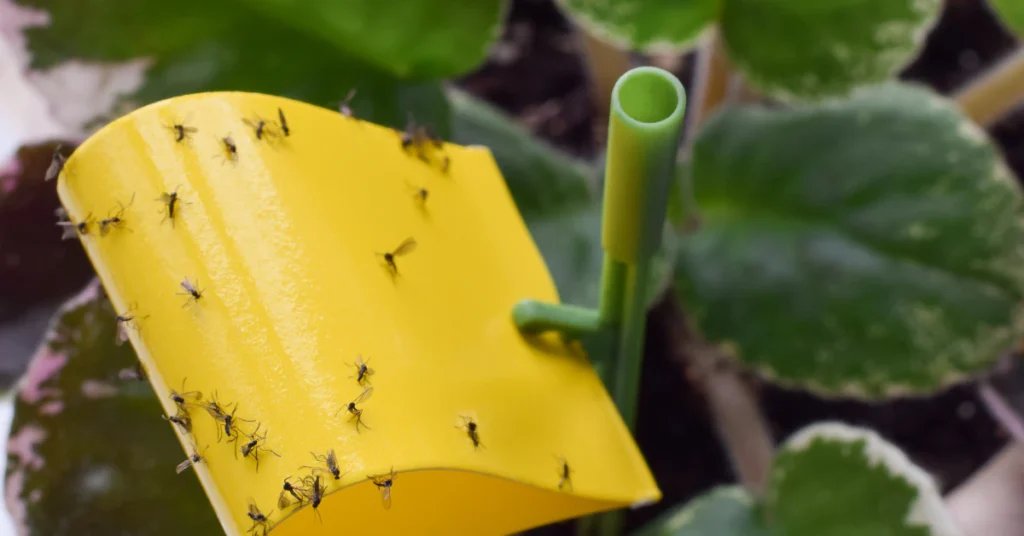
If gnats are flying out of your plant pots every time you water, the soil is the problem. Overwatering is the number one cause of fungus gnats indoors. Wet soil is exactly where these gnats lay their eggs.
Here’s how to fix it in two steps: kill what’s already there, then stop new eggs from hatching.
Kill the larvae with a hydrogen peroxide drench
Mix 1 part 3% hydrogen peroxide with 4 parts water. Pour it slowly over the soil until it runs out the drainage holes.
You’ll hear a fizzing sound. That’s the peroxide killing larvae on contact.
A few things to know before you try this:
- Only use 3% hydrogen peroxide, the kind sold in most drugstores. Never use it full strength. Undiluted hydrogen peroxide can burn plant roots.
- This kills larvae, not eggs. You’ll need to repeat the treatment a few times over the next couple weeks as new eggs hatch.
- Let the top inch of soil dry out between waterings going forward. Dry soil is much harder for gnats to breed in.
Break the cycle with Bti (Mosquito Bits)
For longer-term control, Mosquito Bits use a natural bacteria called Bti. If you have pets or kids crawling near your plants, this matters: Bti has been EPA-registered since 1983 and is OMRI-listed as safe for organic gardening, with no evidence of harm to pets or people. You can check the EPA’s pesticide registration details if you want to see this for yourself.
Mix the bits into your watering can as directed, and water your plant like normal. The bacteria targets gnat larvae in the soil without hurting the plant, your dog, or your toddler.
Catch the flying adults
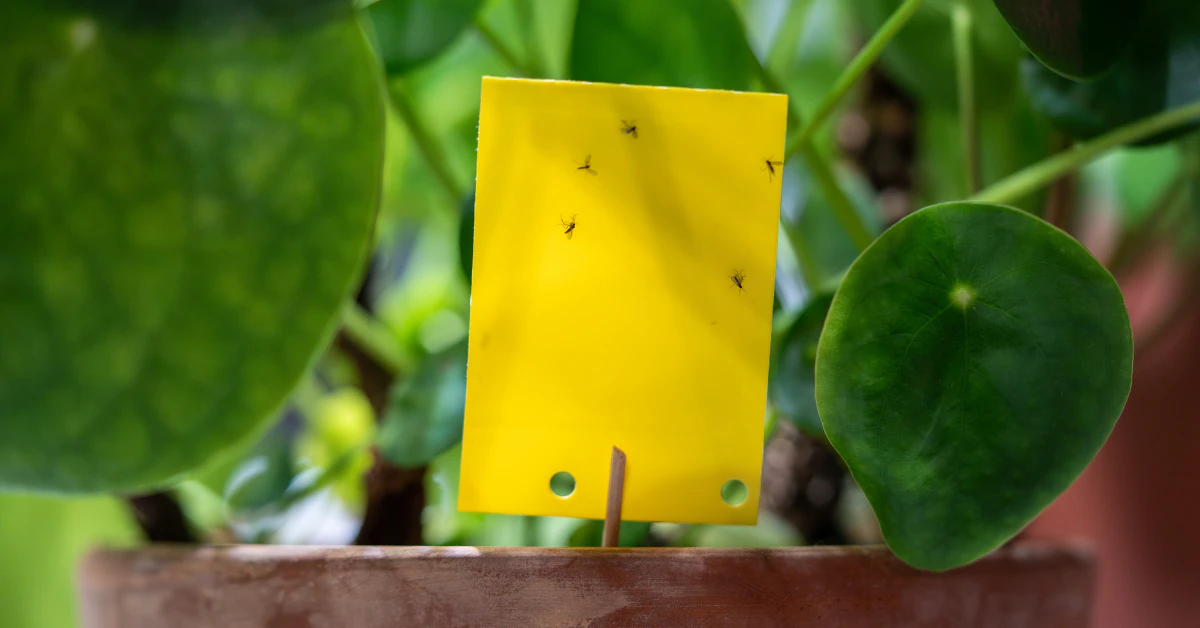
While the soil treatment works underground, stick a few yellow sticky traps in the pot to catch adult gnats still flying around. They won’t fix the root cause, but they’ll cut down on the annoying swarm while you wait for the drench and Bti to finish the job.
Clearing the Kitchen: Fruit Flies
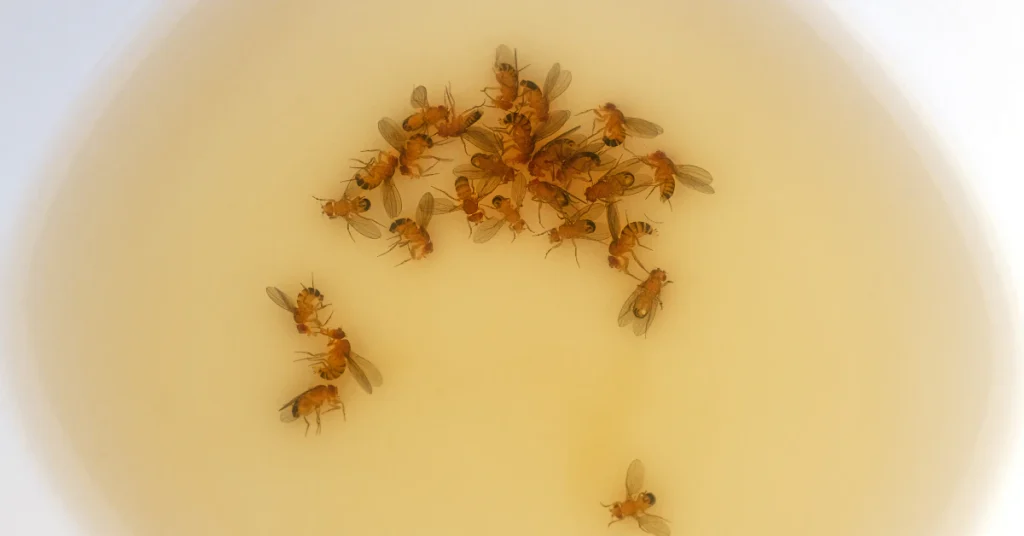
If the gnats are swarming your fruit bowl instead of your plants, you’re dealing with fruit flies. This is where the classic vinegar trap actually earns its reputation.
The apple cider vinegar and dish soap trap
Here’s why it works. Vinegar smells like fermenting fruit, which fruit flies find irresistible. Once they land on the surface to feed, a few drops of dish soap break the water’s surface tension, so they sink instead of flying back out.
To make it:
- Pour a small amount of apple cider vinegar into a bowl or jar.
- Add a few drops of dish soap and stir gently.
- Set it near the fruit bowl or wherever you’re seeing the most activity.
This trap is built for fruit flies, not fungus gnats. If you try it on a houseplant infestation, don’t expect results. Different bug, different bait.
Why traps alone won’t finish the job
Fruit flies can go from egg to adult in just 8-10 days. That means even if your trap is catching flies daily, a new batch can hatch behind your back if you don’t remove what they’re breeding in.
Pair the trap with source control:
- Wash fruit as soon as you bring it home.
- Don’t let produce sit out once it starts to soften or bruise.
- Take the trash out often, especially if it has food scraps.
A word on candle traps
Some people use a lit candle over a dish of soapy water to draw fruit flies in at night. If you try this, never leave an open flame unattended, and keep it far away from pets, curtains, or anything flammable. Blow it out before you leave the room or go to bed.
Unclogging the Drain: Drain Flies & Gnats
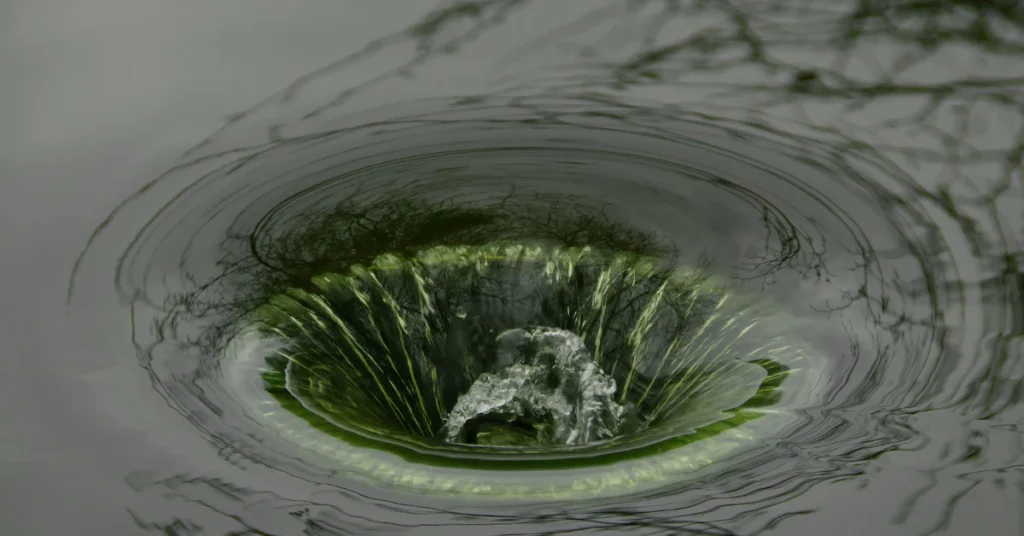
Gnats hovering around your bathroom or kitchen sink usually means one thing: gunk is building up inside the drain. That buildup is what they’re breeding in.
Start with baking soda and vinegar
This is the safest and most effective first move.
- Pour baking soda down the drain.
- Follow it with vinegar and let the mixture fizz for a while.
- Flush it out with boiling water.
This combination breaks down the organic sludge lining your pipes, which cuts off the gnats’ food and breeding ground.
A critical warning about bleach
You may have seen bleach recommended online as a quick fix for drain gnats. Use extreme caution here.
Never mix bleach with other cleaners, including ammonia, vinegar, or rubbing alcohol. This combination creates highly toxic fumes that can cause serious respiratory damage and, in severe cases, can be fatal.
If you’ve just used the baking soda and vinegar method, don’t follow it with bleach. And if you choose to use bleach at all, only ever dilute it with plain water, never with another chemical or cleaner. Treat it as a last resort, not your first step.
Keep it from coming back
Run boiling water down your drains once a week, especially in bathrooms that don’t get used daily. A dry, clean drain gives gnats nothing to lay eggs in, which means fewer of them buzzing around your sink in the first place.
Taking It Outdoors: Yard & Patio Gnats
Gnats on your patio didn’t come from nowhere. They’re breeding somewhere close by, usually in standing water or wet debris you haven’t noticed yet.
Find and remove the breeding grounds
Walk your yard and look for:
- Clogged gutters holding wet leaves
- Low spots where rainwater pools after a storm
- Old tires, buckets, or containers collecting water
- Birdbaths that haven’t been changed in a while
Clean out gutters, fix drainage in low spots, and empty or dump out anything holding standing water. Without water, gnats have nowhere to lay eggs, and the problem starts to fade on its own.
Use Bti for water you can’t remove
If you have a birdbath, pond, or other water feature you want to keep, the same Bti used for houseplants (Mosquito Bits) works outdoors too. Sprinkle it into standing water, and it targets gnat and mosquito larvae without harming birds or other wildlife that visit.
For immediate relief while you work on the source
A targeted gnat spray can knock down the gnats currently swarming your patio so you can actually sit outside. Just don’t expect it to solve the problem long-term. Spraying gnats you can see does nothing about the ones still breeding in your gutter or birdbath.
Source control is the only fix that lasts outdoors. Everything else just buys you a few hours of peace.
Myth-Busting: Do Dryer Sheets and Essential Oils Actually Work?
Not every gnat hack you see online is nonsense. Some are backed by real research. Others could hurt your pet.
The dryer sheet trick actually has science behind it
A 2013 study from Kansas State University and the University of Illinois tested whether Bounce dryer sheets repel fungus gnats. In the test, only 18% of gnats moved toward a dryer sheet, while 45% moved toward the untreated side. Researchers linked this to linalool, a compound in dryer sheets that also shows up naturally in lavender and basil.
That’s a real effect, not just an old wives’ tale. But it’s a mild deterrent, not a fix. Tucking a dryer sheet near your plants might nudge gnats away, but it won’t kill the larvae already living in the soil.
Essential oils can be dangerous for cats
Peppermint, eucalyptus, tea tree, citrus, and lavender sprays show up constantly as gnat repellents, and gnats often do avoid these scents. But if you have a cat, skip them entirely.
These essential oils are highly toxic to cats. Cats can absorb them by breathing the air around a diffuser or by grooming oil residue off their fur, and exposure can lead to serious illness. If you share your home with a cat, do not use essential oil sprays or diffusers as a gnat control method, no matter how many blogs recommend it.
Frequently Asked Questions
Does Dawn and vinegar get rid of gnats?
Yes, this combo works well for fruit flies. The vinegar attracts them with its fermented smell, and the dish soap breaks the surface tension so they sink and can’t escape.
What causes tiny gnats in your house?
The usual culprits are overripe fruit left out too long, overwatered houseplants, and dirty or gunky drains. Find which one applies to you, and you’ll know exactly where to focus your fix.
What’s the best homemade gnat killer?
It depends on the bug. For fruit flies, an apple cider vinegar and dish soap trap works best. For fungus gnats in plant soil, a 1:4 hydrogen peroxide and water drench kills larvae fast.
What smells do gnats hate?
Gnats tend to avoid peppermint, eucalyptus, citronella, and lavender. But if you have a cat, skip these as sprays or diffusers. These essential oils are highly toxic to cats and can cause serious illness through inhalation or grooming.
What gets rid of gnats immediately?
Nothing wipes out an entire infestation instantly, but a hydrogen peroxide soil drench kills fungus gnat larvae the moment it touches them. A direct spray of soapy water will also kill adult gnats on contact.
Do dryer sheets keep gnats away?
To some degree, yes. Research from Kansas State University found that fungus gnats were less likely to approach a dryer sheet, likely because of a compound called linalool. It works as a mild deterrent, not a full fix.
Final Thoughts
Gnats feel impossible to beat because most people try one fix and stop there. The real answer is simpler than it seems: figure out which bug you have, treat the source they’re breeding in, and use the right trap for that specific pest. Do that, and you’re not just clearing gnats for today. You’re making sure they don’t come back next week.