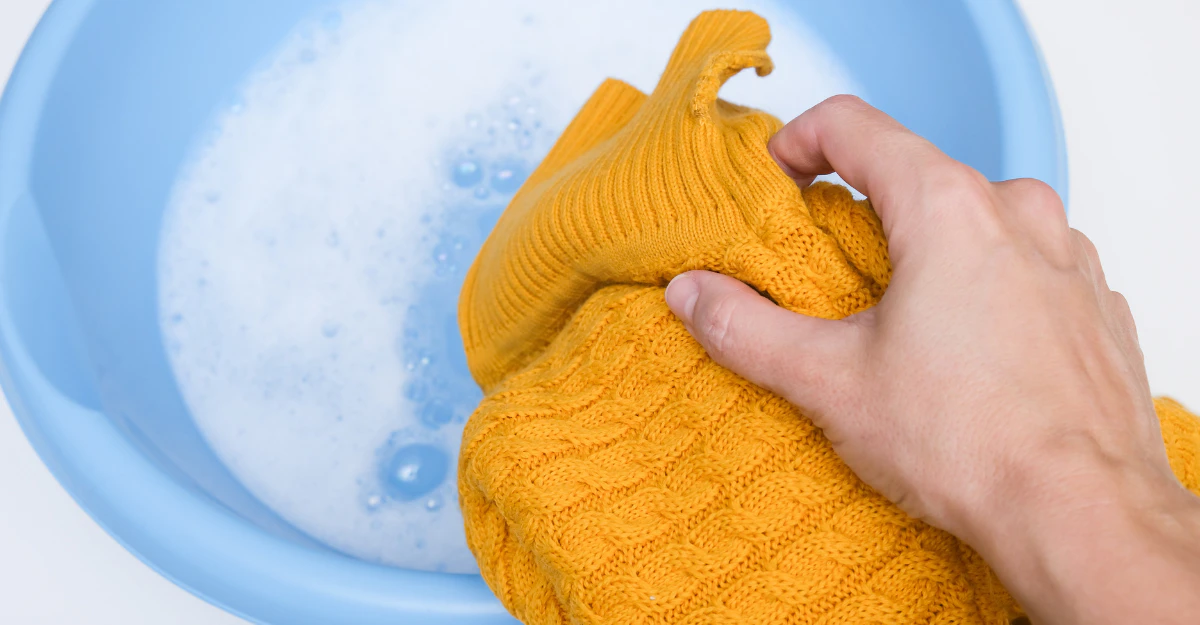
Turn the sweater inside out. Wash it by hand in cold water, or use your machine’s wool cycle. Always use a neutral, enzyme-free detergent made for wool. Never wring the sweater. Instead, press out extra water gently. Lay it flat on a towel to dry, away from heat and direct sun.
Why Does Wool Shrink? (The Science of Felting Explained Simply)
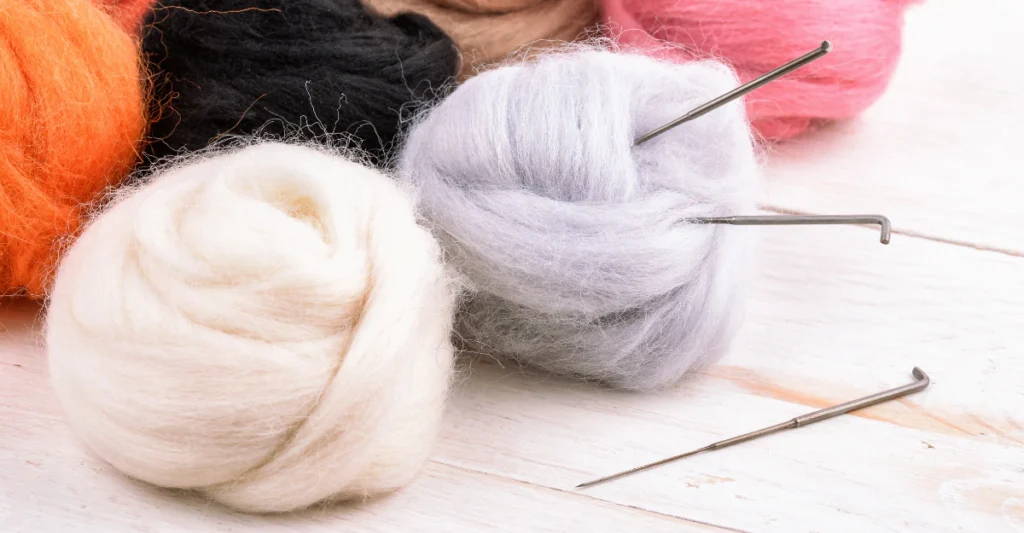
Wool fibers are covered in tiny scales, kind of like shingles on a roof. Normally these scales lie flat and smooth against each other.
Shrinking happens through a process called felting, and it needs three things at once: heat, rubbing or agitation, and an alkaline environment (a pH above 8.5). When all three show up together, the scales swell open and lock onto each other. Once that happens, it cannot be undone. The fibers pull tight and the sweater gets smaller for good.
This is good news if you are worried about a little rain. Getting a wool sweater wet does not shrink it. Water alone is harmless. It is only dangerous when it teams up with heat and rough handling.
So if your sweater got caught in a downpour, do not panic. Just let it dry flat and it will be fine.
This is also why cold water matters so much when you wash wool. Wool fibers stay calm and stable in a mildly acidic environment. Cold water and a neutral-pH soap keep the scales lying flat, so nothing locks together. Hot water and harsh, alkaline soap do the opposite. That combination is what actually ruins sweaters, not water by itself.
Check the Tag First: “Dry Clean Only” Labels and Wool Types Compared
Before you touch a drop of water, look at the care tag. But do not trust it blindly.
Many sweaters marked “Dry Clean Only” can actually be hand-washed safely at home. Manufacturers often slap that label on as a cautious shortcut, not because the sweater will fall apart in water. The exception is structured wool items like tailored coats and suits. Those really should go to a dry cleaner, since their shape depends on stiff interior construction that water can ruin.
Once you know your sweater can get wet, the fiber inside it decides how careful you need to be. A wool blend sweater is more forgiving than 100% wool, since added fibers like cotton or synthetics resist felting better. Still, do not hang a wet wool blend sweater to dry. The synthetic parts can stretch out of shape just as easily as pure wool can.
Merino wool and cashmere also behave differently. Merino wool is more durable and holds up better against pilling than cashmere. Cashmere feels softer and traps more warmth for its weight, but it is far more delicate and wears out faster.
There is one more trade-off worth knowing. Pure merino wool can take up to 40% longer to dry than polyester, and it tends to wear thin at high-friction spots like elbows. Keep that in mind when picking a drying spot and timeline for your merino sweater.
How to Wash a Wool Sweater by Hand (The Safest Method)
Hand washing is the gentlest way to clean a wool sweater, and it is easier than most people think. Just follow these steps in order.
- Turn the sweater inside out. This protects the outer surface from pilling.
- Fill a clean basin or sink with cold or cool water.
- Add a wool-safe soap and mix it gently into the water.
- Submerge the sweater fully and swish it around by hand, without scrubbing.
- Let it soak briefly in the soapy water.
- Drain the basin and refill with clean, cool water. Swish the sweater again to rinse.
- Repeat the rinse until no suds remain in the water.
While handling the wet sweater, never lift it by the shoulders. A soaked wool sweater is heavy, and lifting it that way stretches it out permanently. Instead, support the whole weight from underneath with both hands, the same way you would carry a bowling ball. Never twist or wring the fabric. Just press gently to push out extra water.
Safety Warning: Never Use Chlorine Bleach on Wool
Wool is naturally acidic, but household chlorine bleach is strongly alkaline. When the two meet, they trigger an acid-base neutralization reaction. This does not just stain or fade the sweater. It chemically dissolves the wool fibers into a disintegrated, goopy mess. There is no fixing a sweater once this happens, so keep chlorine bleach far away from any wool garment, no exceptions.
How to Wash Wool Sweaters in a Washing Machine Without Shrinking Them
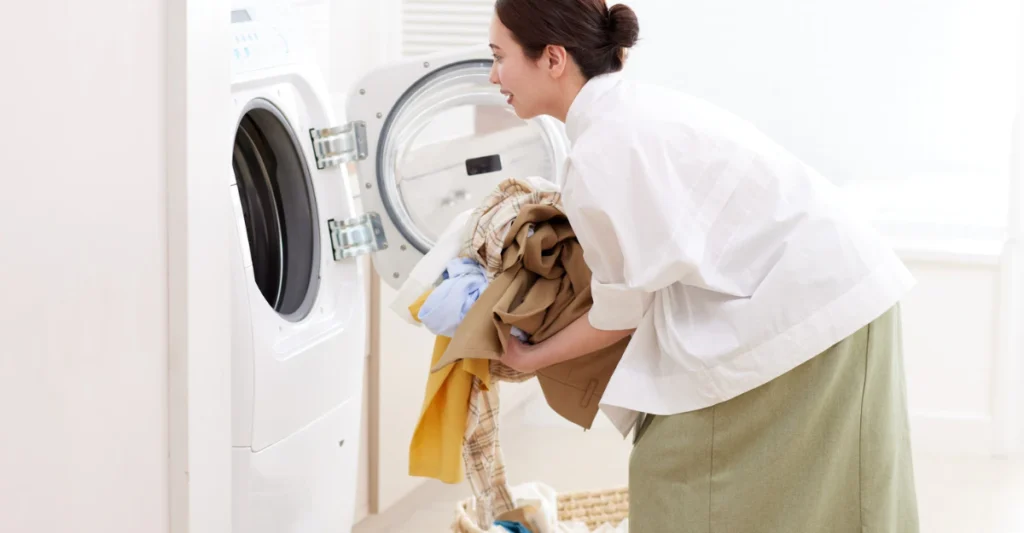
Machine washing a wool sweater is completely safe, as long as the care label allows it. That is the rule straight from Woolmark, the wool industry’s own care authority. So if your tag gives the green light, you do not need to fear your washing machine.
The trick is knowing what a “Wool Cycle” actually does. It is not magic. It works through three simple settings:
- Cold water fill. Heat is one of the three triggers of felting, so the cycle skips it completely.
- A slow “cradle” motion. Instead of the usual vigorous tumbling, the drum rocks gently back and forth. This keeps mechanical agitation as low as possible.
- A limited spin speed. Fast spinning creates strong centrifugal force, which can felt fibers just like scrubbing can. The wool cycle slows this way down.
If your machine does not have a dedicated wool button, you can copy these settings by hand. Choose the coldest water option, pick the delicate or hand-wash cycle, and set the spin speed to low or off entirely.
Before starting any load, whether machine has a wool setting or not, turn the sweater inside out and place it inside a mesh laundry bag. This protects it from snagging on zippers or buttons from other clothes, and it keeps the sweater from stretching against the drum during the cycle.
Best Detergents for Wool (And How to Wash a Wool Sweater Without Wool Detergent)

Not all detergents are safe for wool, and the reason comes down to what is actually inside the bottle.
Safety Warning: Protease Enzymes Break Down Wool Fibers
Standard “bio” laundry detergents and pods contain protease enzymes. These enzymes are designed to eat away at protein stains, but wool, silk, and cashmere are also made of protein. That means these enzymes actively break down and eat away at the fibers themselves, not just the stains on them, causing holes and weakening the garment over time. Skip bio detergents and pods for any wool item.
Now, let’s settle the Woolite debate once and for all. You may have heard that Woolite ruins wool. That rumor is outdated. Woolite Delicates and Damage Defense formulas are actually enzyme-free, bleach-free, and pH-balanced specifically for wool. The bad reputation traces back to an older product called “Woolite Machine Wash,” which used a much more aggressive formula. Shoppers confused it with the gentle original, and the rumor stuck around long after the aggressive version faded from shelves.
What if you have no wool detergent on hand? Fiber artists commonly reach for Dawn dish soap or mild baby shampoo instead, and it works. Just know the catch. Unlike no-rinse wool washes such as Eucalan, Dawn and shampoo lather heavily. That means you need extra rinsing to clear out every trace of soap, or leftover residue can leave the fibers feeling stiff.
Here is how your options stack up:
| Detergent | pH Level | Contains Enzymes? | Rinse Required? | Best Use Case |
| Eucalan / Soak | Neutral, wool-safe | No | No (no-rinse formula) | Everyday wool care, quick washes |
| Woolite Delicates | pH-balanced | No | Yes | Wool, silk, cashmere, mixed loads |
| Dawn Dish Soap / Shampoo | Varies, not wool-specific | No | Yes, extra rinsing needed | Backup option when no wool wash is on hand |
| Regular “Bio” Detergent | High-alkaline | Yes | Yes | Never use on wool |
How to Dry, Soften, and Spot-Clean a Wool Sweater
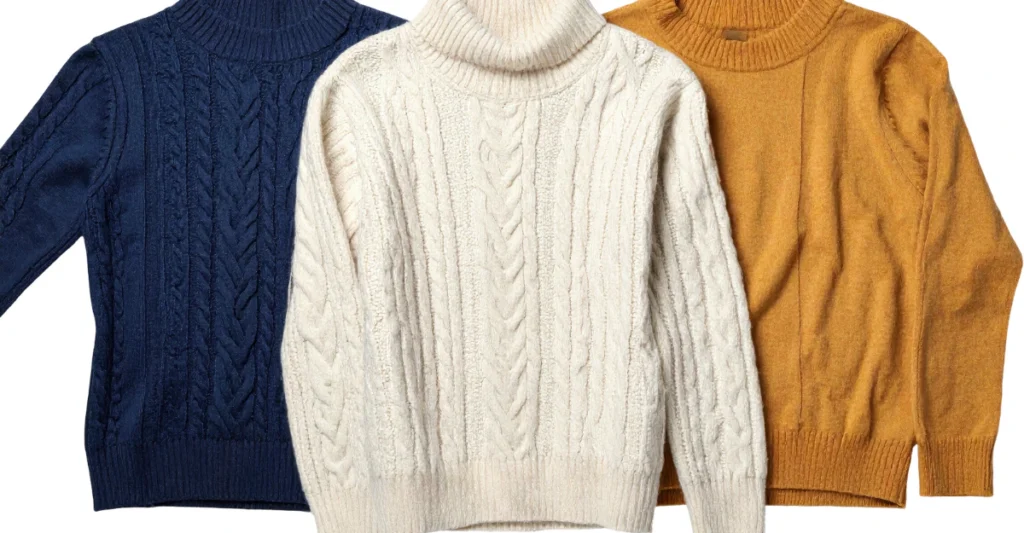
Once your sweater is clean, drying it right matters just as much as washing it right.
Start by laying the wet sweater on a clean, dry towel. Roll the towel up with the sweater inside, pressing gently as you go. This squeezes out extra water without twisting or wringing the fabric.
Next, unroll the sweater and lay it flat to finish drying, away from direct heat or sunlight. Do not hang it on a hanger. Wet wool holds a lot of water, and that water is heavy. If you hang the sweater up, the weight pulls down on the shoulders and hem as it dries, stretching the whole garment out of shape. Drying flat keeps every inch exactly where it belongs.
If your sweater feels scratchy or itchy once it’s dry, there’s a simple fix. Soak it in cool water mixed with a bit of hair conditioner and a splash of white vinegar. This combination coats and relaxes the prickly fibers, leaving the wool noticeably softer.
For stains, blot gently instead of rubbing, which can push the stain deeper into the fibers.
Safety Warning: Never use chlorine bleach on wool stains. And if you ever use a drop of household ammonia to tackle a tough grease stain, keep it far away from bleach. Mixing the two creates deadly, toxic chloramine gas.
Shrank Your Sweater? How to Un-Shrink a Felted Wool Sweater
If your sweater shrank in the wash, don’t panic, and don’t toss it just yet. Let’s be honest, though: badly felted wool, where the fibers have fully locked together, cannot always be fully reversed. But mild shrinking often can.
Here’s how to try it. Fill a basin with lukewarm water and mix in hair conditioner or baby shampoo. Let the sweater soak so the conditioner works its way into the fibers, relaxing the scales that locked together during shrinking.
Once it’s soaked, lift the sweater out and roll it in a towel to press out the extra water. Do not wring it.
Now comes the important part. While the sweater is still damp and pliable, gently stretch it back out, section by section, toward its original size and shape. Work slowly across the shoulders, sleeves, and hem.
Finally, pin the sweater flat to a blocking mat or a heavy towel in its stretched shape, and leave it there until it’s completely dry. This holds the fibers in place as they set.
Between-Wash Care: Pilling, Ironing, and Moth-Safe Storage
Wool doesn’t need washing after every wear. Air it out between uses, and use a fabric comb or sweater stone to smooth away any pills that friction has raised on the surface.
If your sweater needs ironing, keep the iron on the low wool steam setting and place a damp cloth between the iron and the fabric.
Safety Warning: When storing wool for the season, skip traditional naphthalene or paradichlorobenzene mothballs. Per National Poison Control, these are registered pesticides, and as little as one mothball can poison a dog. Children have also been poisoned simply by wearing wool clothing that was stored with mothballs. Always air out and wash stored wool before wearing it, or store it in sealed, breathable cotton bags with natural cedar instead.
Frequently Asked Questions About Washing Wool Sweaters
Can you machine wash a 100% wool sweater?
Yes, if the care label says so. Use a cold wool or delicate cycle to keep it safe.
Can I use Dawn dish soap to wash a wool sweater?
Yes. It works well in a pinch, but it lathers heavily, so rinse thoroughly to avoid stiff, soapy residue.
Does wool get ruined if it gets wet?
No. Water alone doesn’t shrink wool. It takes heat and agitation together to cause damage.
Is Woolite actually good for wool?
Modern Woolite Delicates is enzyme-free, bleach-free, and pH-balanced for wool. Older, more aggressive formulas caused its bad reputation.
What is the best detergent to wash wool sweaters?
A neutral, enzyme-free wool wash like Eucalan or Woolite Delicates.
Should you hang wool sweaters?
No. Always dry flat to prevent stretching from water weight.
What’s better than merino wool?
It depends. Synthetics like polyester dry faster and cost less, while cashmere feels softer.
Wrapping It Up
Washing a wool sweater doesn’t have to be scary. Once you understand that heat and agitation, not water, cause the real damage, the whole process gets a lot less stressful. Stick to cold water, a gentle enzyme-free detergent, and flat drying, and your sweater will stay soft and in shape for years to come.