Sticky residue left behind by tape, stickers, or glue is annoying at best and stressful at worst, especially if it is on your skin or a painted wall. The good news is that most adhesive messes come off easily once you match the right method to the right surface.
Start with heat. A hair dryer on low, held a few inches away, softens almost any adhesive on almost any surface before you reach for liquids. Once it is soft, use a solvent suited to that surface, like rubbing alcohol for metal or soapy water for plastic. Using the wrong solvent can damage the surface, so surface always comes first.
Below, you will find sections for walls, plastic, glass, metal, and skin. Skip straight to the one you need. Each one covers what actually works, what to avoid, and any safety steps you should not skip.
Essential Safety Warnings & The “Two-Step” Rule
Before you grab any bottle, a few rules apply no matter which surface you are working on.
Keep pets and kids away from the area while you work. WD-40 and citrus-based removers like Goo Gone contain petroleum hydrocarbons. These can poison a pet if they lick a treated surface, and breathing the fumes can also cause harm. Always work in a room with a window open or a fan running, and do not let anyone touch the area until it is fully wiped clean and dry.
Second, remember the two-step rule. Solvents like WD-40 or citrus-oil cleaners leave behind an oily film once they lift the adhesive. If you skip cleaning that film off, it can stop new paint or tape from sticking later. After the glue is gone, wash the spot with a grease-cutting dish soap like Dawn to remove any leftover residue.
Finally, choose your tools carefully. Never use a metal putty knife or scraper on a wall. It will gouge the drywall and scratch the paint. Stick to a plastic scraper or the edge of an old credit card instead.
Walls: How to Remove Adhesive Without Damaging Paint
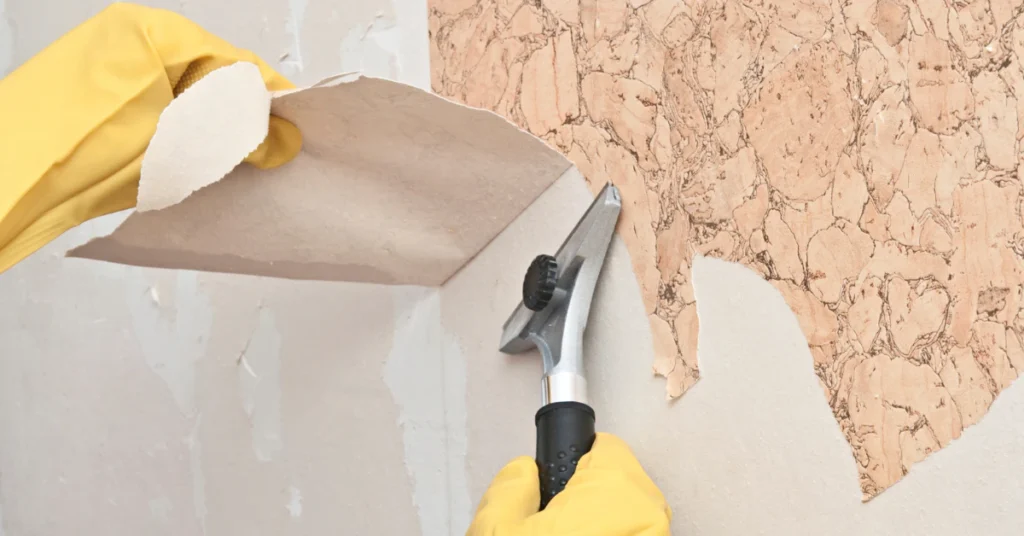
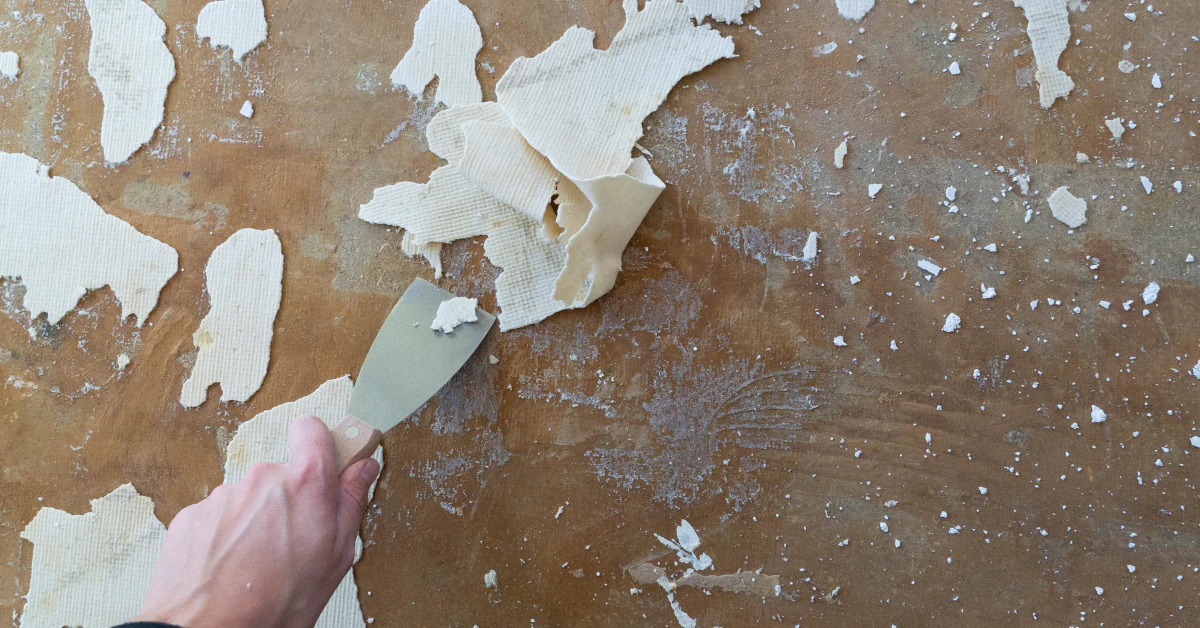
If you are dealing with sticky residue from a decal, tape, or a command hook on a painted wall, your goal is to break the bond without touching the paint underneath.
WD-40 is a good option here, but it is worth understanding how it actually works. It does not dissolve the glue the way a true solvent does. Instead, it works its way underneath the adhesive as a thin oil, breaking the physical grip the glue has on the wall rather than melting it away. This is exactly why it tends to be gentler on paint than stronger solvents. Spray a little onto the residue, let it sit for a few minutes, then gently scrape with a plastic scraper or old credit card. Once the glue is gone, follow up with a dish soap wash so you are not left with an oily patch that stops future paint or tape from sticking.
Now for the warning you should not skip. Never use acetone or nail polish remover on a painted wall. It is a common home fix for stubborn glue, but on paint it acts like a paint stripper. It will not just loosen the adhesive. It can eat straight through the paint layer and leave a permanent, melted-looking scar that no amount of scrubbing will fix.
If the residue is soft and rubbery, like from foam mounting tape or sticky tack, you may not need any liquid at all. Rub it with your finger in small circles. The warmth and friction will roll it into a little ball you can simply pick off.
Whatever method you use, always test in a hidden spot first, since paint types react differently, and go slowly rather than pulling at anything.
Plastics: How to Remove Residue Without Melting the Surface
Price tags and shipping labels always seem to leave behind a stubborn sticky patch on plastic, and it is easy to worry about making things worse.
Start gentle. Warm, soapy water is enough to soften and lift a lot of residue on its own, especially if it is fresh. If that does not fully do the job, diluted vinegar is a safe next step and will not harm most plastics.
Acetone is stronger, but this is where you need to slow down and actually check your plastic type first, rather than just testing a random spot. Not all plastics react the same way, and the difference matters.
Acetone will dissolve polystyrene almost on contact, so it should never touch this material. It will also cause acrylic and polycarbonate to crack, a process called crazing, which leaves the surface clouded and weak even if it does not fully melt. On the other hand, acetone is generally safe to use on polypropylene (PP), high-density polyethylene (HDPE), and Teflon (PTFE), since these plastics resist it well.
Many household containers have a small recycling number stamped on the bottom that tells you the plastic type. Checking this number before reaching for acetone is a much more reliable step than guessing based on a quick test spot, since damage from acetone can happen almost instantly on the wrong material.
If you are ever unsure what your plastic is made from, it is safer to stick with soapy water or vinegar rather than risk acetone at all.
Skin: How to Remove Super Glue Safely
If you have glued your fingers together, take a breath. Super glue on skin looks alarming, but it is not a real emergency in most cases, and it will not stay stuck forever.
Acetone, the kind found in nail polish remover, is the most effective way to break it down. Dab a small amount on a cotton pad and hold it against the glued area for a minute or two, then gently peel the skin apart. Acetone does dry out the skin, so wash the area with soap and water afterward and apply a moisturizer.
There is one important rule here. Never use acetone near your eyes, mouth, nose, or on any skin that is already broken or irritated. It can cause serious stinging and damage in those areas.
You may have heard that toothpaste can dissolve super glue on skin. Skip this one. Many toothpastes contain baking soda, and instead of loosening the glue, baking soda actually acts as a catalyst that makes the bond stronger. It can make the situation worse, not better.
If you do not have acetone on hand, do not panic. Your skin naturally sheds its outer layer over time, and superglue will usually come off on its own within about 5 to 10 days if you just leave it alone.
If the glue is on a large area of skin, or anywhere on your face, it is best to get medical help rather than try to remove it yourself.
Glass & Metal: Heavy-Duty Removal
Glass and metal can handle stronger solvents than plastic or paint, which makes tough, cured glue easier to deal with.
For metal, start with rubbing alcohol, also called isopropyl alcohol. Apply it with a cotton ball and let it soak into the residue for a minute or two. Most adhesives break down on contact with it, and it will not damage the metal underneath, which makes it a safe first move before trying anything stronger.
If the glue is stubborn super glue that will not budge, 3% hydrogen peroxide is a strong option. It works by oxidizing the glue, which is a simple way of saying it breaks apart the chemical bonds holding the adhesive together so it softens and can be scraped away. Soak a cotton ball in the peroxide and press it firmly against the glue, repeating as needed until it loosens.
One thing to check before you use hydrogen peroxide: it can affect certain materials, including aluminum and neoprene. If you are not sure what your metal item is made from, it is worth confirming before soaking it, since the same oxidizing action that breaks down glue can also affect these surfaces.
For glass, the same isopropyl alcohol works well too, since glass is non-porous and holds up fine against it. Let it sit for a few minutes before wiping away the softened residue with a cloth.
The “Friction Ball” Method (No Chemicals Needed)
Not every sticky mess needs a bottle of solvent. Some residue comes off with nothing more than your own hands.
This works especially well on rubbery adhesives, like poster tack, sticky putty, or the leftover glue from foam mounting strips. Press the pad of your thumb or index finger firmly onto the residue and rub it in small circles.
The warmth from your skin softens the adhesive just enough, and the friction rolls it into a small, rubbery ball as you go. Once it forms a “pill,” it lifts away cleanly, often in one piece.
It is slower than using a solvent, but it costs nothing, needs no ventilation, and leaves no oily film to clean up afterward. It is worth trying first before reaching for any liquid at all.
Frequently Asked Questions
Does Dawn dish soap remove adhesive?
Yes. Dawn’s grease-cutting surfactants can break down sticker residue. Add a few squirts directly to the spot, let it sit for about 10 minutes, then gently rub with a cloth until the adhesive lifts away.
What dissolves most adhesives?
There is no single universal remover, since glue types vary so much. That said, isopropyl alcohol and acetone are the two broadest-spectrum options, working across the widest range of adhesives and surfaces when used correctly.
Does WD-40 dissolve adhesive?
Not exactly. WD-40 does not chemically dissolve glue the way acetone does. Instead, it works its way underneath the adhesive and breaks its physical grip on the surface, which is why it tends to be gentler on paint and finishes.
Does vinegar dissolve adhesives?
Only certain kinds. Vinegar works reasonably well on sticker residue and water-soluble glue, but it is too weak for true structural adhesives like epoxy or cyanoacrylate super glue.
What is the best homemade adhesive remover?
It depends on the surface and glue type. For dried super glue, a paste of equal parts coconut oil and baking soda rubbed onto the spot and left for about 15 minutes is a gentle, surface-safe homemade option.
Does hydrogen peroxide remove adhesive residue?
Yes, especially for super glue. It works through oxidation, breaking apart the chemical bonds in cyanoacrylate so the glue softens and can be wiped or scraped away.
Getting sticky residue off your walls, skin, or favorite mug does not have to mean guesswork or a ruined surface. Start with heat or a gentle friction method, match your solvent to the material you are working with, and always keep the safety basics in mind, especially around pets, kids, and ventilation. With the right approach for each surface, even the most stubborn glue is manageable.