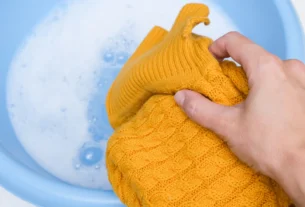
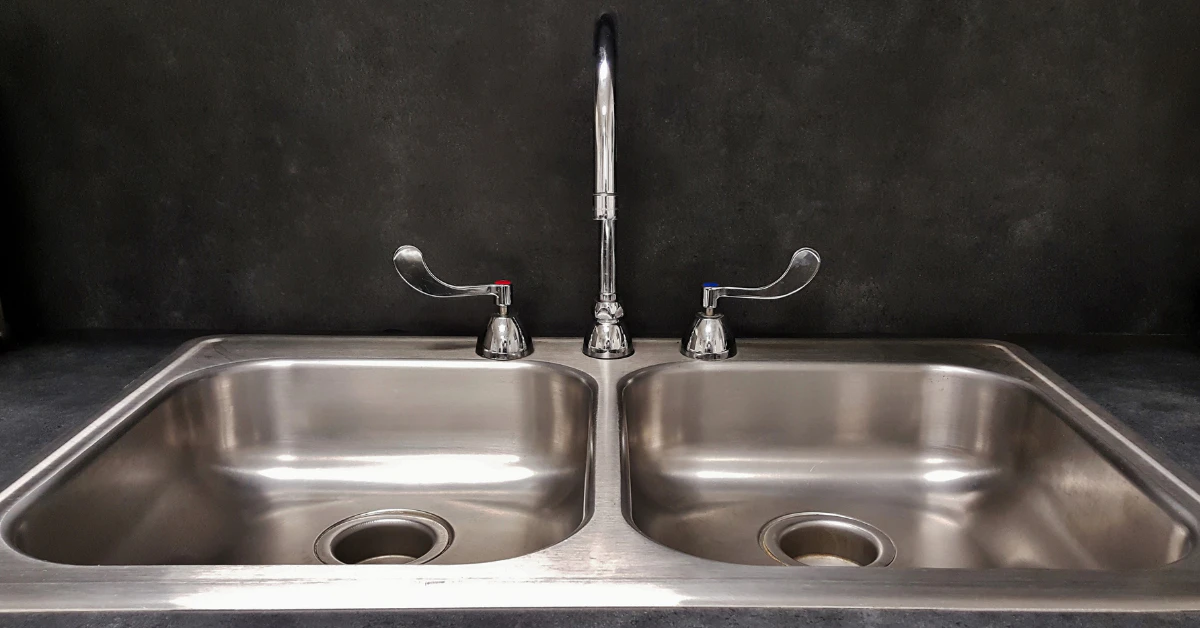
Rinse your sink first. Sprinkle baking soda over the whole basin. Scrub in the direction of the metal grain with a soft cloth and a little mild dish soap. For mineral spots, wipe with undiluted white vinegar. Rinse well and towel dry so no water sits on the surface.
Cleaning your stainless steel sink kitchen routine isn’t just about shine. Even sinks that look spotless can harbor bacteria like E. coli, Salmonella, Listeria, and Staph, according to the Center for Science in the Public Interest and CDC-linked health libraries. Regular washing with soap and water is a key step in keeping that risk low.
Here’s a fast gut-check most guides skip: a magnet won’t stick to true 304-grade stainless steel (labeled 18/8 or 18/10), the type used in most US kitchen sinks. If a magnet sticks to yours, it’s a lower-grade 430 steel or a coated metal instead, which explains why it may scratch or rust faster than standard advice suggests it should.
What NOT to Use or Mix on Stainless Steel (Safety Guide)
Safety Warning: Never mix bleach with anything except plain water. Bleach plus vinegar (or any acid) releases toxic chlorine gas. This is a common accident, since so many sink guides also recommend vinegar, and it’s blamed for roughly 4,800 US poison control calls in 2021. Bleach plus ammonia, found in many glass cleaners, releases toxic chloramine gas. Bleach plus rubbing alcohol produces toxic chloroform. If you ever smell a strong chemical odor after mixing cleaners, leave the room and get fresh air right away.
Bleach doesn’t need a mixing partner to cause harm, either. Chlorine bleach attacks the thin chromium-oxide layer that keeps stainless steel from rusting. This damage often stays invisible for weeks, then shows up as pitting or even pinhole leaks.
Here’s what to keep off your sink entirely:
| Product/Mixture | What Happens to You | What Happens to the Sink |
| Bleach + Vinegar | Releases toxic chlorine gas | N/A (fumes are the danger) |
| Bleach + Ammonia | Releases toxic chloramine gas | N/A (fumes are the danger) |
| Bleach + Rubbing Alcohol | Produces toxic chloroform | N/A (fumes are the danger) |
| Bleach alone (diluted or not) | No immediate risk | Strips protective layer, causes delayed pitting and pinhole leaks |
| Steel wool / wire brushes | No direct risk | Sheds iron particles that embed and rust |
| Acidic foods left sitting (citrus, mustard, pickles, salt) | No direct risk | Can pit the surface over time |
The Everyday & Natural Routine: Dish Soap, Baking Soda, and Vinegar
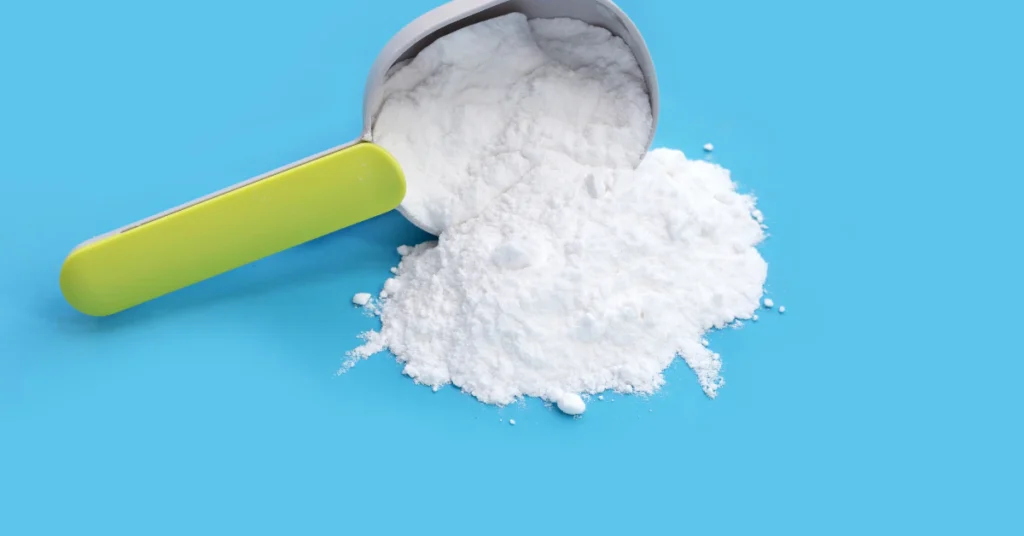
Here’s your safe, everyday routine, using nothing more than what’s already under most kitchen sinks.
Clear and rinse the sink.
Empty out dishes, sponges, and any dish racks. Rinse the whole basin with warm water so it’s damp, not dripping.
Find the grain.
Look closely at the surface. You’ll see faint brushed lines running across the basin in one direction. That’s the grain. Always wipe with it, using a soft, nonabrasive cloth. Wiping in circles or across the grain can leave streaks and fine scratches that catch grime.
Sprinkle baking soda and add dish soap.
Cover the damp basin with a light, even layer of baking soda. Add a few drops of mild dish soap. Dawn is officially recommended by its own manufacturer for stainless steel sinks, including the Dawn Platinum Powerwash Dish Spray, so it’s a safe, tested pick here. Scrub gently, working with the grain.
Add vinegar for deeper grime.
If food residue or dull spots won’t lift, follow up with white vinegar right on the baking soda paste. It will fizz. That reaction helps loosen stuck-on grime beyond what soap alone can manage.
Rinse thoroughly.
Rinse the whole sink with warm water until every trace of baking soda and soap is gone.
Buff completely dry.
Use a microfiber towel and dry the entire basin, working with the grain again. This step matters more than people think. A wet sink left to air-dry is how water spots form. Don’t worry if you notice faint hairline scratches as you dry it. That’s normal wear, and it blends into the metal’s finish over time rather than getting worse.
How to Clean Hard Water Stains (Why Diluted Vinegar Fails)
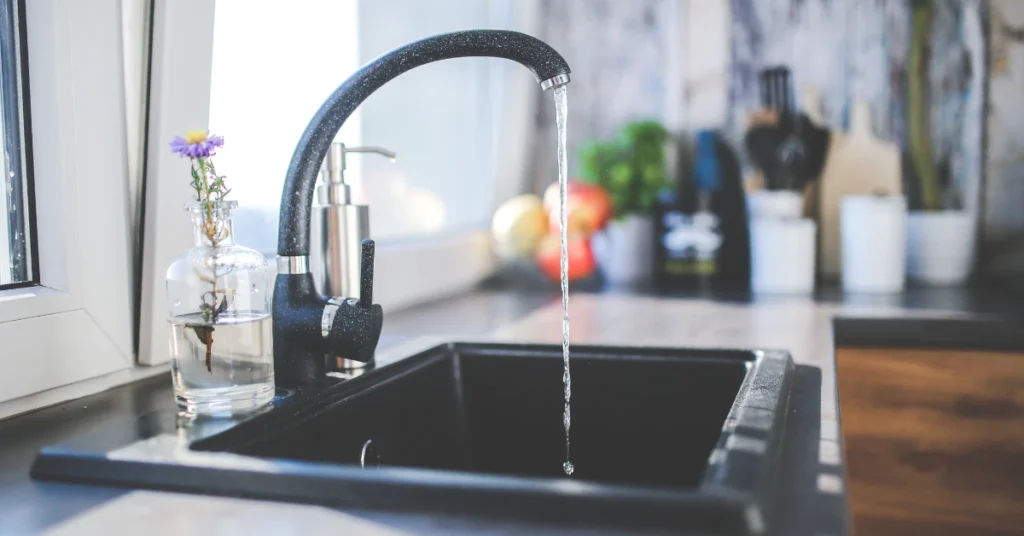
If you’ve scrubbed with vinegar before and the cloudy film just came right back, you’re not doing anything wrong. You’re probably just using it too weak.
Those white, chalky spots are mineral deposits, mostly calcium and magnesium, left behind after tap water evaporates. They’re common in hard water areas, and they build up fastest around the faucet base and drain.
A quick 50/50 vinegar-and-water spritz, wiped off right away, usually isn’t strong enough to break down set-in scale. It needs full-strength vinegar and time to work.
Here’s the actual fix:
- Soak paper towels in undiluted white distilled vinegar.
- Lay the soaked towels flat over the crusty spots, especially around the faucet base and drain.
- Let them sit for 5 to 15 minutes. This dwell time is what actually dissolves the mineral buildup.
- Wipe the area with the grain using a soft cloth.
- Rinse thoroughly with water so the vinegar doesn’t sit on the steel any longer than needed.
- Dry immediately with a towel to stop new spots from forming while the surface is still wet.
Repeat as needed for stubborn buildup, but always finish with a full rinse and dry.
How to Remove Rust Rings and Stubborn Sink Stains
Found an orange ring under the soup can you forgot to take out of the sink? Don’t panic. Your sink almost certainly isn’t rusting.
Real stainless steel doesn’t rust on its own. Those orange spots come from outside iron transferring onto the surface, usually from a wet cast iron skillet, a metal food can, stray steel wool fibers left behind from a scrub, or even iron-rich tap water. The iron sits on top of the steel and rusts there, not underneath it.
To clear it off without bleach, reach for Bar Keepers Friend. Its active ingredient is oxalic acid, a mild acid that dissolves rust, tarnish, and mineral deposits without harsh chemicals.
- Mix a small amount with water to form a paste.
- Rub it gently with a soft, damp cloth, working with the grain, not across it.
- Rinse thoroughly until no residue remains.
One important limit: keep Bar Keepers Friend off gold, silver, pewter, marble, lacquered metals, and anodized aluminum. It’s formulated for stainless steel, not every shiny surface in your kitchen.
How to Fix a Stainless Steel Sink That Has Turned Black
If your sink has turned dark gray or black, here’s the truth right away: more scrubbing won’t fix it, and you’re not doing anything wrong by struggling with it.
That dark patch almost always means an incompatible chemical touched the surface. The usual culprits are a harsh bathroom limescale remover like Lime-Away or chlorine bleach. These strip away the sink’s microscopic chromium-oxide layer, the thin barrier that gives stainless steel its shine and rust resistance.
This is why soap, vinegar, or baking soda won’t lift it. The black color isn’t dirt sitting on top. It’s damaged metal underneath where that protective layer used to be. No amount of gentle cleaning reaches that.
The real fix is mechanical refinishing:
- Use a non-iron abrasive pad, like a Scotch-Brite pad. Never use steel wool here, since it sheds iron that makes things worse.
- Work the pad strictly back and forth in the direction of the grain, never in circles.
- Keep going until the dark patch blends into the surrounding brushed finish.
For serious chemical damage, a professional metal polisher can buff it out properly. Once the surface is restored, the chromium-oxide layer reforms naturally on contact with air.
How to Clean a Stainless Steel Sink Grid, Grates, and Bottom Rack
That metal grid at the bottom of your sink isn’t just decorative. Left in place full-time, it hides a real problem.
Water and food particles collect underneath the grid and inside its rubber or plastic feet, according to Kraus’s official care guidance. That trapped moisture is exactly what causes slime buildup and the mystery rust rings and stains people find on the sink floor.
Here’s a simple weekly routine:
- Pull the grid or rack out of the sink completely.
- Pop off any removable rubber feet or bumpers.
- Soak the feet in warm water with Dawn dish soap. Use an old toothbrush to scrub inside the crevices.
- Scrub the metal grates themselves with baking soda and dish soap.
- Let both the rack and the sink floor dry completely before putting the grid back.
Skipping this step is often the real reason a sink keeps developing stains no amount of basin scrubbing seems to fix.
Frequently Asked Questions (FAQs)
1. What is the best thing to clean a stainless steel kitchen sink with?
For daily care, use mild dish soap (Dawn is officially recommended by the manufacturer), warm water, and a soft cloth wiped with the grain. For mineral or rust spots, use Bar Keepers Friend or undiluted white vinegar.
2. How do you make a stainless steel sink look new again?
Scrub with a baking soda and dish soap paste, then soak any hard water film in undiluted white vinegar for 5 to 15 minutes. Rinse and buff dry with the grain. For extra shine, you can finish with a dedicated polish like Franke Inox Cream or Kohler Stainless Steel Cleaner.
3. What not to use on a stainless steel sink?
Avoid chlorine bleach, chloride cleaners, steel wool, wire brushes, silver-dip cleaners, and harsh scouring powders. Also don’t leave acidic foods like citrus juice, vinegar, mustard, or pickles sitting on the surface for long periods.
4. Can I use Mr. Clean Magic Eraser on my stainless steel sink?
Mr. Clean’s own site says it’s fine for stainless steel sinks specifically, but independent cleaning experts still advise caution. Wet melamine foam acts like roughly 3000-grit sandpaper and can dull the finish over time. If you use it, apply light pressure, keep it wet, and spot-test a hidden corner first.
5. Can Dawn soap clean stainless steel?
Yes. Dawn’s official cleaning guide recommends both Dawn Platinum Powerwash Dish Spray and standard Dawn dish soap for stainless steel, enamel, Corian, and granite sinks.
6. Can I clean my stainless steel sink with vinegar and baking soda?
Yes, this is Young House Love’s go-to deep-clean method, and the fizzing reaction helps lift grime. For stubborn hard water scale specifically, though, undiluted vinegar alone with a 5 to 15 minute soak works even better than a quick fizzing scrub.
Conclusion
A stainless steel sink doesn’t need fancy products to stay clean. Dish soap, baking soda, and white vinegar handle almost everything, as long as you work with the grain and dry the basin after each use. Save Bar Keepers Friend for rust spots, and skip bleach entirely since it can quietly ruin the surface without you noticing right away. If a stain or a dark patch does show up, you now know it’s rarely permanent damage to the steel itself, just a fixable problem with a clear next step.