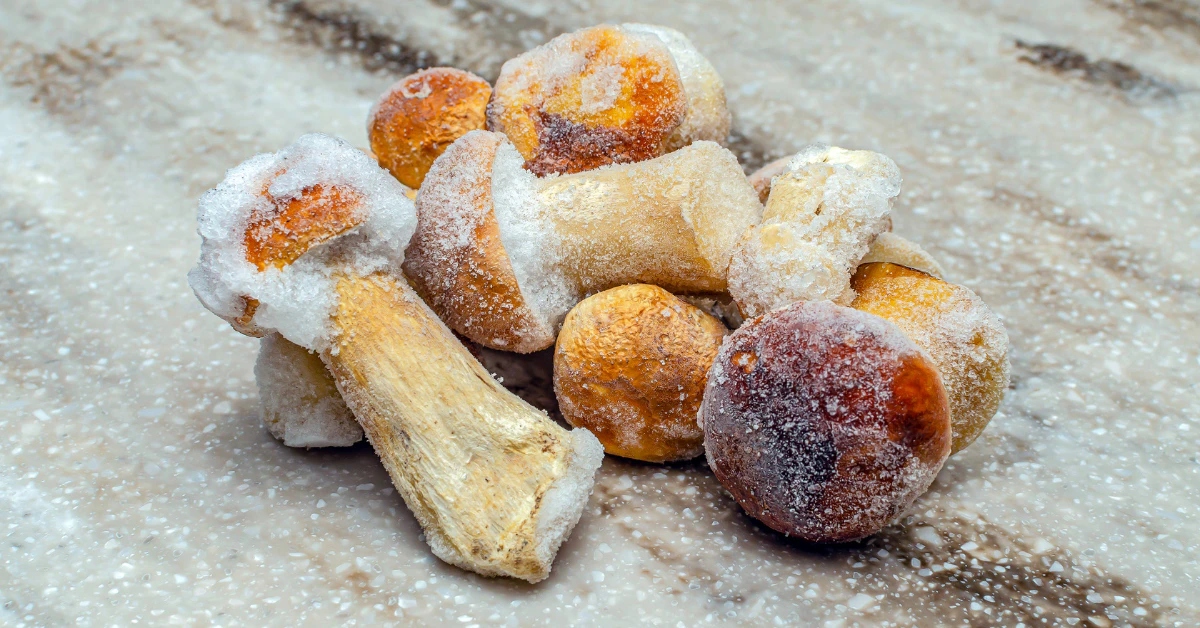
Yes, you can freeze mushrooms. Freezing changes their texture, so they turn softer and release more water when cooked. That makes them best for soups, sauces, and stir-fries, not salads. Start with firm, fresh, unspoiled mushrooms, because freezing cannot fix ones that are already going bad.
I learned this after a big shopping trip left me with more mushrooms than I could cook in a week. I froze the firm ones that same day and threw out any that felt slimy. They worked well later, but they were softer than fresh.
That is the key with freezing fresh mushrooms: plan to cook them. Add them to soups, sauces, casseroles, or stir-fries, where a soft bite is fine. For salads or anything served raw, fresh mushrooms are the better pick.
Keep reading for the best way to prep them, so they stay as firm as possible.
What Happens When You Freeze Mushrooms?
Mushrooms are mostly water. The Mushroom Council says water makes up 80 to 90 percent of them. That is why frozen mushrooms can turn mushy.
When water freezes, it forms ice crystals and expands. Those crystals damage the mushroom’s soft structure. After thawing, the mushroom feels softer and leaks liquid into the pan. USDA also says slow freezing creates large, damaging ice crystals, so I spread mushrooms out to freeze them fast.
In my kitchen, mushrooms frozen raw always come out the softest. Removing some of that water first helps a lot, and I show you how in the next sections. A little extra prep now means better mushrooms later.
Freezing is still a safe way to store them. Food kept at 0°F stays safe indefinitely, according to USDA. The cold puts microbes into a dormant state. It does not kill them. Once food thaws, they can become active again.
Safety warning: Freezing does not make bad or slimy mushrooms safe. Spoiled mushrooms belong in the trash, not the freezer.
USDA also says freezer storage times are about quality, not safety. A long freeze will not make food unsafe, but flavor and texture can slowly fade.
How to Prep and Clean Mushrooms for the Freezer
Washing mushrooms is a debate in many kitchens. The Mushroom Council says you can wipe them with a damp cloth or soft brush, or give them a quick rinse in cold water and pat them dry. Both are fine.
My rule is simple: never soak them. Mushrooms hold water like sponges, and extra water just turns into ice. I wipe or rinse fast, then dry them well with paper towels.
Here are the prep steps, based on guidance from the National Center for Home Food Preservation:
- Pick the best ones. Choose mushrooms with no spots or decay. Skip any that are slimy.
- Sort by size. Group small ones together and larger ones together. Similar sizes cook evenly.
- Clean them. Wipe with a damp cloth or brush, or rinse quickly in cold water.
- Pat dry. Press them with a towel until the surface is not wet.
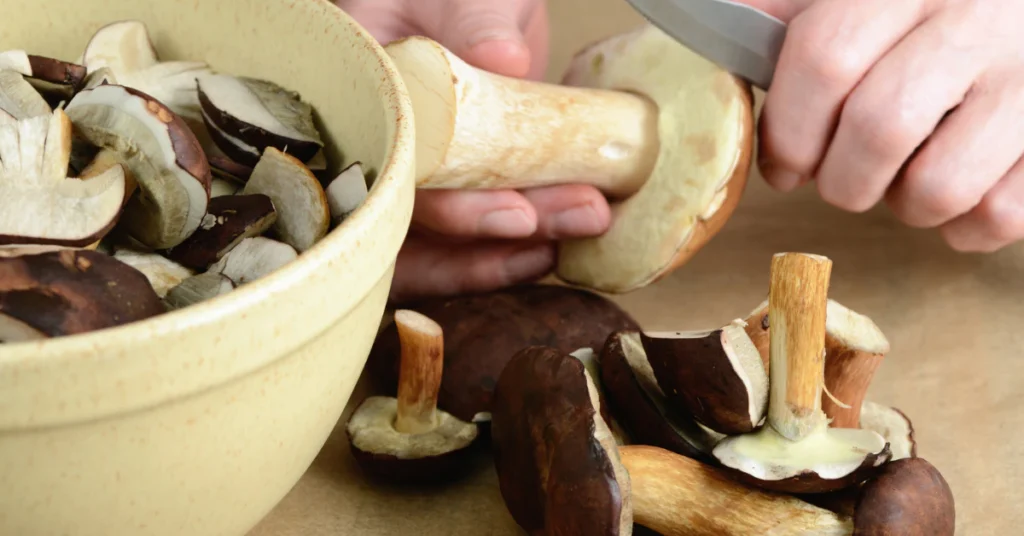
- Trim the stem ends. Cut off the end of each stem.
- Cut larger ones. If a mushroom is more than 1 inch across, slice it or cut it into quarters.
Tip from my own kitchen: I set up my cutting board with one bowl for trimmed mushrooms and one for scraps. I trim all the stems first, then do all the slicing. Doing one job at a time goes faster than finishing each mushroom start to end.
Once they are clean, dry, and cut, they are ready for heat treatment, which comes next.
Three Best Ways to Freeze Mushrooms
I use three methods, and each one removes some water before the freezer. That helps the texture. Pick the one that fits how you plan to cook.
Method 1: Steam Them
The National Center for Home Food Preservation (NCHFP) says steamed mushrooms keep longer than ones cooked in fat. When I want mushrooms to last, I steam them. Steaming before freezing is also called steam blanching.
For better color, start with a quick dip. Mix 1 teaspoon of lemon juice, or 1 1/2 teaspoons of citric acid, into 1 pint of water. Soak the mushrooms in it for 5 minutes. This helps stop them from darkening.
Then steam them:
| Mushroom type | Steam time |
| Whole | 5 minutes |
| Buttons or quarters | 3 1/2 minutes |
| Slices | 3 minutes |
Cool them quickly and drain them well. Pack them, leave 1/2 inch of headspace, seal, and freeze.
Method 2: Sauté Them
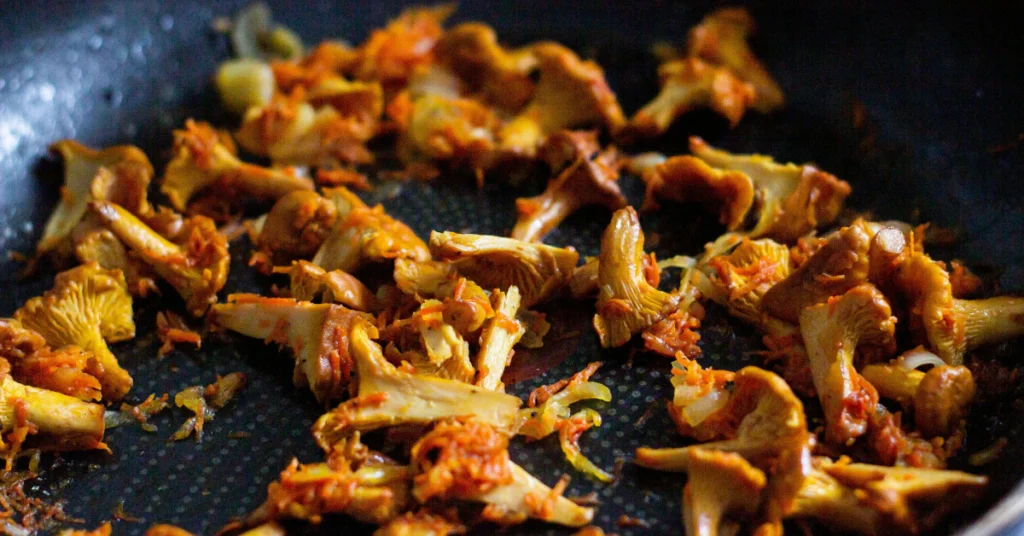
NCHFP also allows cooking mushrooms in butter or margarine. Heat small batches in an open pan until they are almost done. Fat-cooked mushrooms do not keep as long as steamed ones, so I use these first.
Use a large pan and one layer of mushrooms. The Mushroom Council warns that crowded mushrooms steam instead of brown.
Let them cool in the open air, or set the pan in cold water. Pack with 1/2 inch of headspace, seal, and freeze. Sautéed mushrooms work well in sauces, soups, casseroles, and egg dishes.
Method 3: Duxelles Cubes
This one is great for meal prep. Duxelles is finely chopped mushrooms cooked down with butter and extra flavor, such as shallots, per A Foodcentric Life.
- Chop the mushrooms very fine.
- Cook them until the liquid is gone.
- Cool them completely.
- Spoon them into an ice cube tray and freeze until solid.
- Move the cubes to a freezer bag.
That recipe says to use the cubes within 3 months. Stir them into soups, stews, or sauces. One caution from the same source: dropping a frozen cube into warm food can cool the dish or add extra moisture.
Packing tip: For any method, if you use a rigid container, leave 1/2 inch of headspace. Food expands as it freezes.
Freezing Guide by Mushroom Variety
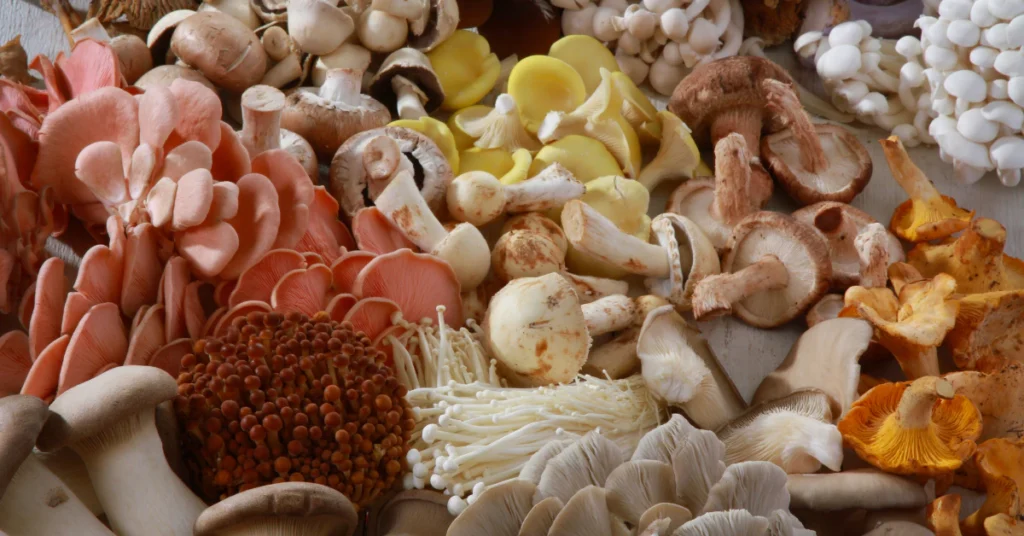
Not every mushroom freezes the same way. Here is a quick guide, so you can match the method to what is in your cart.
| Mushroom | Best way to freeze |
| White button | Sauté or steam |
| Cremini (baby bella) | Sauté or steam |
| Shiitake | Remove stems first, then sauté or steam |
| Portobello | Slice first, never freeze whole for stuffing |
| Morel | Blanch 3 minutes with lemon juice |
White Button and Cremini
These are the easiest. Sauté or steam them using the steps in the last section. They hold up well and work in almost any cooked dish.
Shiitake
Remove the stems before freezing. A recipe site called A Couple Cooks gives this tip. I do it every time, since shiitake stems are tough and they will not soften much.
Portobello
Do not freeze whole caps if you plan to stuff them. The texture changes too much. Slice them first, then freeze the slices.
I learned this the hard way. I once froze whole portobello caps, planning to stuff them later. They came out soft and watery, and they fell apart on the baking sheet. Sliced portobellos work far better in sauces and stir-fries.
Morels
Follow the University of Illinois Extension method:
- Boil water with 1 teaspoon of lemon juice for every pint of water.
- Blanch the morels for 3 minutes.
- Cool them, then drain well.
- Pack with 1/2 inch of headspace and freeze.
Safety warning: Only freeze wild mushrooms you can positively identify. False morels look similar and are poisonous. Oregon State Extension says that unless you are an expert at identification, preserve only mushrooms sold in stores. Always cook morels, since University of Missouri Extension says they must be cooked.
Safely Freezing Wild and Foraged Mushrooms
Freezing will not tell you whether a wild mushroom is safe. Identification has to come first.
Oregon State Extension says that unless you are an expert at mushroom identification, you should preserve only commercially sold mushrooms. That is the safest rule, and I follow it. If you are not sure what you picked, do not freeze it, cook it, or eat it.
Michigan State University Extension gives these steps to avoid mushroom poisoning:
- Never eat any mushroom unless you are positive about what it is.
- Cook all mushrooms thoroughly.
- Never eat a wild mushroom raw.
- Try a new mushroom with caution. Eat only a small amount and wait several hours to check for a reaction.
- Never try mushrooms that are not considered generally safe to eat.
Safety warning: Never eat wild mushrooms raw. Always cook them thoroughly, whether you cook them before freezing or after.
False morels are a real danger. They look similar to true morels and often grow in the same places. University of Missouri Extension says false morels are poisonous. True morels must also be cooked before eating.
Even edible wild mushrooms can upset some people’s stomachs or cause an allergic-type reaction. That is why the small-first-bite rule matters.
For the freezing steps once you are sure of your mushrooms, see the morel method in the variety guide above.
How Long Do Frozen Mushrooms Last? A Reality Check
Search results give wildly different answers, from 1 month to 12 months. I found the same mess when I checked. The truth is that no single official number exists for mushrooms alone. Here is what the trusted sources do say.
- Safety: Food kept constantly at 0°F stays safe indefinitely, says USDA. Storage times are about quality, not safety.
- General vegetables: NCHFP lists fruits and vegetables at 8 to 12 months for best quality. This is a broad category, not a mushroom-specific rule.
- Cooked leftovers: USDA guidance says frozen leftovers keep their best quality for 3 to 4 months. After that, food is still safe but can dry out and lose flavor. This came to me through a secondary source, so double-check it on the USDA site.
- Mushroom Council: One older note says frozen sautéed mushrooms keep up to about a month. It is the most cautious number I found.
My plan: I label every bag with the date and use sautéed mushrooms within 3 to 4 months. I use steamed ones first if I forget about a bag, since NCHFP says steamed mushrooms keep longer than ones cooked in fat. That is my own habit, not an official rule.
Check your freezer. An appliance thermometer shows whether it is truly at 0°F. USDA recommends keeping one inside.
What About Freezer Burn?
Freezer burn is not a safety problem. USDA says it only makes food dry in spots. Cut away the dry parts before or after cooking.
How to Cook with Frozen Mushrooms (Don’t Thaw Them!)
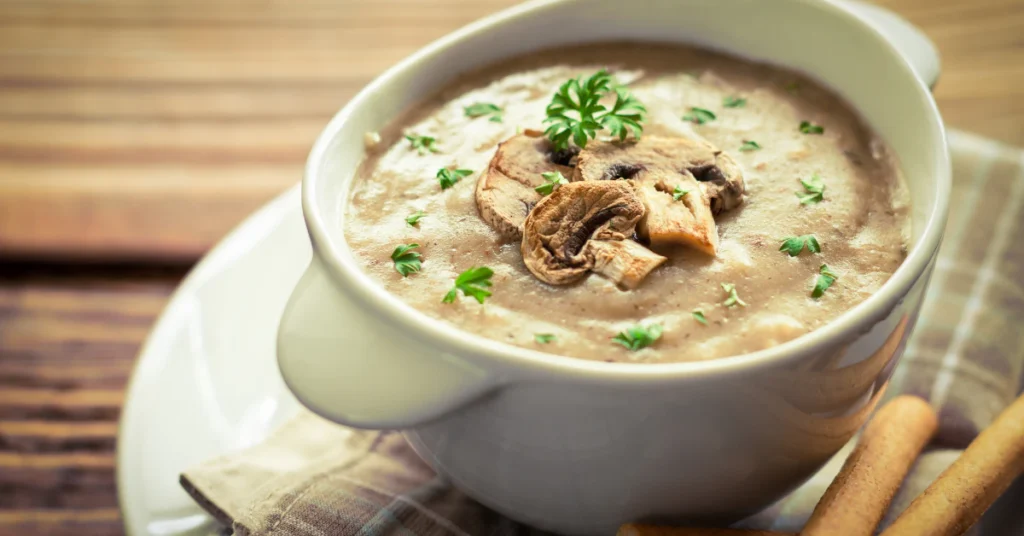
Skip the thaw. Cook frozen mushrooms straight from the freezer.
Tasting Table says to use a pan over medium to high heat and cook them as you would fresh ones. Thawing first can make them soggier. Heat hits them right away this way, so extra water cooks off fast.
My own habit is to give them a little more time in the pan than fresh mushrooms. They release liquid first, and I wait until it cooks away before adding other ingredients. For soups, stews, and sauces, I drop them in frozen.
Soups and Cream Sauces
Cream does not freeze well. USDA-based guidance lists cream sauce among foods that don’t freeze well, because it can separate. Recipe sources suggest freezing the soup or sauce before adding the cream. Then stir in the cream when you reheat.
If You Must Thaw
Safety warning: Never thaw mushrooms on the counter. Use only the refrigerator, cold water, or the microwave, as USDA directs.
Leftovers
Once you cook mushrooms into a dish, the leftovers keep 3 to 4 days in the fridge. Chill them within 2 hours of cooking. That timing comes from USDA guidance as relayed by a dietitian blog, so it is worth confirming on the USDA site.
Frozen mushrooms are a cooking ingredient. Use them in hot dishes, not in raw ones such as salads.
Frequently Asked Questions
Can you freeze mushrooms raw?
Yes, but the texture will be softer. Oregon State Extension says most mushrooms freeze better when steamed or sautéed first. Raw frozen ones work best in soups, stews, and sauces where texture matters less.
Can you refreeze thawed mushrooms?
Avoid it. UConn Extension says thawing and refreezing vegetables changes their texture. That advice is for vegetables in general, not mushrooms alone. Cook only what you need, and keep the rest frozen.
Do I need to thaw frozen mushrooms before cooking?
Usually no. Cook them straight from the freezer in a hot pan or drop them into soups and sauces. If you must thaw, use only the fridge, cold water, or the microwave.
How should I wash mushrooms before freezing?
Wipe them with a damp cloth or brush, or give them a quick cold rinse. Then pat them dry. Do not soak them.
Can I freeze wild mushrooms?
Only if you can positively identify them. Oregon State Extension says to preserve only store-bought mushrooms unless you are an expert. Always cook wild mushrooms.
Conclusion
Yes, you can freeze mushrooms. Start with firm, fresh ones, and remove some water first by steaming or sautéing. Pack them with 1/2 inch of headspace, and keep your freezer at 0°F.
Then cook them straight from the freezer in soups, sauces, and stir-fries. They will be softer than fresh, but they are far better than tossing a batch that spoiled. Label your bags, use them within a few months for the best quality, and always follow the safety rules above.