
Yes, you can freeze cheese. Hard and semi-hard cheeses like cheddar, Swiss, and Parmesan freeze best. They turn crumbly, but the flavor mostly stays. Soft cheeses do worse. Food kept at 0°F stays safe, so the change is about texture, not safety. Block cheese works too if you cut it into small pieces first.
I never plan to buy too much cheese. It just happens. A big block at the warehouse store costs less per pound, so it goes in the cart. Then I get home and realize my family cannot finish it before it spoils.
So I started freezing the extra, but I wanted to know which cheeses survive the trip. Before I trusted the freezer, I checked what USDA’s Food Safety and Inspection Service says. Freezing at 0°F keeps food safe, and storage times are about quality. Here is what that means for your cheese.
Does Your Freezer Actually Cut It? (The Tech Side)
Your freezer matters as much as the cheese. A weak one can hurt good cheese before it gets a fair chance.
Here is the science in plain words. Cheese holds water, and water turns into ice crystals when it freezes. USDA’s FSIS says slow freezing makes large, disruptive ice crystals. When food thaws, those crystals damage the cells and dissolve emulsions. An emulsion is a mix of fat and water that holds food together. In cheese, that damage shows up as a crumbly, dry, or grainy bite.
Cheeses with more water have more to lose. America’s Test Kitchen notes that cream cheese is about half water, and theirs turned grainy after thawing. A slow, weak freezer makes this problem worse.
Freezer warning: Your freezer must hold 0°F. USDA says if a freezer compartment cannot hold 0°F, or the door is opened often, use it for short-term storage only.
That matters in a busy kitchen, where the freezer door opens all day.
That is why I keep a thermometer in mine. USDA recommends an appliance thermometer for freezers. Here is how to check yours:
- Put an appliance thermometer inside the freezer.
- Read the temperature.
- Look for 0°F or lower.
- If it reads warmer, treat the freezer as short-term storage and use your cheese sooner.
Some freezers have a quick-freeze setting. That feature depends on the brand and model, so check your manual.
Tight wrapping also helps prevent freezer burn. I cover wrapping in a later section.
Tallying word counts while finalizing cheese-freezing guidance
Which Cheeses Freeze Best? (And Why Experts Disagree)
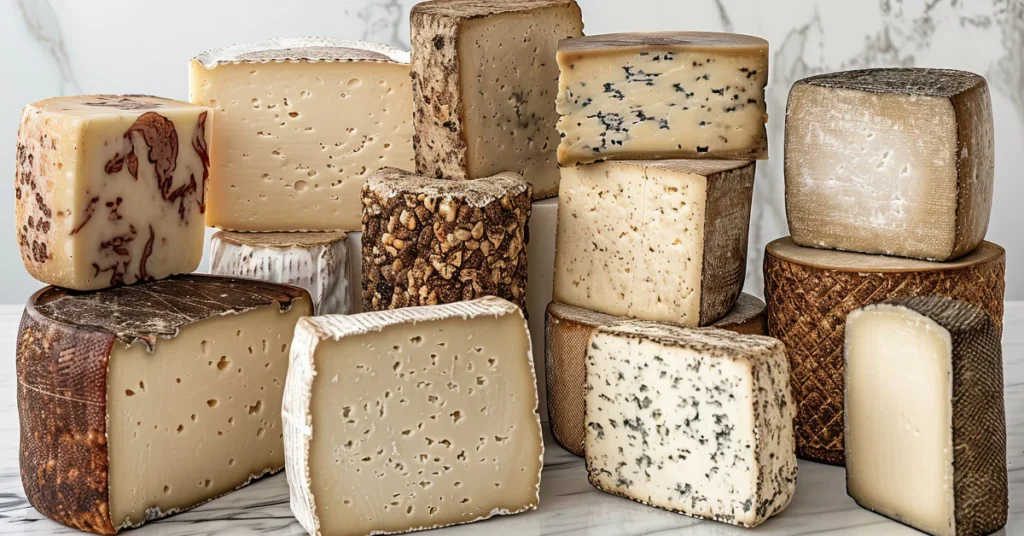
Hard and semi-hard cheeses freeze best. Soft, high-water cheeses like cottage cheese, ricotta, and cream cheese do the worst. Less water means fewer ice crystals, so the cheese holds together better after thawing.
The Best Cheeses to Freeze
UC Master Food Preservers lists these as good choices: cheddar, Edam, Muenster, Parmesan, provolone, Romano, and Swiss. If you want to freeze cheddar cheese, expect it to turn crumbly and a bit dry. It won’t slice as neatly, but NDSU Extension says the flavor stays just as good as fresh.
Softer cheeses lose much more. Sources even disagree on cottage cheese and ricotta. One extension chart says do not freeze them, and another allows a month. I treat them as a poor bet and only freeze them for cooked dishes.
Why the Experts Disagree
Cheese makers lean cautious. Carr Valley says cheese can be frozen, but they do not recommend it. Gardner’s Wisconsin Cheese says not to freeze block cheese unless you plan to cook with it later.
Then there’s America’s Test Kitchen. They froze extra-sharp cheddar, Brie, fresh goat cheese, and Pecorino Romano for six weeks. Each was wrapped tightly in plastic wrap and sealed in a zipper bag. After thawing, the cheeses were essentially identical to unfrozen ones, and the cheddar melted properly.
Both sides can be right. A cheese maker cares about how cheese slices and tastes straight from the package. The test only ran six weeks, and ATK says the limit is about two months with very tight wrapping or vacuum sealing. So I freeze cheese I plan to cook with, and I wrap it well.
So can you freeze block cheese? Yes, if you cut it into ½ to 1 pound pieces first, according to University of Nebraska-Lincoln Extension.
Can You Freeze Cream Cheese?
You can, but it gets grainy. ATK says cream cheese is about half water. After thawing, their samples were crumbly and ricotta-like. Spreading it on bagels was out.
It still worked in pound cake and biscuits. It turned gritty in cheesecake. So save thawed cream cheese for baking, not for spreading or cheesecake.
Freezing Sliced, Shredded, and Processed Cheese
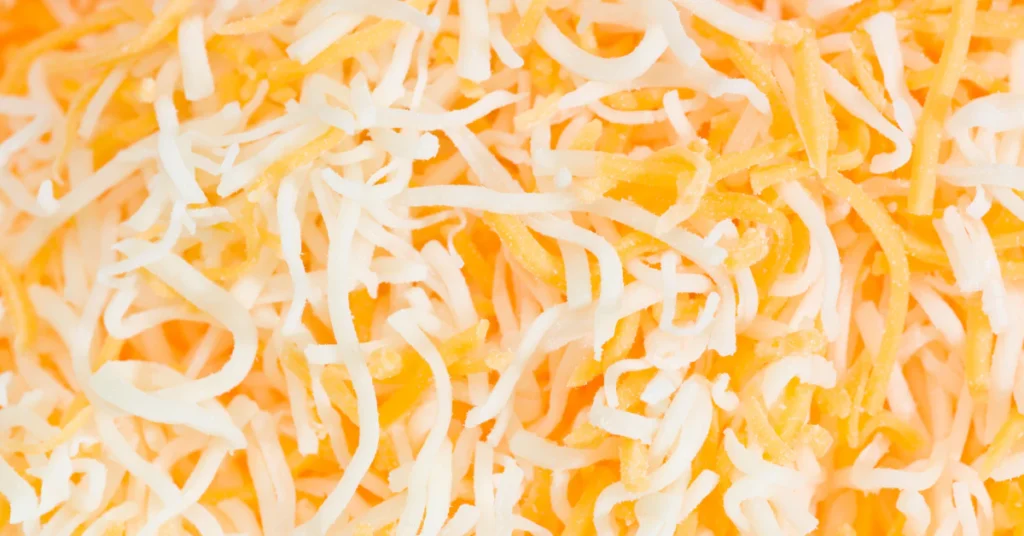
Shredded cheese freezes well. Sliced cheese works too, if you keep the slices apart. Processed cheese is where experts disagree. Here is how I handle each one.
Shredded Cheese
Leftover taco night cheese goes straight into my freezer. University of Nebraska-Lincoln Extension says to freeze shredded cheese in its original package. When you need it, thaw it in the fridge for 24 to 48 hours so the moisture can soak back in. UC Master Food Preservers says shredded cheese keeps best for 3 to 4 months.
Homemade shreds are different. They clump in the bag. Store-bought bags usually contain an anti-clumping agent, so they behave better. Here is the fix from Home-Ec 101:
- Shred your cheese.
- Put it in a freezer bag with 1 to 2 tablespoons of cornstarch.
- Press out as much air as you can, then shake the bag to coat the shreds.
Running to the Kitchen points out that the starch only makes sense if the cheese will be cooked. Skip it for cold uses like salads.
Deli and Sliced Cheese
Slices stick together in the freezer, and I want to pull out one at a time. Taste of Home says to put a piece of parchment paper between each deli slice. For prepackaged slices, just put the whole package in a freezer bag.
Processed Cheese and American Singles
Experts disagree here, so I can’t give you one clean answer. NDSU Extension says processed cheese products usually freeze fine. UC Master Food Preservers says processed cheese slices do not freeze well.
If you freeze them anyway, plan to melt them. Grilled cheese and other cooked dishes hide texture changes. I would not count on frozen singles for a cold sandwich.
Step-by-Step: How to Freeze and Thaw Cheese Safely
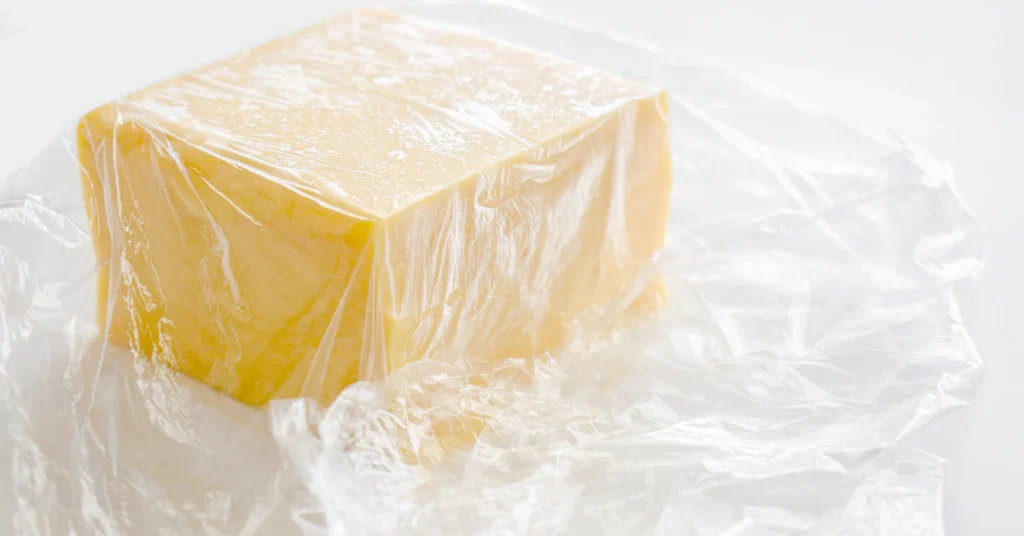
Cut it small, wrap it tight, keep your freezer at 0°F, and thaw it in the fridge. That is the whole plan. The details below keep cheese from drying out or going bad.
How to Freeze Cheese
- Check the freezer first. It needs to hold 0°F. If it can’t, use your cheese sooner.
- Cut the cheese into small pieces. Sources disagree on size. NDSU Extension and UC Master Food Preservers say ½ pound or less. University of Nebraska-Lincoln Extension says ½ to 1 pound. I aim for ½ pound and never go past 1 pound. Small pieces thaw more evenly, and you only thaw what you need.
- Wrap each piece tightly in plastic wrap. Tight wrapping fights freezer burn. America’s Test Kitchen says to wrap cheese extremely well or vacuum seal it.
- Seal it in a freezer bag. Press out the extra air.
- Label it. Write the cheese type and the date.
- Freeze it. For best quality, UC says blocks keep up to 6 months and shredded cheese 3 to 4 months. Those times are about quality. USDA says food kept at 0°F stays safe.
How to Thaw Cheese
Food safety warning: Thaw cheese in the refrigerator only. Never thaw it on the counter. USDA guidance sets a limit of 2 hours out of the fridge, or 1 hour above 90°F. Freezing only pauses germs, and they can grow again after thawing, says Washington State University Extension.
- Move the wrapped cheese to the fridge.
- Give it time. Shredded cheese needs 24 to 48 hours so the moisture can soak back in, per UNL Extension. America’s Test Kitchen thawed its blocks overnight in the fridge.
- Use it fast. UNL says to use thawed cheese as quickly as possible.
- Skip the second freeze. USDA says food thawed in the fridge is safe to refreeze, but quality drops. For cheese, that means even more crumbling. Small portions solve this, because you only thaw what you need.
Thawed cheese works best in cooked dishes like casseroles and grilled cheese, where a crumbly texture hides.
Can You Refreeze Thawed Cheese?
Yes, you can refreeze thawed cheese, but only if it thawed in the fridge. The bigger problem is quality, not safety.
USDA guidance, shared by University of Nebraska-Lincoln Extension, says food thawed in the refrigerator is safe to refreeze. Some quality can be lost because of moisture that escapes during thawing. Washington State University Extension agrees. If plans change, it says, it’s safe to put thawed food back in the freezer.
This is general USDA food guidance, not a cheese-specific rule. Some cheese makers are stricter. Gardner’s Wisconsin Cheese says refreezing can be unsafe. I follow the USDA safety rule, but I still avoid refreezing cheese when I can.
Food safety warning: Only refreeze cheese that thawed in the refrigerator. Never refreeze cheese that sat out for more than 2 hours, or 1 hour above 90°F.
Refreezing is not a free do-over. Cheese already loses moisture the first time it thaws, so a second freeze can leave it drier and more crumbly. The research I found does not say how much worse it gets. It only warns that quality drops, so I treat it as a last resort.
Here is the better fix: portion the cheese before the first freeze.
- Cut the cheese into small pieces, about ½ to 1 pound.
- Wrap each piece on its own.
- Thaw only what you plan to use.
That way, a change in dinner plans costs you one small piece, not the whole block.
Food Safety: Mold and Microbes on Frozen Cheese
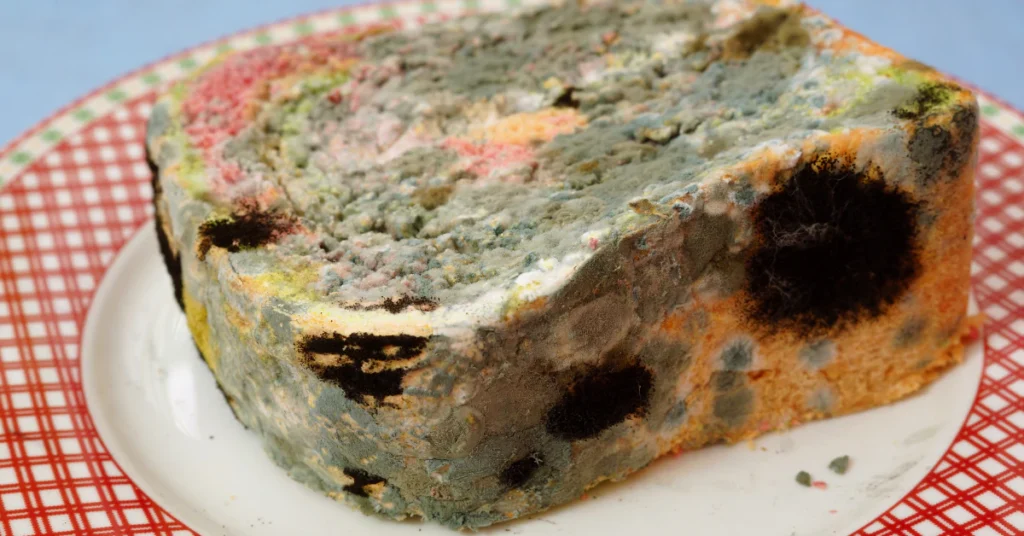
Freezing does not kill germs or mold. It only puts them to sleep. USDA’s FSIS says freezing at 0°F inactivates microbes, and Washington State University Extension says they can grow again after thawing. So a frozen block with mold on it is still a moldy block.
Food safety warning: Check cheese for mold as soon as it thaws. Follow these rules exactly.
- Hard cheese blocks (cheddar, Parmesan, Swiss): Cut off at least 1 inch around and below the mold spot. Keep the knife out of the mold, so it doesn’t spread to clean parts. Then re-wrap the cheese in fresh wrap.
- Shredded, sliced, or crumbled cheese: Throw it out.
- Soft cheese (cottage, cream, ricotta, Brie): Throw it out.
Mayo Clinic explains why. In shredded, crumbled, sliced, and soft cheese, mold can send threads through the whole cheese, even where you can’t see them. Harmful bacteria can also grow along with the mold.
Some cheeses, like Brie and Camembert, are made with safe mold. USDA still says to discard soft cheese with mold that isn’t part of how it was made. If you aren’t sure, Mayo Clinic says to throw it out.
Troubleshooting
Crumbly thawed cheese is normal. Ice crystals break up the cheese as it freezes, so it falls apart when it thaws. You did nothing wrong. I have pulled out plenty of blocks that crumbled the second my knife touched them.
You can’t bring back the sliceable texture, so change the job. University of Nebraska-Lincoln Extension says frozen cheese works best for cooking. NDSU Extension says the flavor stays as good as fresh. In America’s Test Kitchen’s test, frozen cheddar still melted properly. Use crumbly cheese in casseroles, mac and cheese, and soups, where no one will notice the texture.
FAQs
Does freezing cheese ruin it?
No. Freezing changes the texture, not the safety or the flavor. Frozen cheese gets drier and crumblier, but NDSU Extension says the taste stays as good as fresh cheese.
Why is my frozen cheese crumbly?
Ice crystals form inside the cheese as it freezes and damage its structure. USDA’s FSIS says slow freezing makes the largest, most damaging crystals. Cheeses with more water, like cream cheese, break down the most.
Can you fix crumbly frozen cheese?
You can’t restore the original texture. Move it to cooked dishes instead, such as casseroles, mac and cheese, or soups. Melting hides the crumbles and keeps the flavor.
How long can you keep cheese in the freezer?
For best quality, UC Master Food Preservers says blocks keep up to 6 months and shredded cheese 3 to 4 months. These times are about quality, not safety. USDA says food kept at 0°F stays safe.
Is frozen cheese safe to eat?
Yes, if it stayed at 0°F the whole time. Freezing only pauses germs and mold, so check the cheese once it thaws. Cut 1 inch around mold on hard cheese. Throw out shredded, sliced, crumbled, or soft cheese with mold.
Can you use frozen cheese on sandwiches or a cheese board?
I wouldn’t. NDSU Extension says frozen cheese slices poorly. A cheese board shows off the texture, so save fresh cheese for that. Use thawed cheese in hot dishes.
Frozen cheese isn’t ruined cheese. It just has a new job. Freeze it right, thaw it in the fridge, and you will waste a lot less.