Getting rid of crickets means fixing the reasons they got inside, not just killing the ones you see. Cut down moisture, seal cracks and gaps, then remove the crickets that are already in with a vacuum or a simple soapy water trap. Spray last, not first.
That chirping at 2 AM gets old fast. One cricket can keep a whole house up, and a few dozen in the basement feels like a real problem. This guide covers crickets indoors and outdoors, in basements, garages, walls, and yards, plus what to do about just one stubborn cricket you can’t find.
Here’s the mistake most people make: they grab bug spray right away. But extension experts say sealing entry points and drying out damp areas should come first. Spray before that, and crickets just keep wandering back in.
How to Find and Remove a Single Cricket (The 2 AM Problem)
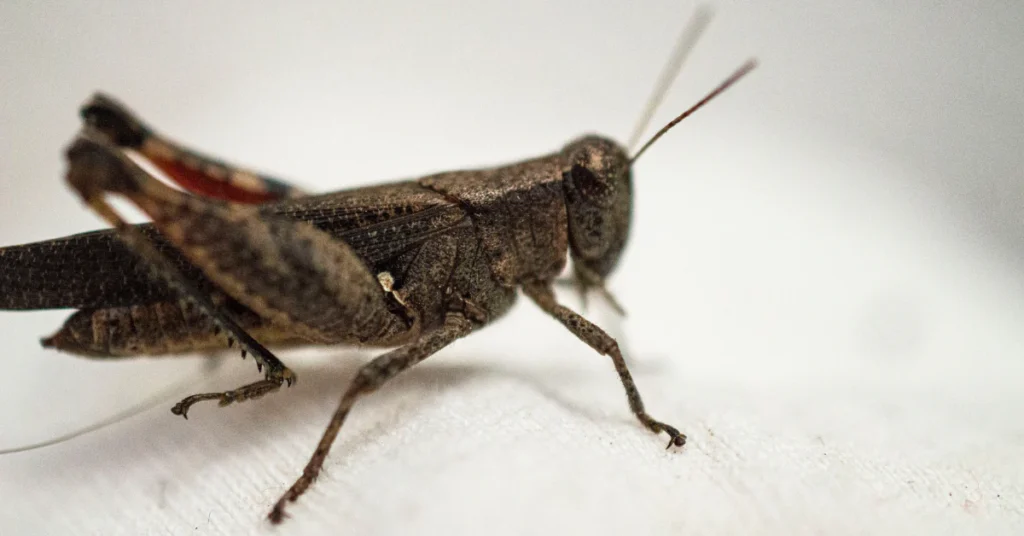
One cricket can be louder than you’d think. The hard part is finding it, because crickets go quiet the moment they feel movement or vibration nearby. Chase the sound, and it stops. Get closer, and it stays silent until you give up and walk away.
Here’s a better way to track it down:
- Turn off every light in the room except one in a nearby hallway or bathroom. Crickets tend to move toward light, so this can draw it out of hiding.
- Wait a few minutes without moving. Let the house go quiet and listen for the chirp again.
- Check the usual hiding spots once it starts up: along baseboards, behind furniture, near door frames, and in dark corners.
- Move slowly. Sudden steps or sounds will send it silent again.
Once you spot it, skip the chase and grab a vacuum with a hose attachment. According to University of Maryland Extension, a vacuum cleaner is one of the most effective and least toxic ways to get rid of crickets that have wandered indoors. It’s instant, it doesn’t involve chemicals, and there’s no cleanup afterward.
If you don’t have a hose attachment handy, a cup and a piece of paper work too. Trap it against a wall, slide the paper underneath, and release it outside.
No need to turn the room upside down. A few minutes of patience usually gets the job done.
Choosing Your Method: Fast, Natural, or Pet-Safe?
Not every cricket problem calls for the same fix. Some readers want the fastest kill possible. Others have a cat or toddler crawling around the floor and want something gentler. Here’s how the main methods stack up:
| Method | Kills on Contact? | Pet-Safe? | Best For | Indoor/Outdoor |
| Vacuuming | No (removes live) | Yes | Single cricket | Indoor |
| Soapy water spray | Yes | Caution with pets nearby | Infestation | Both |
| Sticky traps | No (traps alive) | Yes | Infestation | Indoor |
| Diatomaceous earth | Yes (slower) | Yes, if used as directed | Infestation | Both |
| Essential oil spray | No (repels only) | Generally yes | Prevention | Both |
| Commercial insecticide | Yes | Only after drying, follow label | Infestation | Both |
A quick note before you pick one: crickets aren’t dangerous. They don’t bite people, and they don’t carry diseases. That means you don’t need to reach for the strongest chemical option out of fear. If you’d rather not kill anything, or you have pets wandering nearby, a vacuum, sticky trap, or natural spray will usually do the job just fine. Save the heavier options for a real infestation that the gentler methods aren’t keeping up with.
DIY Sprays and Hacks: What Works and What’s a Myth
Not every home remedy you see online is backed by real evidence. Here’s what the research actually supports, and what to skip.
What works
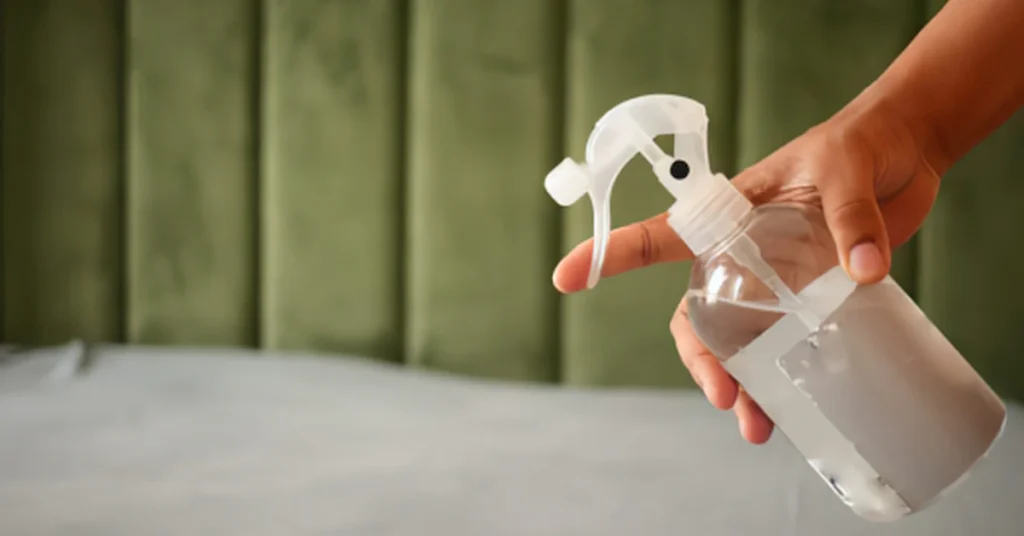
Soapy water does more than just drown crickets. The soap strips away the waxy coating on a cricket’s exoskeleton. Without that coating, the cricket dries out and dies. A 1984 toxicology study found that common dishwashing soaps, including Dawn, were toxic to crickets this way.
To use it, mix a few drops of dish soap into a spray bottle of water and spray crickets directly.
Essential oils also have real science behind them. A peer-reviewed study tested 27 essential oils on house crickets and found that four stood out: peppermint, rosemary, cinnamon, and lemongrass. These oils showed a genuine, measurable repellent effect, with stronger concentrations working better.
Here’s a simple spray recipe:
- Mix 10 to 15 drops of peppermint, rosemary, cinnamon, or lemongrass oil into one cup of water.
- Add a small squirt of dish soap to help the oil mix in.
- Shake well and spray along baseboards, window sills, and door frames.
Safety warning: Undiluted essential oils, especially cinnamon, can be toxic to cats. Always dilute oils before spraying, and keep cats away from treated areas until the spray has dried.
What’s a myth
WD-40 shows up constantly in TikTok videos as a bug hack, but there’s no real evidence it works on crickets or any other insect. It has no lasting, residual effect once sprayed. Pest control professionals say it simply isn’t a reliable repellent.
It’s also not a safe product to spray around pets or kids. Skip this one and stick with soap or essential oils instead.
Using Traps, Baits, and Chemical Treatments Safely
For a real infestation, gentler methods won’t always be enough. These heavier options work faster, but they come with safety rules you shouldn’t skip.
Diatomaceous earth
Diatomaceous earth, often called DE, works by scraping away the cricket’s protective outer layer. Once that layer is gone, the cricket dries out and dies.
Safety warning: DE is safe when used as directed, but it can irritate a pet’s eyes, skin, and lungs if inhaled. Don’t apply it directly to pet bedding or sleeping areas, and avoid stirring up dust clouds in rooms your pets spend a lot of time in.
Boric acid baits
Granular baits with boric acid are labeled for cricket control and work slowly over several days.
Safety warning: These products carry an EPA label requiring them to be kept away from children and pets. This matters because dogs can show signs of toxicity after eating around 0.02 ounces of boric acid per pound of their body weight. For a 20-pound dog, that’s less than half an ounce. Keep bait stations tucked into cracks, behind appliances, or anywhere pets and kids can’t reach.
Commercial insecticide sprays
Store-bought sprays kill crickets on contact and can cover baseboards, window frames, and entry points.
Safety warning: Keep pets and children off any treated surface until it’s completely dry. Always follow the directions on the product label for reentry times and application amounts.
For label details and safe-use instructions on EPA-registered pest products, you can check the EPA’s pesticide product label search.
How to Get Rid of Crickets in the House (Room by Room)
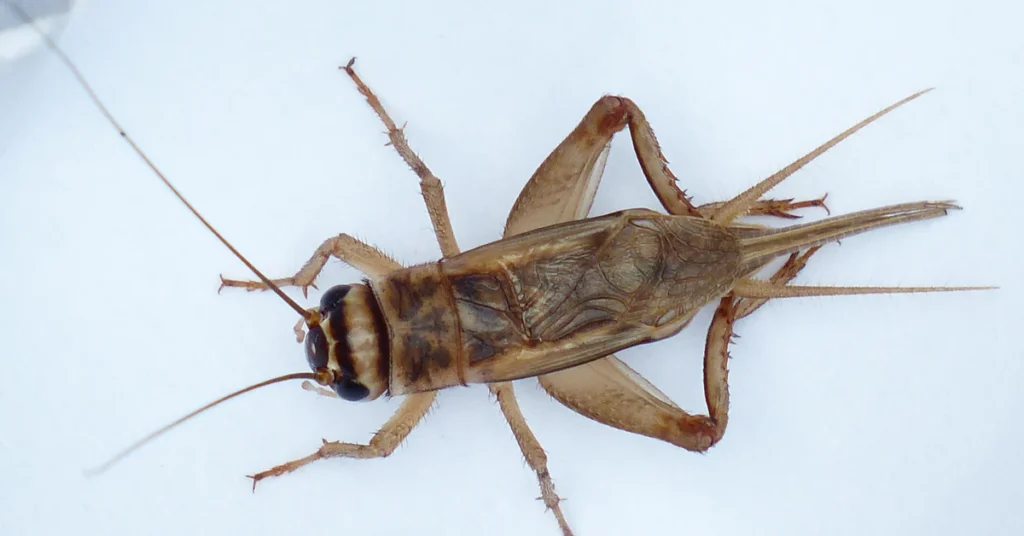
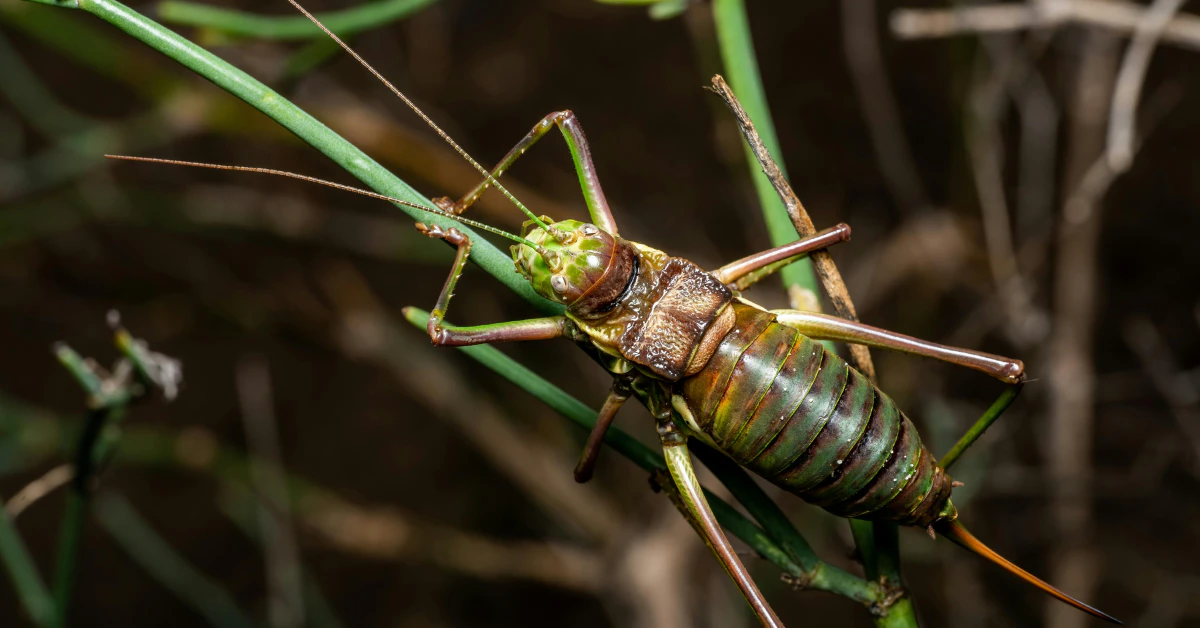
Where you find the cricket usually tells you something about why it’s there. House, field, and camel crickets are the top three species that end up indoors, and each shows up for slightly different reasons.
Basement
Basements are damp, dark, and quiet, which makes them a favorite hiding spot for camel crickets. If you’ve spotted a hunched-back, wingless cricket down there and never heard it chirp, that’s likely what you’re dealing with. Camel crickets don’t make sound at all.
To fix a basement problem:
- Run a dehumidifier to cut down moisture.
- Clear out clutter like cardboard boxes, old newspapers, and stacked firewood.
- Check for cracks in the foundation and seal them with caulk.
Garage
Garages share the same damp, cluttered conditions crickets love, especially near door seals and storage piles. Keep the garage door seal in good shape, move boxes and debris away from the walls, and store firewood outside rather than stacked against the garage.
Inside the walls
Hearing a cricket chirp from inside a wall is especially frustrating, because you can’t just reach in and grab it. Crickets usually get into wall voids through small gaps around utility lines, foundation cracks, or loose baseboards.
Here’s how to close those entry points:
- Caulk along the baseboards where they meet the floor and wall.
- Seal any gaps around outlet covers, since these are a common hidden entry point.
- Check where pipes or cables run through the foundation, and caulk around them too.
If crickets are already active inside the wall void, don’t spray liquid insecticide into it. Liquid can seep into places you don’t want it and won’t reach the whole space evenly. Instead, use diatomaceous earth dust, which can be puffed into the void through an outlet gap or small opening using a duster.
Sealing these entry points does double duty. It stops the current cricket from finding a way out into your living space, and it keeps the next one from getting in at all.
Stopping Them Outside: Yard, Garden, and Windows
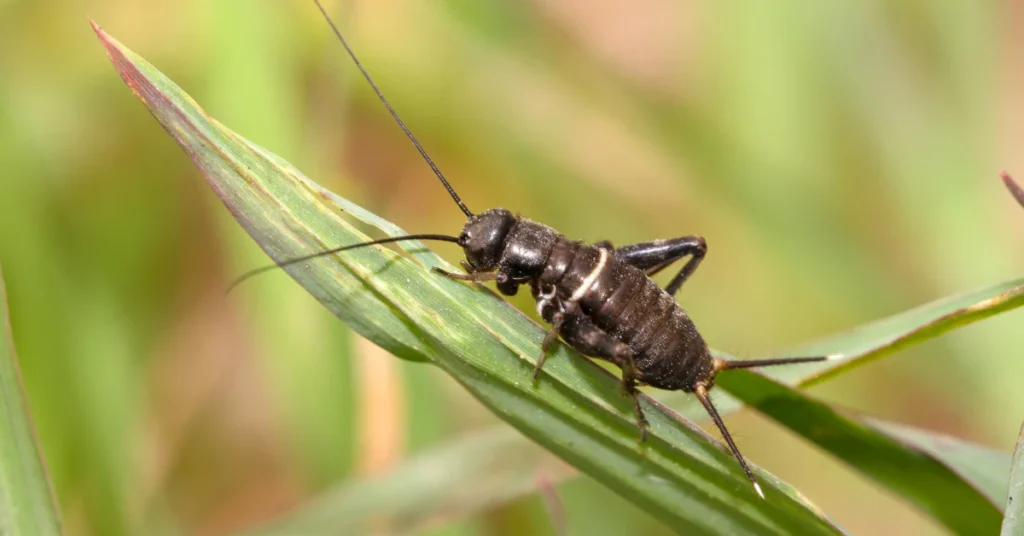
The fewer crickets near your house, the fewer end up inside it. Outdoor control is really about making your yard and windows a place crickets don’t want to be.
Lighting matters more than you’d think
Crickets are strongly drawn to bright, white outdoor lighting, especially incandescent bulbs, according to University of Minnesota Extension. If you’ve got porch lights or window-mounted fixtures blazing all night, you’re likely pulling crickets straight toward your doors and windows.
Swap standard bulbs for warm-toned or yellow “bug lights” near entry points. They’re far less attractive to crickets and other night-flying insects, which means fewer show up at your windows in the first place.
Clean up the yard
Crickets look for cool, damp, cluttered spots to hide during the day. A few changes to your yard make it less inviting:
- Move woodpiles away from the foundation instead of stacking them against the house.
- Clear out leaf litter and plant debris near walls and window wells.
- Fix areas with poor drainage, since standing water and soggy soil attract crickets looking for moisture.
Create a dry, unappealing perimeter
Think of the area right around your house as a buffer zone. The goal is to make it dry, clean, and well-lit with warm bulbs, so crickets have no reason to stick around near your windows and doors. Keep grass trimmed, gardens tidy, and gutters clear so water drains away from the foundation instead of pooling nearby.
A little yard maintenance goes a long way toward keeping crickets outside where they belong, instead of making their way in through a window screen or door gap.
Should You Just Leave Them Alone? (Ecology and Folklore)
If you feel a little bad about killing a cricket, you’re not alone. Outdoors, crickets actually do good work. They eat weed seeds, break down organic matter, and feed birds and other wildlife. They only become a problem once they wander inside.
There’s a cultural side to this too. Chinese, Native American, and English folklore all share a belief that killing a cricket brings bad luck.
If that hesitation feels real to you, you don’t have to kill every cricket you find. Catch-and-release with a cup and a piece of paper works just as well as swatting one. Sealing up entry points and cleaning out damp hiding spots keeps future crickets from getting in at all, without a single one needing to die.
Frequently Asked Questions
What will make crickets go away?
Cutting down moisture, sealing cracks and gaps, and clearing clutter near your home all help. These steps work better than spraying alone, since they remove the reasons crickets came in.
Does Dawn dish soap kill crickets?
Yes. Soap strips the waxy coating off a cricket’s exoskeleton, causing it to dry out and die. A 1984 toxicology study confirmed this effect on crickets.
Why should you not kill crickets?
Outdoors, crickets eat weed seeds and break down organic matter, which helps your yard. Chinese, Native American, and English folklore also consider killing a cricket bad luck.
What smell does a cricket hate?
Peppermint, rosemary, cinnamon, and lemongrass oils showed a real repellent effect on house crickets in a peer-reviewed study.
What does WD-40 do to crickets?
Not much. It has no proven repellent effect and no lasting action, despite being a popular online hack. It also isn’t safe to use around pets.
What is a good homemade spray to keep crickets away?
Mix 10 to 15 drops of peppermint, rosemary, cinnamon, or lemongrass oil into a cup of water with a little dish soap. Spray it along baseboards and entry points.
How do you get rid of a single cricket?
Turn off nearby lights except one in another room to draw it out, then check dark corners and baseboards once it starts chirping again. A vacuum with a hose attachment removes it instantly.
What kills crickets the fastest?
Direct contact with soapy water or a labeled insecticide spray kills fastest. For a single cricket, a vacuum is the quickest chemical-free option.
Will coffee grounds keep crickets away?
This isn’t confirmed for crickets specifically. There’s no solid study backing it up, so it’s best treated as an unproven idea rather than a reliable fix.
Conclusion
Getting rid of crickets isn’t complicated once you know the order of operations. Cut the moisture, seal the gaps, then deal with the crickets already inside using whatever method fits your comfort level, from a quick vacuum to a soapy spray. Handle the outside of your house the same way, and you’ll see far fewer crickets trying to get in come fall.