
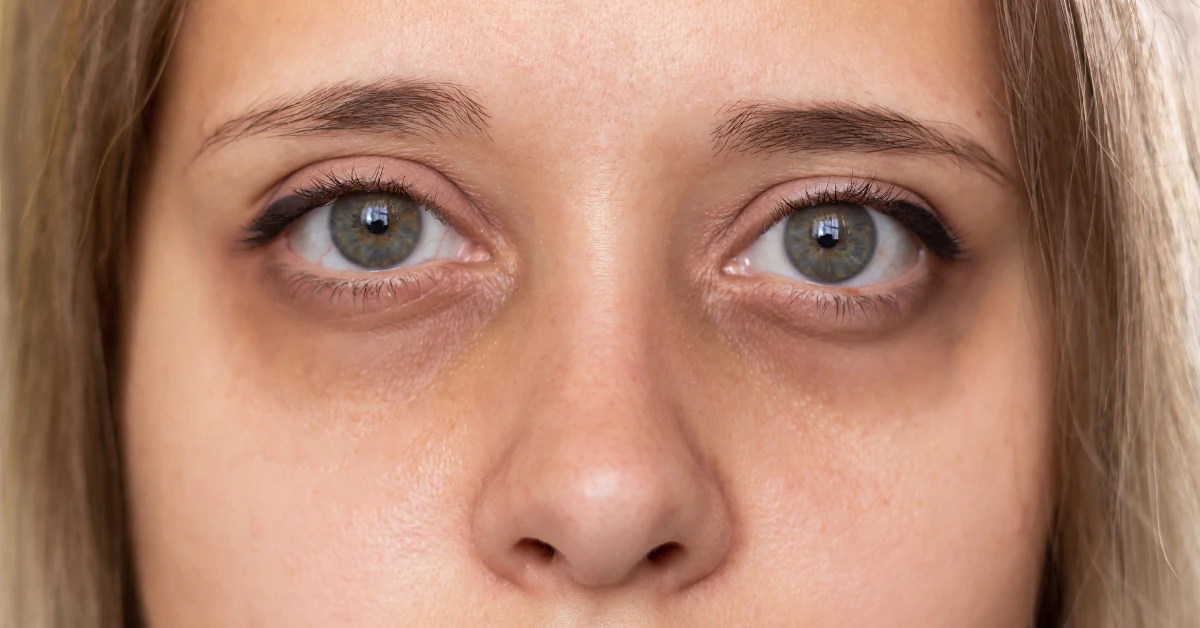
Getting rid of dark circles depends on what’s causing them. Poor sleep and dehydration fade with rest and water. Genetics and thin skin need brightening ingredients like vitamin C or caffeine. Deeper pigment or hollowing may need a dermatologist’s help with peels, lasers, or filler.
Dark circles are one of the most common skin complaints, and they can show up no matter how much sleep you get. The good news is that they are usually harmless. They don’t mean something is wrong with your health in most cases. But they can still knock your confidence, especially when people keep asking if you’re tired or sick.
This guide breaks down what actually works, starting with fast fixes and moving toward longer-term and medical options, so you can pick the right one for your situation.
Why Do I Have Dark Circles? Diagnosing the 3 Main Types

Not all dark circles are the same, and that’s the main reason so many products fail to work. If you don’t know which type you have, you might be treating the wrong problem.
There are three main types.
Vascular circles (the most common type)
These show up as a blue, purple, or reddish tint under the eyes. They happen because the skin there is very thin, so the small blood vessels underneath show through more easily. This type is actually the most common cause of dark circles, making up an estimated 38 to 43.8 percent of cases.
Pigmented circles
These look brown or tan, almost like a stain under the eyes. They come from extra pigment (color) building up in the skin, often from sun exposure, rubbing your eyes, or genetics.
Structural circles
These are really shadows, not color at all. As skin loses volume with age, small hollows form under the eyes. Light hits those hollows and creates a shadow that looks like a dark circle, even though the skin itself hasn’t changed color.
Many people also deal with a mix of two or three types at once, which is why one product rarely solves everything.
A common mix-up worth clearing up
A lot of people confuse puffy, dehydrated circles with pigmented ones. If your circles look worse after a salty meal or a night with little water, that’s usually puffiness and fluid buildup, not pigment. In that case, a brightening serum won’t do much. What actually helps is drinking more water and cutting back on salt, since that’s treating the real cause instead of guessing.
When circles might point to something else
If your dark circles show up suddenly and don’t improve no matter how much you sleep, it may be worth checking in with a doctor about your iron levels. One study looked at 200 people with persistent dark circles and found that half of them had iron-deficiency anemia, a condition where the blood doesn’t carry enough oxygen. Once their anemia was treated, many of them saw their dark circles improve on their own.
This doesn’t mean every case of dark circles is linked to anemia. But if yours came on fast, feel unusually stubborn, or come with tiredness that sleep doesn’t fix, it’s a reasonable thing to mention at your next checkup.
Knowing which type (or mix) you’re dealing with is the first real step. It’s also what the rest of this guide is built around, so the fixes actually match the cause.
How to Get Rid of Dark Circles Under Eyes at Home & Naturally

If you want results fast and without spending money, start with what’s already in your kitchen and your daily habits. These fixes won’t erase every type of dark circle, but they make a real difference for the vascular and puffy kind, and they’re worth doing even if your circles have other causes too.
Get consistent sleep, not just more sleep
It’s not only about hours. Going to bed and waking up at roughly the same time each day helps your body regulate blood flow better, which can reduce how dark and puffy the under-eye area looks. A single late night won’t ruin your skin, but a pattern of irregular sleep will show up under your eyes first.
Drink more water, especially if you had salty food
Dehydration makes the skin under your eyes look duller and more sunken, which makes dark circles more obvious. If you notice your circles look worse the day after a salty meal or a few drinks, that’s fluid retention and dehydration working against you. Cutting back on salt and sipping water through the day can visibly help within a day or two.
Cut back on smoking and alcohol
Both smoking and drinking too much alcohol cause the blood vessels under your eyes to widen, or dilate. That’s part of why dark circles often look worse the morning after drinking, or in people who smoke regularly. Cutting back won’t fix genetic or pigmented circles, but it does calm down the vascular type.
Use a cold compress, but know what it can and can’t do
Cold temporarily narrows (constricts) the blood vessels under your eyes. That can reduce puffiness and dial down the bluish tint of vascular circles for a little while. But once your skin warms back up, the blood vessels return to normal and the look comes right back. Ice does nothing for pigment-based dark circles or for the shadow caused by hollows, no matter how long you leave it on or how many times a day you use it.
So if you’ve been icing your eyes every morning and seeing no real change, that’s not you doing it wrong. It just means your circles are the pigmented or structural type, and ice was never going to fix that.
Safety warning: Never put ice directly on bare skin. Always wrap it in a clean towel or cloth first. Applying ice straight to skin, especially the thin skin under your eyes, can cause irritation or even a cold burn.
The Skincare Fix: Eye Creams, Serums, and the Retinol Mistake

Once you know which type of dark circle you’re dealing with, picking the right ingredient gets a lot easier. You’re not guessing anymore. You’re matching the product to the actual cause.
For vascular circles (blue or purple tint)
Look for caffeine. It works by improving how your blood vessels function, which cuts down on the small leaks that cause that bluish color, and it also helps with puffiness. Caffeine eye creams and gels are widely available and this is one of the few ingredients with a clear, understood mechanism behind it.
For pigmented circles (brown or tan tint)
Brightening ingredients like vitamin C and niacinamide are the better match here. They work on the skin’s pigment itself rather than on blood flow, so they’re a better fit if your circles look more like a stain than a shadow.
For structural circles (hollows and shadows)
Hydrating ingredients, like hyaluronic acid, can plump the skin slightly and soften the look of a hollow. They won’t fully fix volume loss, but they help more than a brightening product would, since the issue isn’t color at all.
How to actually apply it
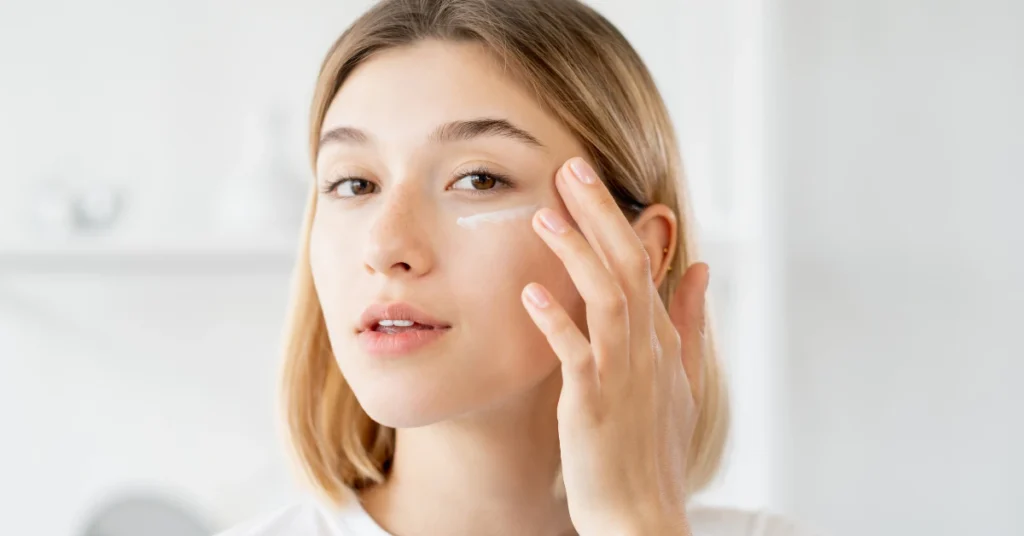
The order you apply products in matters almost as much as the ingredients themselves. A simple routine that works well: cleanse first, apply any treatment serum, then follow with a hydrating eye cream, and finish with moisturizer and sunscreen in the morning. Use your ring finger to apply eye products. It naturally uses the lightest pressure, which matters because the skin under your eyes is some of the thinnest on your body. Gently tap the product in instead of rubbing or dragging it.
The retinol mistake almost everyone makes
Retinol can genuinely help with dark circles over time. It boosts collagen and speeds up skin cell turnover, which can fade pigment and firm up thin skin. But here’s the mistake: using the same retinol product on your under-eyes that you use on the rest of your face.
Face-strength retinol is usually too strong for the eye area. The skin there is thinner and has fewer oil glands, so it can’t handle the same concentration without getting irritated, red, or flaky. If you want to use retinol under your eyes, use a product made specifically for the eye area, which is formulated at a gentler strength.
Safety warning: Always patch-test any new retinol or brightening product before using it near your eyes. Apply a small amount to a less sensitive area, like your inner forearm, and wait 24 hours to check for redness, itching, or irritation before putting it anywhere near your eye area.
Safety warning: Retinol and other retinoid products are not recommended during pregnancy. If you’re pregnant or trying to become pregnant, skip retinol-based eye products and ask your doctor about safer alternatives.
Give any new product real time to work. Skincare ingredients that target pigment or collagen generally need several weeks of consistent use before you’ll notice a difference, so don’t judge a product after just a few days.
How to Get Rid of Dark Circles Under Eyes for Men
Men get dark circles for the same core reasons as anyone else, like genetics, pigment, and thin skin. But a few habits tend to make it worse for men specifically.
Rubbing your eyes when you’re tired
It’s a reflex when you’re exhausted or your eyes feel itchy from allergies, but rubbing irritates the thin skin under your eyes and can make pigment darker over time. If you catch yourself doing this often, it’s worth breaking the habit, even if it feels harmless in the moment.
Shaving routines can play a role too
If shaving brings a razor or aftershave close to the under-eye and upper cheek area, that can cause mild irritation nearby. Irritation anywhere near the eyes can contribute to puffiness or make existing dark circles more noticeable. Being a bit more careful with your razor near that zone can help.
Skipping skincare basics
Many men simply don’t have a skincare routine at all, which means the eye area never gets any support. The fix doesn’t need to be complicated.
A simple routine that actually works
- Wash your face daily with a gentle cleanser.
- Apply a basic eye cream once a day, ideally one with caffeine if your circles look more blue or purple.
- Use sunscreen every morning, including the skin under your eyes. Sun exposure makes pigment-based dark circles darker over time.
- Drink water through the day, especially if you work outside or exercise a lot.
That’s genuinely most of it. You don’t need a ten-step routine. Consistency with these few steps will do more than any single product.
Treating Dark Circles in Deeper Skin Tones
Dark circles work a bit differently on deeper skin tones, and it’s worth understanding why before you pick a treatment.
Skin with more melanin (the pigment that gives skin its color) is more prone to hyperpigmentation in general. That’s true for dark spots anywhere on the body, including under the eyes. It also means that when hyperpigmentation does show up, it tends to be more intense and can take longer to fade compared to lighter skin tones.
This doesn’t mean deeper skin tones are harder to treat. It means the approach needs to be more careful, especially with stronger treatments.
Everyday care still works the same
The basics from earlier in this guide still apply. Gentle brightening ingredients like vitamin C and niacinamide, daily sunscreen, good hydration, and not rubbing your eyes all help regardless of skin tone. Sun protection matters even more here, since sun exposure can trigger or darken existing pigmentation more easily on melanin-rich skin.
Where extra caution is needed
Stronger procedures like chemical peels and laser treatments can be effective, but they carry real risk for deeper skin tones specifically. If the wrong strength or wrong type of laser is used, it can actually trigger more pigmentation instead of fixing it. This is sometimes called post-inflammatory hyperpigmentation, and it can end up looking worse than the original dark circles.
Safety warning: If you’re considering a chemical peel or laser treatment for dark circles and you have a deeper skin tone, only see a dermatologist who has specific experience treating skin of color. Not every dermatologist has this training, and using the wrong settings or products on melanin-rich skin can make hyperpigmentation worse instead of better. Ask directly about their experience with your skin tone before booking any procedure.
A rushed or poorly matched treatment can set you back further than doing nothing at all, so it’s worth taking the extra time to find the right provider.
How to Get Rid of Dark Circles Permanently: Procedures and Risks
If you’ve tried sleep, hydration, and topical products and your dark circles haven’t budged, you’re probably dealing with structural circles, the hollow-and-shadow type caused by volume loss. This type usually doesn’t respond to creams because there’s no pigment to fade and no blood vessel to calm down. It’s simply lost volume creating a shadow.
For this type, clinical procedures are the main option. But it’s worth being clear about what “permanent” actually means here, because it’s not quite what it sounds like.
Tear trough filler
This involves a dermatologist or plastic surgeon injecting a filler under the eyes to replace lost volume and smooth out the hollow. It can make a real difference in how shadowed the area looks. But despite how it’s sometimes marketed, it is not permanent. Results typically last somewhere between 9 and 15 months, after which the filler breaks down and the hollow gradually returns.
Laser treatment
Lasers can help by targeting pigment or stimulating collagen, depending on the type used. Results vary quite a bit from person to person, and like filler, laser treatment is not a one-and-done permanent fix. Many people need repeat sessions to maintain results.
Why age-related circles are harder to fully reverse
Dark circles caused by genuine aging and volume loss usually aren’t reversible with skincare alone. This is exactly why procedures like filler exist, but it also means expectations should be realistic. These treatments manage the look of dark circles. They don’t cure the underlying cause permanently.
Safety warning: Tear trough filler carries a rare but serious risk. If it’s injected improperly, it can cause vascular complications, meaning the filler affects a blood vessel in a way it shouldn’t. In documented case reports, this has led to permanent vision loss. This is uncommon, but it is a real risk, which is why this procedure should only ever be done by a board-certified dermatologist or plastic surgeon with specific experience in under-eye filler. Never consider this procedure from an unlicensed provider or a medspa without a qualified injector overseeing the treatment.
If you’re considering filler or laser treatment, a consultation with a board-certified provider is the right first step. They can tell you honestly whether your circles are a good match for the procedure before you commit to it.
Frequently Asked Questions
Do dark circles go away?
It depends on the cause. Circles from poor sleep or dehydration fade once you fix those habits. Circles from genetics, aging, or pigment are harder to fully reverse and may need targeted treatment to improve.
What do Koreans do for dark circles?
A typical K-beauty eye routine involves cleansing first, then applying a brightening serum, followed by a hydrating eye cream with ingredients like caffeine, peptides, or hyaluronic acid. Products are applied with the ring finger using a gentle tapping motion, never rubbing, usually morning and night.
What are the main causes of dark circles?
The main causes are genetics, naturally thin under-eye skin that shows blood vessels, excess pigment buildup, volume loss from aging, allergies, eye rubbing, and lifestyle factors like poor sleep and sun exposure.
How to stop getting dark circles?
Keep a consistent sleep schedule, stay hydrated, wear sunscreen under your eyes daily, and avoid rubbing or scratching the area. If allergies are a trigger, managing them can also help.
How to fade dark circles quickly?
A cold compress wrapped in cloth can reduce puffiness and a blue or purple tint within minutes, though the effect is temporary. For a same-day look, a peach or salmon-toned concealer can visually cancel out the discoloration.
What am I lacking if I have dark circles?
Persistent dark circles have been linked to iron deficiency in clinical research. One study found that half of a group of 200 patients with stubborn dark circles had iron-deficiency anemia, and many improved once it was treated. Deficiencies in vitamin B12 and vitamin K have also been linked to dark circles.
What vitamin stops dark circles?
No single vitamin works for everyone, but iron, vitamin B12, and vitamin K have the strongest links to dark circles in available research, particularly when a true deficiency is the underlying cause.
Can ice remove dark circles?
Ice can temporarily reduce puffiness and calm the bluish tint of vascular dark circles by narrowing blood vessels. It does not fix pigment-based circles or the shadow caused by hollows under the eyes, and the effect wears off once your skin warms back up.
What to eat to remove dark eye circles?
Iron-rich foods like red meat, poultry, beans, and leafy greens support healthy iron levels. Foods rich in vitamin B12 matter too, especially for people eating a plant-based diet. Staying hydrated and cutting back on excess salt also helps reduce puffiness-related darkness.
Conclusion
Dark circles rarely have one single fix, because they rarely have one single cause. Once you know whether yours are vascular, pigmented, or structural, the right next step becomes a lot clearer, whether that’s a cold compress and more water, a caffeine or vitamin C eye cream, or a conversation with a board-certified dermatologist about longer-term options. Start with the simplest, lowest-risk fix for your type, give it real time to work, and build from there.