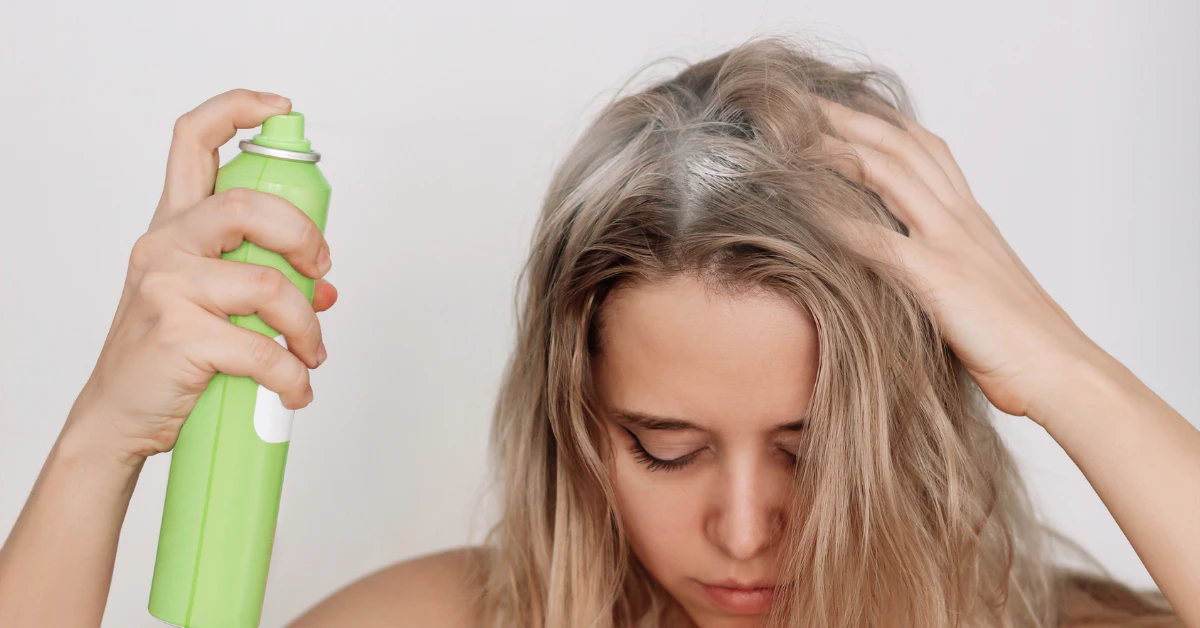
Dry shampoo does not actually wash your hair. It uses alcohol or starch to soak up oil at your roots, so your hair looks and feels fresh without water. Here is the fast version:
- Shake the can well before you spray.
- Split your hair into small sections so you can reach the roots.
- Hold the bottle 6 to 8 inches from your scalp and spray in short bursts.
- Wait a couple of minutes so the product can absorb the oil.
- Massage it into your scalp, then brush it out.
That is the whole process, done in under five minutes.
Step-by-Step: The Right Way to Apply Dry Shampoo
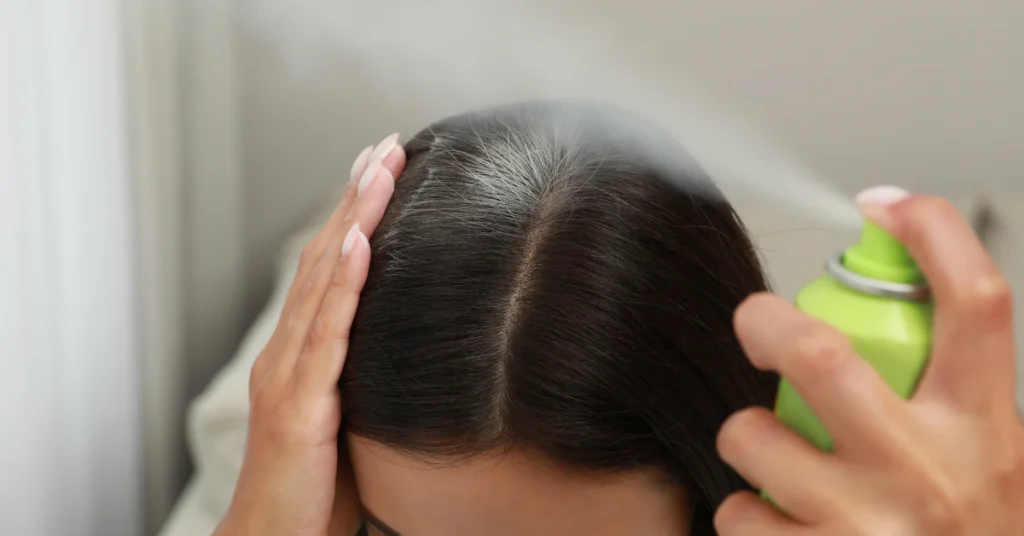
Oily roots need a bit more care than a quick spray and a prayer. Here is how to use dry shampoo for oily hair the right way, step by step.
- Shake the can. Give it a good shake for a few seconds. This mixes the formula so the oil-absorbing particles spray evenly instead of clumping in one spot.
- Section your hair. Part your hair into small sections, starting at the crown and working outward. Oil builds up fastest at the scalp, so you need to actually see your roots to treat them. Skipping this step is why a lot of people end up spraying blindly and missing the oiliest spots.
- Spray at the right distance. Hold the bottle 6 to 8 inches from your scalp and spray in short bursts along each part. Getting too close loads one area with too much product, which is a common cause of that chalky white look.
- Let it sit. This part matters more than people think. The alcohol or starch in dry shampoo needs a couple of minutes of contact time to actually pull oil off your scalp. If you brush it out right away, you are just moving wet, oily powder around instead of absorbing anything.
- Massage it in. Use your fingertips to work the product into your roots. This breaks up any clumps and helps the powder blend into your natural hair color instead of sitting on top of it.
- Brush it out. Comb or brush from root to tip to remove any leftover powder. This step also adds a bit of lift and texture at the roots.
If you have dark hair and still see a white cast after massaging and brushing, do not panic. Point a blow-dryer at your roots on the cool setting and move it around for a few seconds. The airflow scatters the remaining powder and blends it into your hair color instead of leaving it sitting on top. This is a simple fix that works better than brushing alone, especially for brunette or black hair where light powder tends to show up more.
Following these steps in order, especially the wait time before brushing, is what separates a natural, refreshed look from a dry, powdery mess.
Targeted Tactics: Night Use, Short Hair, and Volume

Dry shampoo can do more than fix a bad hair day. Here are three specific ways to use it depending on your goal.
Using dry shampoo at night
Some people like to spray dry shampoo before bed so it can absorb oil while they sleep, waking up to fresher roots. This can work occasionally. But dermatologists warn against making this a nightly habit. Using dry shampoo every night, instead of just once or twice a week, can lead to product buildup on the scalp over time, which raises the risk of clogged follicles and irritation. If you want to use it before bed, keep it to an occasional treat, not a daily routine, and still wash your hair on a normal schedule.
Using dry shampoo on short hair
Short hair does not need heavy brushing the way longer hair does. Instead, apply a small amount at the roots, then use your fingertips to work it in and shape your style at the same time. This spreads the product evenly without flattening whatever texture or volume you already have. A full brush-out can undo the shape you just styled, so fingers do a better job on short cuts.
Using dry shampoo for volume
If your goal is volume, focus on the roots and massage the product upward instead of down. Lifting the hair at the base while you spray, then pushing the powder up toward the scalp as you massage, creates lift that lasts through the day. This works because the same absorbent particles that soak up oil also add a bit of grip, which helps hair hold its shape instead of falling flat.
Each of these tactics uses the same basic dry shampoo, just applied with a different goal in mind.
The Workout Dilemma: Why Dry Shampoo Fails After the Gym

If you have ever sprayed dry shampoo right after a workout and ended up with clumpy, sticky hair, there is a simple reason for that. Dry shampoo is built to absorb oil, not sweat.
Oil, or sebum, comes from your scalp’s own glands. It is what dry shampoo’s alcohol or starch is designed to soak up. Sweat is different. It is mostly water, mixed with salt and minerals, and it behaves nothing like oil once it hits a powder-based product.
When you spray dry shampoo onto a sweaty, damp scalp, the powder cannot do its job. Instead of absorbing anything, it mixes with the moisture and forms clumps. This is why your hair can end up looking pastier or greasier than before you sprayed it, not fresher.
The fix is simple: dry your hair first. Let it air dry completely, or use a blow-dryer to speed things up. Once your scalp is fully dry, any oil that has resurfaced will behave normally, and dry shampoo can absorb it the way it is supposed to.
So if dry shampoo has “failed” on you after the gym, it is not a flaw in the product. It is a mismatch between what the product does and how it was used. Sweat needs to dry first. Oil is the only thing dry shampoo is built to handle.
Comparing Options: Aerosols, Powders, and Pantry Alternatives
Not all dry shampoo comes in a spray can. Here is how the main options stack up against each other.
| Type | Ease of Use | Risk of White Cast | What’s In It |
| Aerosol spray | Very easy, quick spray application | Low to moderate if used at the right distance | Alcohol or starch, plus a propellant gas to spray it |
| Loose powder | Takes more effort to apply evenly | Higher, especially on dark hair | Starch-based powder, no propellant |
| Pantry alternatives (cornstarch, arrowroot) | Simple but needs a light hand | Highest on dark hair | Just the starch itself, nothing added |
Cornstarch and arrowroot powder from your kitchen can absorb oil in a pinch, and many people use them as a low-cost backup. But they are missing the optical diffusers that commercial dry shampoos use to blend into hair color. That means they tend to show up more as a visible white cast, especially on darker hair, unless you brush them out carefully.
If you prefer a store-bought powder over a spray, it is worth checking the label. Some consumer safety groups recommend choosing powders marked “talc-free,” since traditional talc has raised contamination concerns in the past. This is a simple thing to check before you buy, and it does not cost anything extra to look for it on the label.
Health, Safety, and the “Hair Loss” Truth
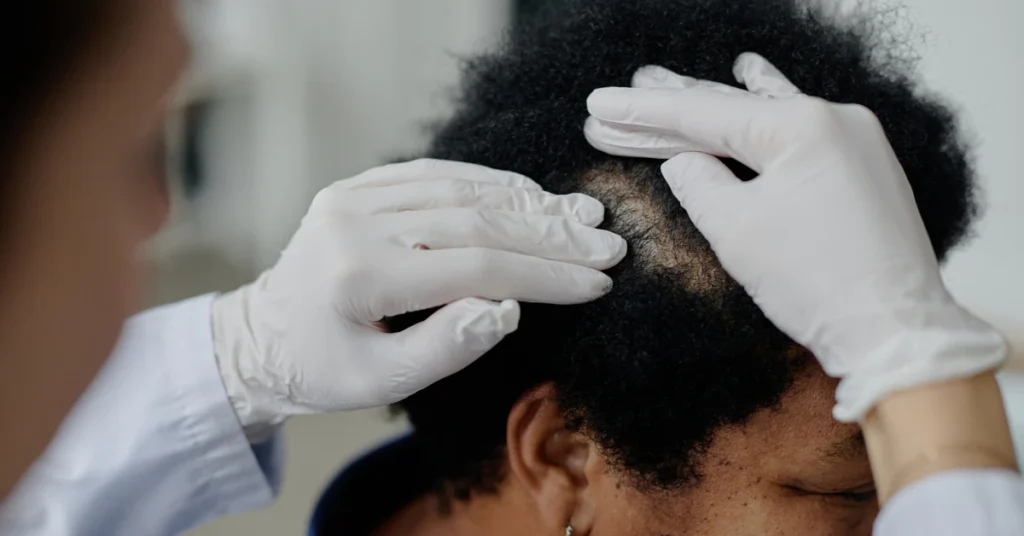
Before you make dry shampoo part of your routine, a few safety basics matter.
Since dry shampoo contains fragrance and alcohol, it is smart to do a patch test if you are trying a new brand for the first time. Spray a small amount on your arm, wait, and check for any redness or irritation before using it on your scalp. If you have eczema, psoriasis, dandruff, or seborrheic dermatitis, talk to your dermatologist before using dry shampoo regularly, since these conditions can make your scalp more likely to react.
How often is too often?
Dermatologists generally recommend using dry shampoo no more than once or twice a week. It is meant to stretch time between washes, not replace washing altogether.
What is really behind the “hair loss” rumors?
You may have seen posts online blaming dry shampoo, including Batiste, for hair loss. Here is what is actually documented. Using dry shampoo too often can lead to product buildup on the scalp. That buildup can trigger folliculitis, which is irritation and inflammation around the hair follicle. Folliculitis can make hair feel brittle and cause it to snap or break more easily. That breakage can look like thinning hair, especially over time. But this is breakage, not the follicle itself shutting down. There is no confirmed evidence that dry shampoo kills hair follicles or causes permanent hair loss, according to Today.com’s interviews with board-certified dermatologists.
What about the Batiste benzene recalls?
Between 2022 and 2024, several aerosol dry shampoo brands, including Batiste, Dove, and Suave, were tied to benzene contamination. This is important to understand correctly. Benzene was not an ingredient added on purpose. It came from contaminated propellant gas used to spray the product out of the can, an issue that affected multiple brands across the aerosol category, not just one formula.
In 2022, Batiste’s parent company, Church & Dwight, agreed to a $2.5 million class action settlement over these benzene concerns, while denying any wrongdoing. The deadline to file a claim in that settlement has already passed. This recall history is a real, documented safety event. It is separate from the unproven hair loss claims, and the two should not be confused with each other.
Frequently Asked Questions
What are the downsides of using dry shampoo?
The main downsides show up with overuse. Spraying it too often can cause product to build up on your scalp, which leads to itching and, in some cases, folliculitis, a condition where hair follicles become irritated and inflamed. The alcohol in many formulas can also dry out your hair over time, making strands more likely to snap or break.
How long do I leave dry shampoo in my hair?
Let it sit for a few minutes after spraying before you massage or brush it out. This gives the alcohol or starch enough time to actually absorb the oil at your roots. Brushing it out too soon just moves the product around instead of letting it work.
Are you supposed to wash dry shampoo out of hair?
Yes. Dry shampoo is meant to hold you over between washes, not replace washing altogether. It does not clean your scalp the way water and real shampoo do. Eventually, you still need to wash your hair to remove the buildup and any oil the product has absorbed.
What are common dry shampoo mistakes?
A few mistakes come up again and again:
- Spraying too close to the scalp, which causes a heavy white cast.
- Applying it to damp or sweaty hair instead of fully dry hair.
- Skipping the massage and brush-out step, so the product just sits on top of your hair.
- Using it too many days in a row instead of sticking to a normal wash schedule.
Does Batiste dry shampoo cause hair thinning?
There is no confirmed scientific link between Batiste and permanent hair loss. What can happen is buildup from overuse, which can lead to breakage that looks like thinning, but this is not the same as the follicle shutting down. The actual documented issue with Batiste was a benzene contamination case tied to aerosol propellants, which led to a class action settlement in 2022. That case was about chemical contamination, not hair loss, and the two should not be mixed up.
What is a healthier alternative to dry shampoo?
The simplest step is to limit how often you use any dry shampoo, aiming for once or twice a week instead of daily. If you want a low-cost, ingredient-simple option, cornstarch or arrowroot powder from your kitchen can absorb oil in a similar way. Just apply a small amount at the roots and brush it out well, since these options can leave a visible white cast, especially on darker hair.
Conclusion
Dry shampoo is a simple tool once you know how it actually works. It absorbs oil, not sweat or dirt, so it only does its job when your hair is fully dry and you give it a few minutes to work. Stick to once or twice a week, brush it out properly, and it can genuinely stretch the time between washes. Just remember it is a helper, not a replacement for a real wash with water, and any past benzene recalls were about contaminated propellants, not a reason to fear the formula itself when used as directed.